
Electrolyte Imbalances: One Table for All of Them
Group the six electrolytes by what they control: sodium is a brain problem (confusion and seizures), potassium is a heart problem (rhythm disturbances), and calcium and magnesium act on nerves and muscles (twitchy when low, weak when high). The two rules the exam leans on hardest are to correct sodium slowly because too-fast correction causes brain damage, and to never give potassium by IV push.

Fluids and electrolytes in one lesson: every imbalance, its causes, its findings and the nursing care.
From the Intensive NCLEX Course. See the course; the full video library is part of Pro and Ultimate.
Six electrolytes. Each one has a high and a low. That is twelve conditions.
Here they all are, with what causes them, what you see, and what you do.
Sodium (135–145 mEq/L)
Sodium controls water. Sodium problems are brain problems.
| LOW sodium (under 135) | HIGH sodium (over 145) | |
|---|---|---|
| Causes | Too much water, SIADH, diuretics, vomiting, heart or kidney failure | Dehydration, not enough water, diabetes insipidus, tube feeds without water |
| Signs | Confusion, headache, nausea, muscle cramps, seizures | Thirst, dry mouth, restless, agitated, seizures |
| Do | Restrict fluids, careful sodium replacement, seizure precautions | Give fluids slowly, seizure precautions |
The big rule: correct sodium SLOWLY. Correcting it too fast causes brain damage. This is heavily tested.
Both high and low sodium cause seizures. Any severe sodium problem needs seizure precautions.
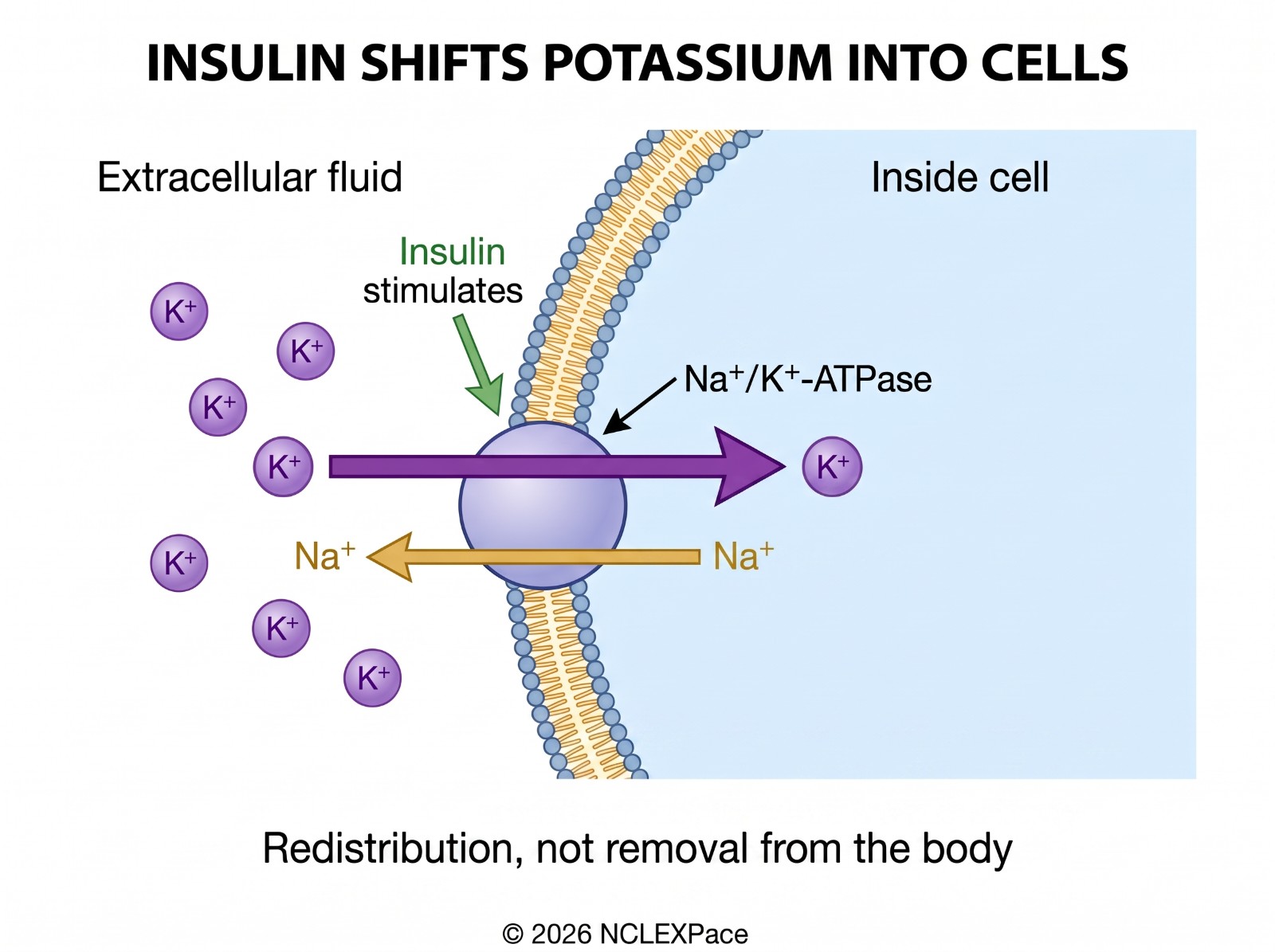
Potassium (3.5–5.0 mEq/L)
Potassium controls the heart rhythm.
| LOW potassium (under 3.5) | HIGH potassium (over 5.0) | |
|---|---|---|
| Causes | Diuretics, vomiting, diarrhea, gastric suction, poor intake | Kidney failure, potassium-sparing diuretics, ACE inhibitors, tissue damage, burns |
| Signs | Muscle weakness, cramps, irregular heart rhythm, constipation, low bowel sounds, fatigue | Muscle weakness, irregular heart rhythm, tingling, diarrhea, hyperactive bowel sounds |
| Do | Replace potassium (never IV push), check magnesium, monitor heart | Stop potassium, EKG, monitor, treatments to move or remove potassium |
Notice the bowel difference: low potassium slows the gut (constipation, quiet bowel sounds). High potassium speeds it up (diarrhea, loud bowel sounds).
Both cause muscle weakness and dangerous rhythms. See Article 71.
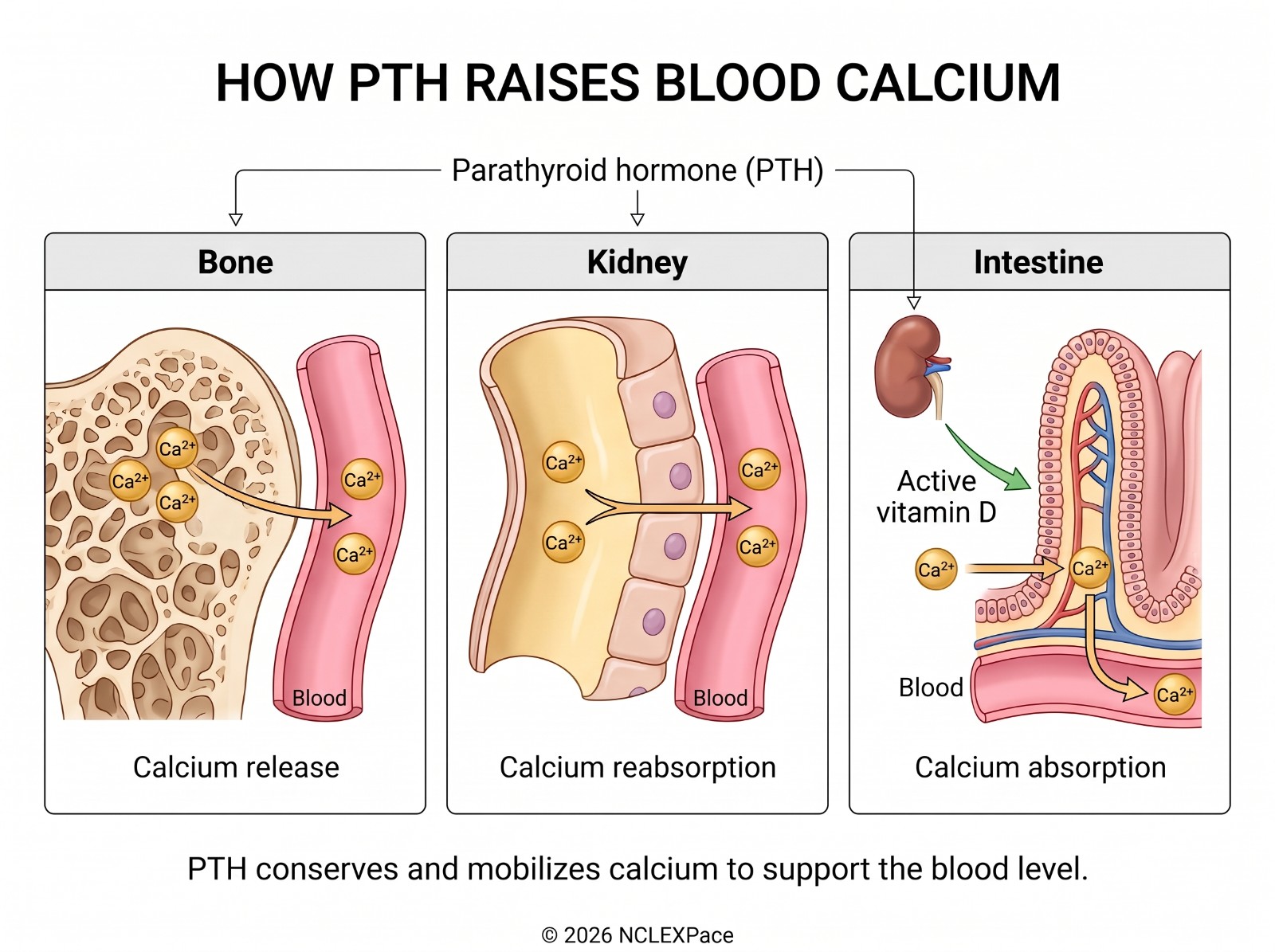
Calcium (9.0–10.5 mg/dL)
Calcium calms nerves and muscles. Low calcium means excitable nerves.
| LOW calcium (under 9.0) | HIGH calcium (over 10.5) | |
|---|---|---|
| Causes | Thyroid/parathyroid surgery, kidney disease, low vitamin D, blood transfusions | Cancer, overactive parathyroid, too much vitamin D, immobility |
| Signs | Twitching, tingling, muscle spasms, seizures, positive Chvostek and Trousseau signs, airway spasm | Weakness, tiredness, confusion, constipation, kidney stones, bone pain |
| Do | Calcium replacement, seizure and airway precautions | Fluids, increase movement, treat the cause |
Two signs of low calcium worth knowing:
- Chvostek sign — tap the cheek near the ear, the face twitches
- Trousseau sign — inflate a blood pressure cuff, the hand cramps into a spasm
The dangerous part of low calcium is airway spasm. After thyroid or parathyroid surgery, always watch for low calcium and keep emergency airway equipment nearby.
Magnesium (1.3–2.1 mEq/L)
Magnesium behaves a lot like calcium.
| LOW magnesium | HIGH magnesium | |
|---|---|---|
| Causes | Alcohol use, poor nutrition, diarrhea, diuretics | Kidney failure, too many magnesium antacids, magnesium infusion in pregnancy |
| Signs | Twitching, tremor, irregular heart rhythm, positive Chvostek and Trousseau | Loss of deep tendon reflexes, weakness, low blood pressure, slow breathing, cardiac arrest |
| Do | Replace magnesium, monitor heart | Stop the magnesium, calcium gluconate, support breathing |
Low magnesium makes low potassium hard to correct. If a client’s potassium will not come up, check the magnesium. Commonly tested.
High magnesium: reflexes disappear FIRST. This is the earliest warning in a client on a magnesium infusion. See Article 63.
Phosphorus (3.0–4.5 mg/dL)
Phosphorus and calcium move in opposite directions.
Calcium up → phosphorus down. Calcium down → phosphorus up.
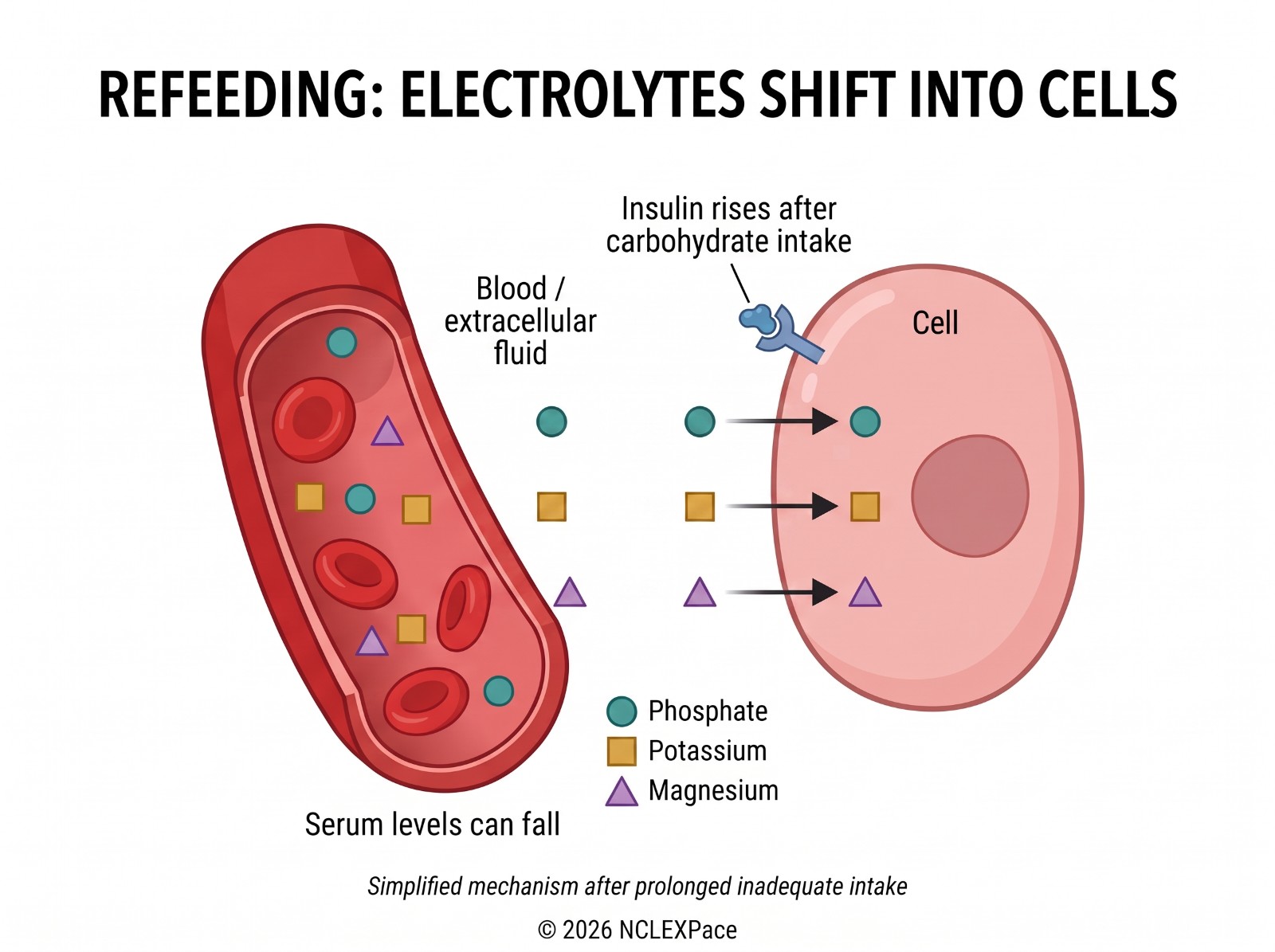
Low phosphorus: muscle weakness, confusion, bone pain. Causes include poor nutrition, refeeding syndrome, alcohol use.
High phosphorus: usually kidney failure. Signs mostly come from the low calcium that goes with it.
Chloride (98–106 mEq/L)
Chloride follows sodium. It is rarely tested on its own. If sodium is low, chloride is usually low too.
The patterns that make this easier
Sodium = brain. Confusion and seizures. Potassium = heart. Rhythm problems. Calcium and magnesium = nerves and muscles. Twitching when low, weakness when high.
Low calcium and low magnesium look the same — twitchy, spasms, positive Chvostek and Trousseau.
High calcium and high magnesium look the same — weak, sleepy, sluggish.
Calcium and phosphorus are opposites.
What the exam asks
Usually one of three things:
1. What signs would you expect? Use the table.
2. Which client is at risk? Look at their medications, kidney function, and losses (vomiting, diarrhea, suction).
3. What do you do first? Usually monitor the heart for potassium and magnesium, protect the airway for calcium, and seizure precautions for sodium.
The short version
- Sodium → brain → correct SLOWLY
- Potassium → heart → never IV push
- Calcium → low means twitchy and airway risk; watch after thyroid surgery
- Magnesium → high means reflexes disappear first; give calcium gluconate
- Phosphorus → opposite of calcium
- Low magnesium blocks potassium correction
Reference ranges vary by laboratory. Treatment protocols vary by facility.
5 NCLEX practice questions on this topic
The same questions, player and partial-credit scoring students use inside NCLEXPace: answer, submit, read the full rationale, then Next. Your score is waiting at the end. No account needed for these.
A free account opens 20 more questions, a case study, a video and a cheat sheet. The full bank has 3,200+ questions with rationales, by topic.
Practice more, free →Ready for the full bank? See NCLEXPace plans and prices: one payment for 1, 2, 3 or 6 months.
Frequently asked questions
Common follow-up questions on Labs, Values & Diagnostics.
Why do you correct sodium slowly?
Sodium controls water, so sodium problems are brain problems. Correcting the level too fast causes brain damage, which is why careful, gradual replacement is the rule. Both high and low sodium can cause seizures, so any severe sodium imbalance also needs seizure precautions.
What are Chvostek and Trousseau signs?
They are two signs of low calcium. Chvostek sign is a facial twitch when you tap the cheek near the ear, and Trousseau sign is the hand cramping into a spasm when a blood pressure cuff is inflated. Low magnesium can produce the same positive signs, because low calcium and low magnesium look alike.
Why does potassium not come up despite replacement?
Low magnesium makes low potassium hard to correct. If a client's potassium will not rise, check the magnesium, because it may need correcting first. This pairing is commonly tested.
What is the earliest warning of high magnesium?
Loss of deep tendon reflexes appears first. In a client on a magnesium infusion, disappearing reflexes are the earliest warning sign before weakness, low blood pressure, slow breathing, or cardiac arrest. The treatment is to stop the magnesium and give calcium gluconate.
How do calcium and phosphorus relate?
Calcium and phosphorus move in opposite directions: when calcium goes up, phosphorus goes down, and when calcium goes down, phosphorus goes up. High phosphorus is usually caused by kidney failure, and its signs mostly come from the low calcium that accompanies it.
Sources and references
- Harding MM, Kwong J, Hagler D, Reinisch C. Lewis's Medical-Surgical Nursing: Assessment and Management of Clinical Problems. 12th ed. Elsevier; 2023; Chapter: Fluid, Electrolyte, and Acid-Base Imbalances.
- Pagana KD, Pagana TJ, Pagana TN. Mosby's Diagnostic and Laboratory Test Reference. 16th ed. Elsevier; 2023.
Reviewed by the NCLEXPace team, October 2026.
Keep reading
3,200+ NCLEX questions with think-like-a-nurse rationales, unfolding case studies and adaptive readiness exams. Start with free practice questions, then choose a plan when you are ready.
Create Free Account →