NCLEX Lab Values: The Complete List With Panic Ranges
The NCLEX expects you to recognize a handful of values instantly and act on them: potassium 3.5–5.0 mEq/L, sodium 135–145 mEq/L, and a critical potassium above 6.0 or below 2.5 requires immediate action. Learn the panic ranges before the normal ranges. The exam tests what you do about an abnormal result far more often than the number itself.

Fluids and electrolytes: the laboratory values the exam asks about most, with what the nurse does for each.
From the Intensive NCLEX Course. See the course; the full video library is part of Pro and Ultimate.
The NCLEX rarely asks "what is the normal potassium?" It asks what you'll do about a potassium of 6.1 — hold the ACE inhibitor? Check the ECG? Call the provider first? So learn every value twice: the range, and the action its abnormal triggers.
Electrolytes — the exam's favorites
| Value | Normal | Nurse thinking when abnormal |
|---|---|---|
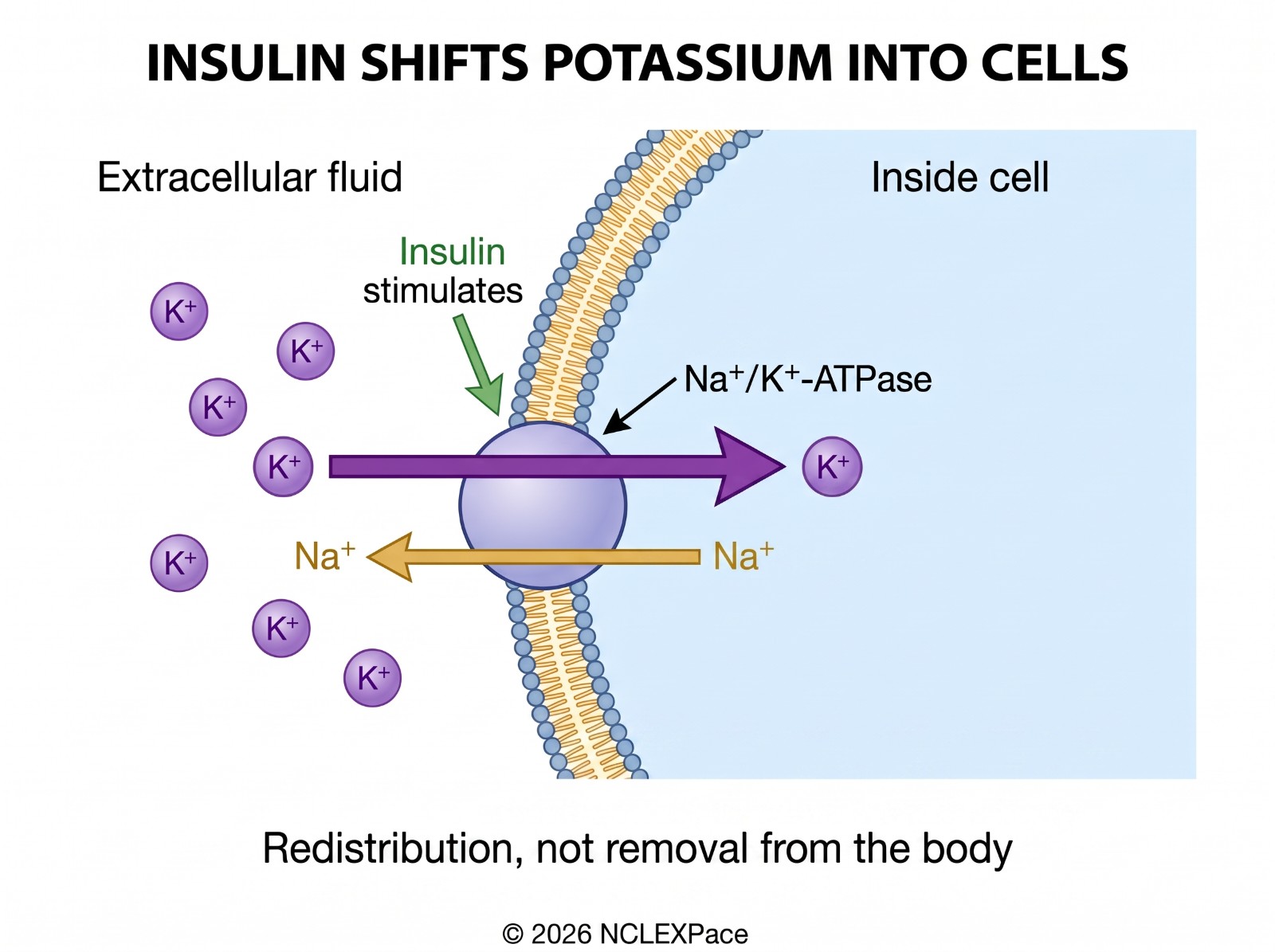
| Potassium (K⁺) | 3.5–5.0 mEq/L | The heart electrolyte. High → peaked T waves, hold K⁺-sparing meds, prepare insulin+glucose. Low → flat T/U waves, NEVER IV push potassium |
| Sodium (Na⁺) | 135–145 mEq/L | The brain electrolyte — both directions end in confusion and seizures. Correct SLOWLY |
| Calcium (Ca²⁺) | 9.0–10.5 mg/dL | Low → Trousseau/Chvostek, tetany (think post-thyroidectomy). High → stones, bones, groans, psychiatric moans |
| Magnesium (Mg²⁺) | 1.3–2.1 mEq/L | Low → torsades risk, tremors. High (think OB clients on mag) → lost deep-tendon reflexes FIRST, then respiratory depression — antidote calcium gluconate |
| Phosphorus | 3.0–4.5 mg/dL | Moves opposite to calcium — if one is high, check the other |
Metabolic & renal
| Value | Normal | Nurse thinking |
|---|---|---|
| Glucose (fasting) | 70–100 mg/dL | Below 70 with symptoms → treat FIRST, document later. 15 g fast carbs, recheck in 15 min |
| HbA1c | <5.7% (diabetic goal <7%) | The 3-month truth — one good fasting glucose doesn't outweigh a 10% A1c |
| BUN | 10–20 mg/dL | Rises with kidney injury AND dehydration — read it with creatinine |
| Creatinine | 0.6–1.2 mg/dL | The kidney number. Rising creatinine → question every nephrotoxic drug on the MAR (vancomycin, NSAIDs, contrast) |
| GFR | >90 mL/min | <60 = kidney disease; many drugs need renal dosing below this |
Hematology & clotting — where the "hold the dose?" questions live
| Value | Normal | Nurse thinking |
|---|---|---|
| Hemoglobin | M 14–18 · F 12–16 g/dL | Trend beats snapshot — a fall of 2+ g/dL post-op means bleeding until proven otherwise |
| Hematocrit | M 42–52% · F 37–47% | Roughly Hgb × 3 — if they diverge, think dilution or dehydration |
| Platelets | 150,000–400,000 | <50k → bleeding precautions; <20k → spontaneous bleeding risk, no IM injections |
| WBC | 5,000–10,000 | High → infection hunt. <1,000 neutropenic → reverse isolation, no fresh flowers, no rectal temps |
| INR (on warfarin) | Therapeutic 2.0–3.0 | >4 → hold warfarin, assess for bleeding; antidote vitamin K |
| aPTT (on heparin) | 1.5–2.5× control (~46–70 sec) | Too high → bleeding risk; antidote protamine sulfate |
ABGs — four steps, every time
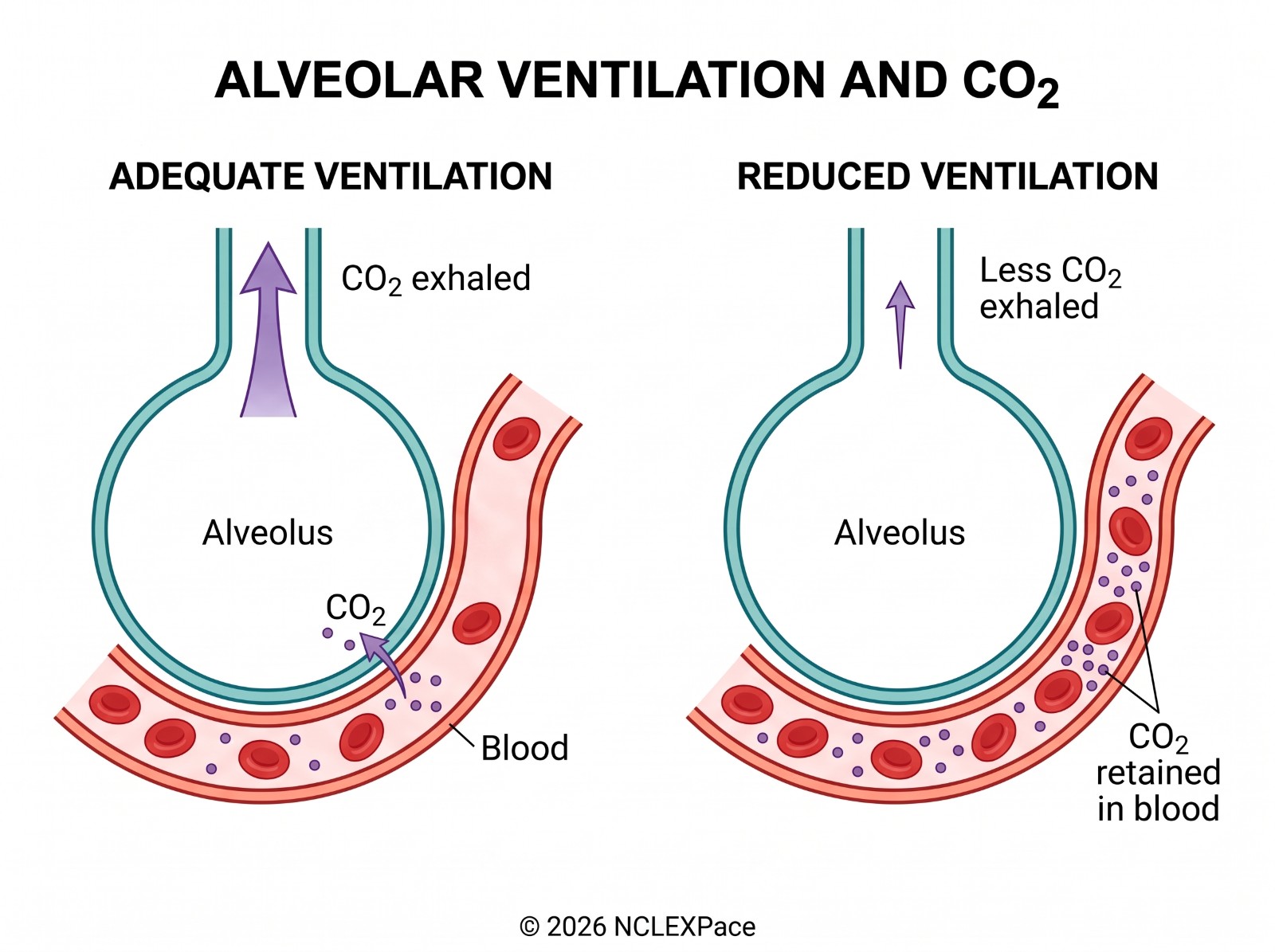
pH 7.35–7.45 · PaCO₂ 35–45 · HCO₃⁻ 22–26. Method: 1) pH tells acid vs alkaline. 2) CO₂ is the respiratory lever (ROME: Respiratory Opposite). 3) HCO₃⁻ is the metabolic lever (Metabolic Equal). 4) Whichever lever matches the pH direction is the cause.
NCLEX tip: When a question pairs a lab value with a medication, the answer is almost always about the medication — hold the digoxin for the K⁺ of 3.1, question the vancomycin for the rising creatinine. The lab is the clue; the drug decision is the question.
5 NCLEX practice questions on this topic
The same questions, player and partial-credit scoring students use inside NCLEXPace: answer, submit, read the full rationale, then Next. Your score is waiting at the end. No account needed for these.
A free account opens 20 more questions, a case study, a video and a cheat sheet. The full bank has 3,200+ questions with rationales, by topic.
Practice more, free →Ready for the full bank? See NCLEXPace plans and prices: one payment for 1, 2, 3 or 6 months.
Frequently asked questions
Common follow-up questions on Labs, Values & Diagnostics.
Which lab values must I memorize for the NCLEX?
Potassium 3.5–5.0 mEq/L, sodium 135–145 mEq/L, calcium 9.0–10.5 mg/dL, magnesium 1.3–2.1 mEq/L, glucose 70–110 mg/dL fasting, creatinine 0.6–1.2 mg/dL, BUN 10–20 mg/dL, haemoglobin 12–18 g/dL, haematocrit 37–52%, platelets 150,000–400,000/mm³, and white cells 5,000–10,000/mm³.
What is a critical potassium level?
Above 6.0 mEq/L or below 2.5 mEq/L requires immediate action, because both extremes cause life-threatening cardiac dysrhythmias. Any potassium outside 3.5–5.0 mEq/L warrants cardiac monitoring and provider notification.
Which therapeutic drug levels appear on the exam?
Digoxin 0.5–2.0 ng/mL, lithium 0.6–1.2 mEq/L, phenytoin 10–20 mcg/mL, and theophylline 10–20 mcg/mL. All four have narrow therapeutic windows, which is exactly why the exam favours them.
How should I answer a question about an abnormal lab value?
Identify whether the value is critical, then choose the action that addresses the physiological threat: assess the client, place them on cardiac monitoring, hold the implicated medication, or notify the provider. The exam rewards acting on the value rather than simply reporting it.
Sources and references
- Pagana KD, Pagana TJ, Pagana TN. Mosby's Diagnostic and Laboratory Test Reference. 16th ed. Elsevier; 2023.
Reviewed by the NCLEXPace team, October 2026.
Keep reading
3,200+ NCLEX questions with think-like-a-nurse rationales, unfolding case studies and adaptive readiness exams. Start with free practice questions, then choose a plan when you are ready.
Create Free Account →