
Cardiac Drugs on the NCLEX: Digoxin, ACE Inhibitors and Nitrates
Digoxin needs an apical pulse for a full minute and a potassium check before every dose: hold it below 60 and treat yellow-green halos as toxicity. ACE inhibitors cause a dry cough and raise potassium, and facial swelling is an airway emergency. Sublingual nitroglycerin is taken sitting down, up to three tablets five minutes apart, and never with erectile dysfunction drugs.

Digoxin, ACE inhibitors, nitrates and beta blockers: what each does, what to check before giving it, and the toxicity signs that get tested.
From the Intensive NCLEX Course. See the course; the full video library is part of Pro and Ultimate.
Three drug groups, three clear nursing rules — and they come up constantly. Learn what you check before you give and what you teach the client, and the cardiac-drug questions become predictable.
Digoxin
What it does: slows the heart rate and makes each beat stronger. Used for heart failure and some irregular rhythms, especially atrial fibrillation.
The safety range is narrow — a therapeutic level of roughly 0.5–2 ng/mL, and toxicity can happen even inside that range.
Before giving — the most tested nursing action
- Take the apical pulse for a full minute.
- Hold the dose if the pulse is under 60 in an adult (parameters differ for children — follow the order) and notify the provider.
Signs of digoxin toxicity
- Nausea, vomiting, loss of appetite
- Visual changes — blurred vision, yellow or green halos around lights
- Confusion, especially in older adults
- Slow heart rate or irregular rhythm
Yellow-green halos are the classic exam clue. And low potassium makes digoxin toxicity more likely — many clients on digoxin also take a potassium-wasting diuretic, a favourite exam scenario, so always check the potassium. Antidote: digoxin immune fab.
ACE inhibitors (-pril) and ARBs (-sartan)
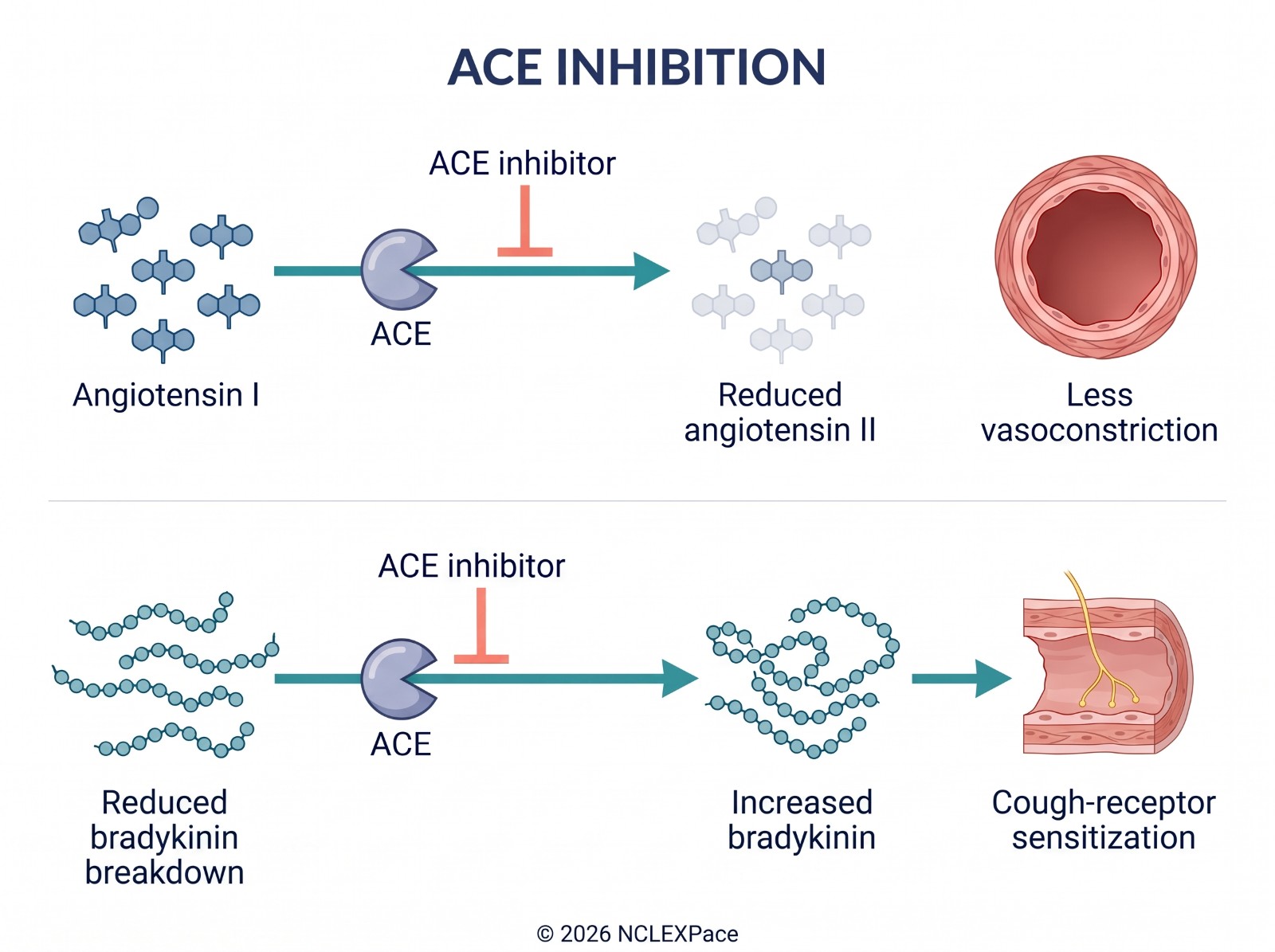
What they do: relax blood vessels and lower blood pressure, protect the kidneys in diabetes, and help in heart failure. Three things to know:
- Dry, persistent cough. Very common, annoying but not dangerous. The provider may switch a bothered client to an ARB, which usually does not cause it.
- High potassium. These drugs keep potassium in. Monitor levels and teach clients to avoid salt substitutes, which are usually potassium-based.
- Angioedema. Swelling of the face, lips, tongue or throat — an airway emergency. Stop the drug and get help immediately.
Also watch for first-dose hypotension, monitor kidney function, and remember these are not safe in pregnancy. ARBs work similarly but usually without the cough — same potassium and pregnancy cautions.
Nitrates (nitroglycerin)
What they do: widen blood vessels, reduce the heart's workload and relieve chest pain. The sublingual teaching is a classic exam item:
- Sit or lie down first — it can cause a big drop in blood pressure and fainting.
- Place one tablet under the tongue and let it dissolve. Do not swallow it.
- If pain is not relieved after 5 minutes, call emergency services, then a second tablet may be taken — up to 3 tablets, 5 minutes apart.
Current guidance emphasises calling emergency services after the first dose fails rather than waiting through all three. Follow the instruction given in the question and your facility's teaching.
- Headache is very common and expected — treat with acetaminophen; teach this so the client does not stop the drug.
- Store tablets in the original dark glass container, away from light and heat.
- Never with erectile dysfunction drugs (sildenafil and similar) — the combination can cause a fatal drop in blood pressure. Heavily tested.
- Patches: remove the old one before applying a new one, rotate sites, and allow a nitrate-free period as ordered to prevent tolerance.
Where beta blockers fit
Beta blockers (-olol) belong to the same cardiac picture — check heart rate and blood pressure before each dose, never stop them abruptly, and remember they mask the warning signs of low blood sugar.
Quick comparison
| Drug | Check first | Main teaching |
|---|---|---|
| Digoxin | Apical pulse 1 minute, potassium | Report yellow-green halos, nausea |
| ACE inhibitor | Blood pressure, potassium, kidney function | Dry cough is common; report facial swelling |
| Nitroglycerin | Blood pressure | Sit down; never with ED drugs |
NCLEX tip: When digoxin and a diuretic appear in the same stem, check the potassium before you do anything else — a low potassium turns a therapeutic digoxin level into a toxic one, and that is usually the whole point of the question.
Educational use only: therapeutic ranges, hold parameters and nitroglycerin teaching protocols vary. Check a current drug reference and follow the prescriber's parameters.
5 NCLEX practice questions on this topic
The same questions, player and partial-credit scoring students use inside NCLEXPace: answer, submit, read the full rationale, then Next. Your score is waiting at the end. No account needed for these.
A free account opens 20 more questions, a case study, a video and a cheat sheet. The full bank has 3,200+ questions with rationales, by topic.
Practice more, free →Ready for the full bank? See NCLEXPace plans and prices: one payment for 1, 2, 3 or 6 months.
Frequently asked questions
Common follow-up questions on Pharmacology.
What must the nurse check before giving digoxin?
The apical pulse for a full minute. The dose is held and the provider notified if the pulse is under 60 in an adult, and the potassium is checked because a low potassium makes digoxin toxicity more likely even at a therapeutic level.
What are the signs of digoxin toxicity?
Nausea, vomiting and loss of appetite; visual changes, classically yellow or green halos around lights; confusion, especially in older adults; and a slow or irregular heart rate. The antidote is digoxin immune fab.
Why do ACE inhibitors cause a cough, and what else do they do?
The dry, persistent cough is a common and harmless effect; a bothered client may be switched to an ARB, which usually does not cause it. ACE inhibitors also raise potassium and can cause angioedema (facial, lip, tongue or throat swelling) which is an airway emergency.
How is sublingual nitroglycerin taken?
Sitting or lying down, because it can drop the blood pressure sharply. One tablet dissolves under the tongue; if pain persists after 5 minutes, emergency services are called and up to three tablets may be taken five minutes apart. It is never combined with erectile dysfunction drugs.
Why can't nitroglycerin be taken with erectile dysfunction drugs?
Both dilate blood vessels, and together they can cause a fatal drop in blood pressure. This interaction is heavily tested, and the teaching is absolute: the two are never combined.
Sources and references
- Burchum JR, Rosenthal LD. Lehne's Pharmacology for Nursing Care. 11th ed. Elsevier; 2022; Chapter: Drugs for Heart Failure.
- Burchum JR, Rosenthal LD. Lehne's Pharmacology for Nursing Care. 11th ed. Elsevier; 2022; Chapter: Drugs for Angina Pectoris.
- Heidenreich PA, et al. 2022 AHA/ACC/HFSA Guideline for the Management of Heart Failure. Circulation. 2022;145(18):e895-e1032.
Reviewed by the NCLEXPace team, October 2026.
Keep reading



3,200+ NCLEX questions with think-like-a-nurse rationales, unfolding case studies and adaptive readiness exams. Start with free practice questions, then choose a plan when you are ready.
Create Free Account →