
Beta Blockers vs Calcium Channel Blockers on the NCLEX
Both lower blood pressure but through different routes, and their side effects separate them: beta blockers slow the heart rate and reduce contractility, so hold them for a pulse below 60 and use caution in asthma and diabetes; dihydropyridine calcium channel blockers dilate vessels, producing peripheral oedema, flushing, headache and reflex tachycardia.

Beta blockers and calcium channel blockers side by side with the other cardiovascular medications: what each slows, what each lowers, and what to check before giving them.
From the Intensive NCLEX Course. See the course; the full video library is part of Pro and Ultimate.
Beta blockers and calcium channel blockers both lower blood pressure, and several of them lower heart rate too. The NCLEX exploits that overlap constantly — so the useful knowledge is not what they have in common, but the handful of places they behave completely differently.
Step 1 — Different mechanisms, different consequences
| Beta blockers (-olol) | Calcium channel blockers | |
|---|---|---|
| How they work | Block beta receptors — heart beats slower and less forcefully | Block calcium entering muscle — vessels relax, and some slow the heart |
| Examples | Metoprolol, atenolol, propranolol, carvedilol | Amlodipine, nifedipine (vessel); verapamil, diltiazem (heart) |
| Signature side effects | Bradycardia, fatigue, dizziness, masked hypoglycemia | Peripheral edema, headache, flushing; constipation with verapamil |
| Big contraindication | Asthma — non-selective agents cause bronchospasm | Heart block, severe heart failure (verapamil, diltiazem) |
| Stopping them | Never abruptly — rebound tachycardia, angina, MI | Taper advisable, but far less dangerous |
Step 2 — The split inside calcium channel blockers
Treating CCBs as one class is what makes these questions confusing. There are two families that behave differently.
| Family | Drugs | Acts mainly on | Watch for |
|---|---|---|---|
| Dihydropyridines (-dipine) | Amlodipine, nifedipine, felodipine | Blood vessels | Ankle edema, flushing, headache, reflex tachycardia |
| Non-dihydropyridines | Verapamil, diltiazem | The heart | Bradycardia, heart block; verapamil causes constipation |
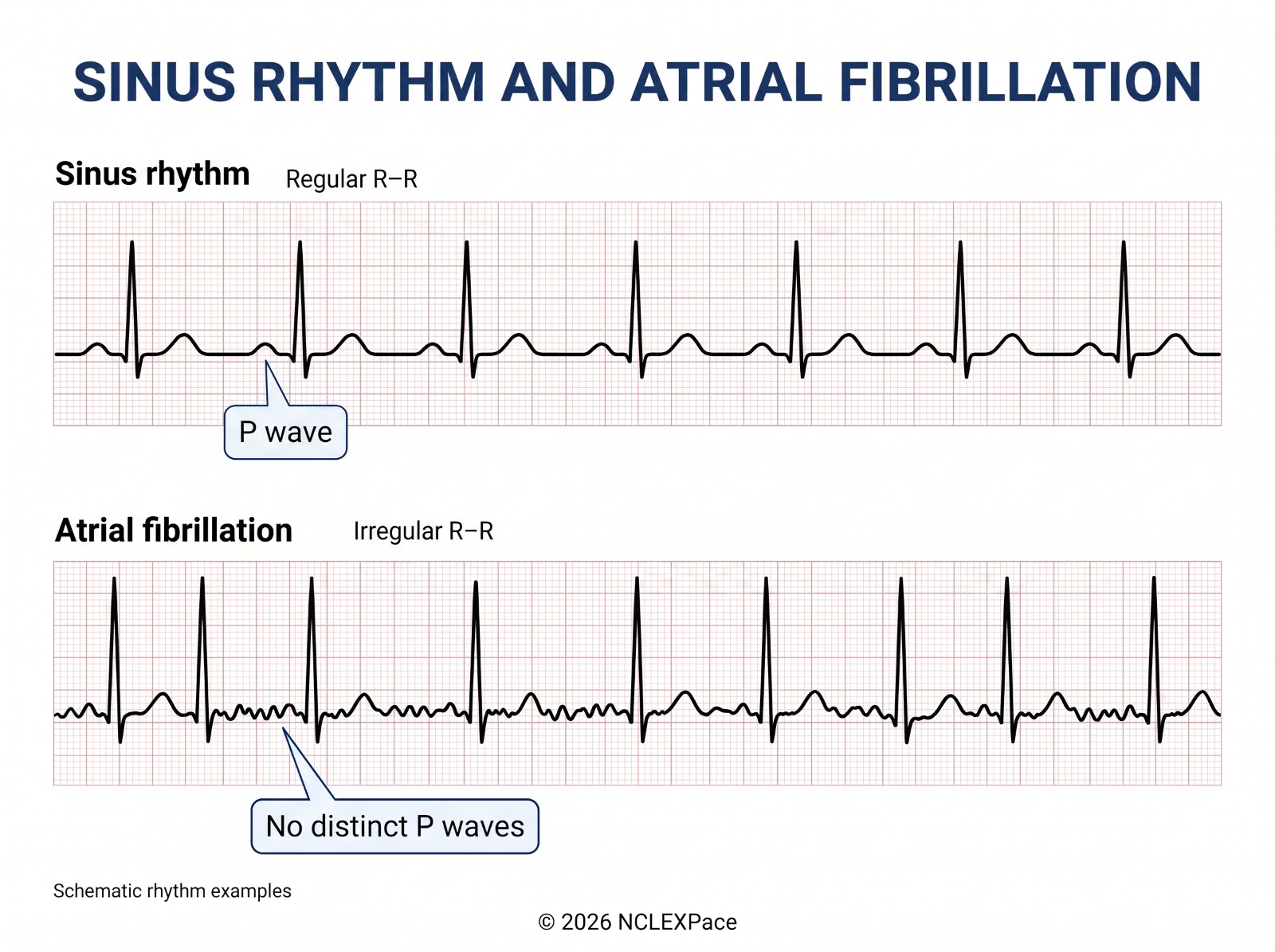
So "does this CCB slow the heart?" depends entirely on which family. Amlodipine may cause the heart rate to rise slightly; verapamil lowers it, which is why verapamil and diltiazem are used for rate control in atrial fibrillation and amlodipine is not.
Step 3 — The combination the exam wants you to catch
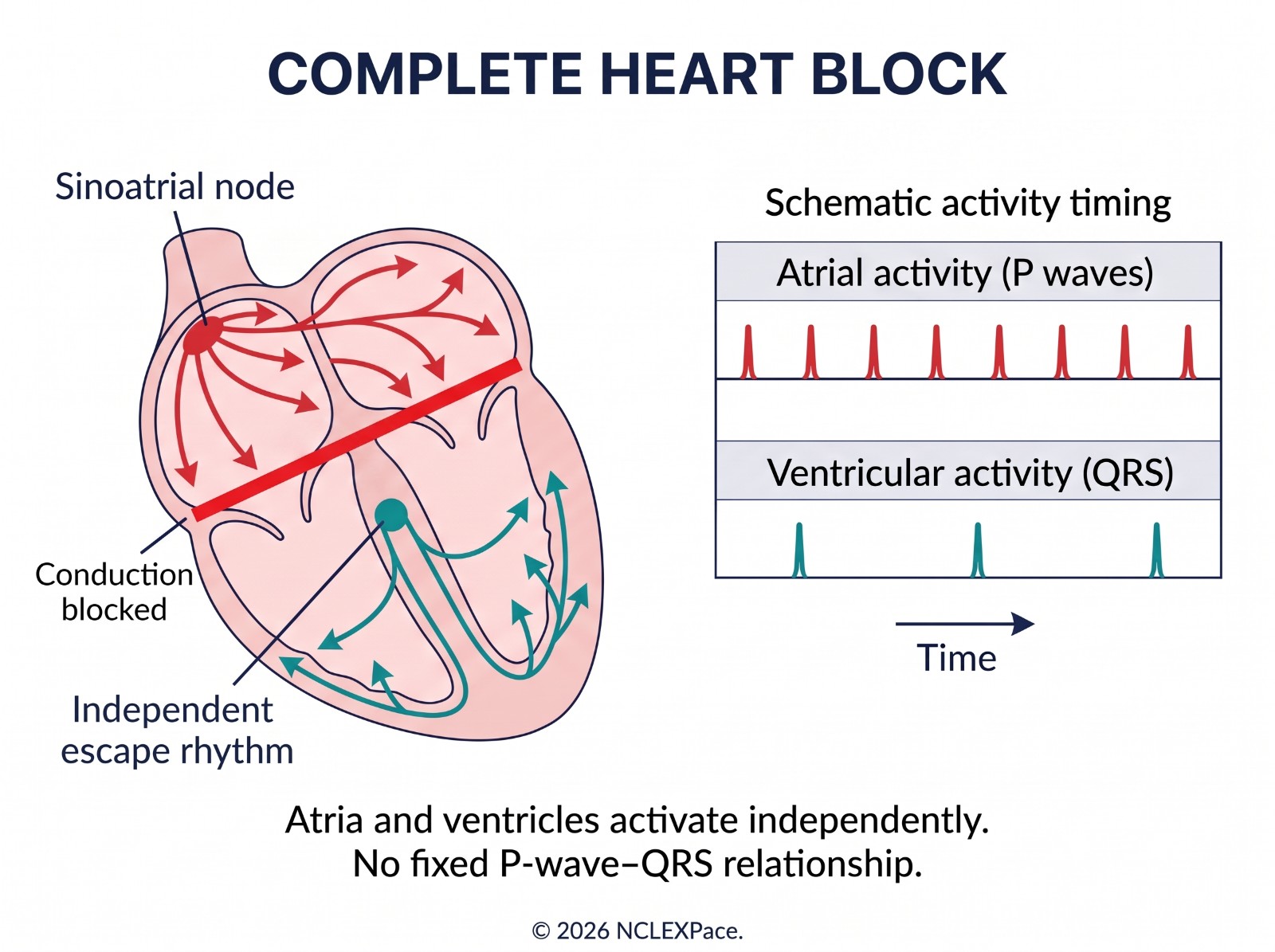
A beta blocker plus verapamil or diltiazem is the classic dangerous pairing. Both slow conduction through the AV node; together they can produce profound bradycardia or complete heart block. If a question shows a client on metoprolol and a new order for verapamil arrives, that order needs questioning.
A beta blocker with amlodipine is a common and reasonable combination — different families, different targets. The distinction matters.
Step 4 — The teaching points that get asked
| Situation | What the nurse does or teaches |
|---|---|
| Before any dose of either class | Check apical pulse for a full minute and blood pressure. Hold and report for HR under 60 or systolic under 90 unless parameters say otherwise |
| Client with diabetes on a beta blocker | Beta blockers mask tachycardia and tremor, the usual warnings of hypoglycemia. Sweating still occurs. Teach them to check glucose rather than wait to feel it |
| Client with asthma or COPD | Avoid non-selective beta blockers such as propranolol. Cardioselective agents like metoprolol are preferred when one is needed |
| Client reports swollen ankles on amlodipine | An expected side effect, not heart failure — but report it; it is dose-related and often manageable |
| Client wants to stop their metoprolol | Never stop abruptly. Rebound effects can precipitate angina or infarction. Must be tapered |
| Client on any CCB | Avoid grapefruit juice — it raises drug levels and the risk of hypotension |
| Either class | Rise slowly from sitting or lying. Orthostatic hypotension is a fall risk, especially in older adults |
Carvedilol and labetalol, briefly
Both block alpha as well as beta receptors, so they lower blood pressure more than a pure beta blocker and cause more orthostatic hypotension. Carvedilol is commonly used in heart failure — which surprises students, since beta blockers reduce contractility. The answer is that in chronic, stable heart failure they improve outcomes over time; in acute decompensated failure they are not started.
NCLEX tip: When a question involves a calcium channel blocker, identify the family before anything else. "-dipine" means vessels and ankle swelling; verapamil and diltiazem mean heart rate and heart block. Half the wrong answers in these items are true of the other family.
5 NCLEX practice questions on this topic
The same questions, player and partial-credit scoring students use inside NCLEXPace: answer, submit, read the full rationale, then Next. Your score is waiting at the end. No account needed for these.
A free account opens 20 more questions, a case study, a video and a cheat sheet. The full bank has 3,200+ questions with rationales, by topic.
Practice more, free →Ready for the full bank? See NCLEXPace plans and prices: one payment for 1, 2, 3 or 6 months.
Frequently asked questions
Common follow-up questions on Pharmacology.
When should a beta blocker be held?
Hold and notify the provider for an apical pulse below 60 beats per minute or systolic blood pressure below 90 mmHg, measuring the apical pulse for a full minute before each dose.
Why are beta blockers used cautiously in asthma and diabetes?
Non-selective beta blockers can cause bronchoconstriction in asthma, and all beta blockers mask the tachycardia and tremor that warn a diabetic client of hypoglycaemia: sweating remains as the one reliable warning sign.
Why must beta blockers never be stopped abruptly?
Abrupt withdrawal causes rebound tachycardia, severe hypertension, angina and can precipitate myocardial infarction. These drugs are tapered over one to two weeks under supervision.
What is the key teaching for calcium channel blockers?
Avoid grapefruit juice, which raises drug levels; change position slowly because of orthostatic hypotension; report ankle swelling, which is common with the -dipine drugs; and increase fibre and fluids for the constipation typical of verapamil.
Sources and references
- Burchum JR, Rosenthal LD. Lehne's Pharmacology for Nursing Care. 11th ed. Elsevier; 2022; Chapter: Adrenergic Antagonists.
- Burchum JR, Rosenthal LD. Lehne's Pharmacology for Nursing Care. 11th ed. Elsevier; 2022; Chapter: Calcium Channel Blockers.
Reviewed by the NCLEXPace team, October 2026.
Keep reading


3,200+ NCLEX questions with think-like-a-nurse rationales, unfolding case studies and adaptive readiness exams. Start with free practice questions, then choose a plan when you are ready.
Create Free Account →