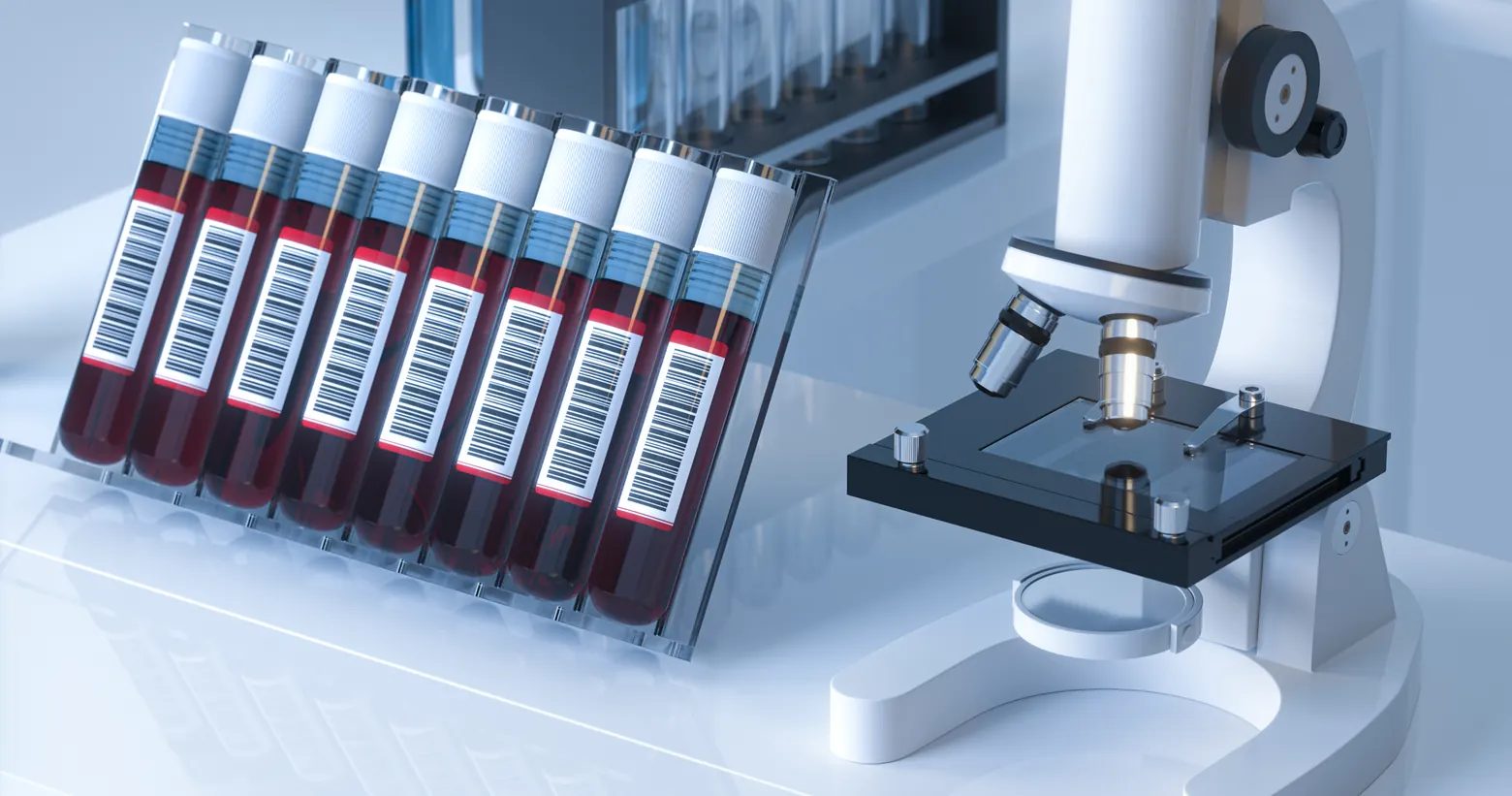
ABG Interpretation in Four Steps (the ROME Method)
An arterial blood gas is a procedure, not a memory problem: look at the pH, then the CO2, then the bicarbonate, then decide which value matches the pH, because whichever one points the same way as the pH is the cause and the other, if abnormal, is compensation. ROME captures step four, Respiratory Opposite and Metabolic Equal, so a respiratory problem moves pH and CO2 in opposite directions while a metabolic problem moves pH and bicarbonate in the same direction.

ABGs explained step by step: the three numbers, the four steps, compensation and the causes.
From the Intensive NCLEX Course. See the course; the full video library is part of Pro and Ultimate.
Arterial blood gases look like a memory problem and are actually a procedure. Learn the four steps and you can read any gas the NCLEX gives you without recognising it.
The three numbers you need
| Value | Normal | Controlled by |
|---|---|---|
| pH | 7.35–7.45 | The overall verdict |
| PaCO₂ | 35–45 mm Hg | The lungs — respiratory |
| HCO₃⁻ | 22–26 mEq/L | The kidneys — metabolic |
The four steps
1. Look at pH. Under 7.35 is acidosis. Over 7.45 is alkalosis. Inside the range, either normal or fully compensated.
2. Look at CO₂. Over 45 is acidic, under 35 is alkaline.
3. Look at bicarbonate. Under 22 is acidic, over 26 is alkaline.
4. Decide which one matches the pH. Whichever value points the same way as the pH is the cause. The other one, if abnormal, is compensation.
ROME, for step 4
Respiratory Opposite — with a respiratory problem, pH and CO₂ move in opposite directions.
Metabolic Equal — with a metabolic problem, pH and bicarbonate move in the same direction.
| pH | CO₂ | HCO₃⁻ | Answer |
|---|---|---|---|
| ↑ 58 | 24 | Respiratory acidosis — opposite directions | |
| ↑ 7.52 | ↓ 28 | 24 | Respiratory alkalosis |
| ↓ 7.28 | 38 | ↓ 16 | Metabolic acidosis — same direction |
| ↑ 7.50 | 40 | ↑ 32 | Metabolic alkalosis |
Compensation, and the words for it
| Term | What you see |
|---|---|
| Uncompensated | pH abnormal, only one system abnormal — the body has not responded yet |
| Partially compensated | pH still abnormal, but both values abnormal — the response has started and is not enough |
| Fully compensated | pH back inside the range, both values still abnormal |
With a fully compensated gas, decide the original problem by which side of 7.40 the pH sits. A pH of 7.37 with a high CO₂ and a high bicarbonate is compensated respiratory acidosis — the pH is on the acidic side of centre, so acidosis was the problem and the kidneys fixed it.
Timing helps too: the lungs compensate in minutes, the kidneys take days. So a metabolic problem with respiratory compensation happens fast; a respiratory problem with renal compensation means it has been going on a while.
What causes each
| Disturbance | Common causes |
|---|---|
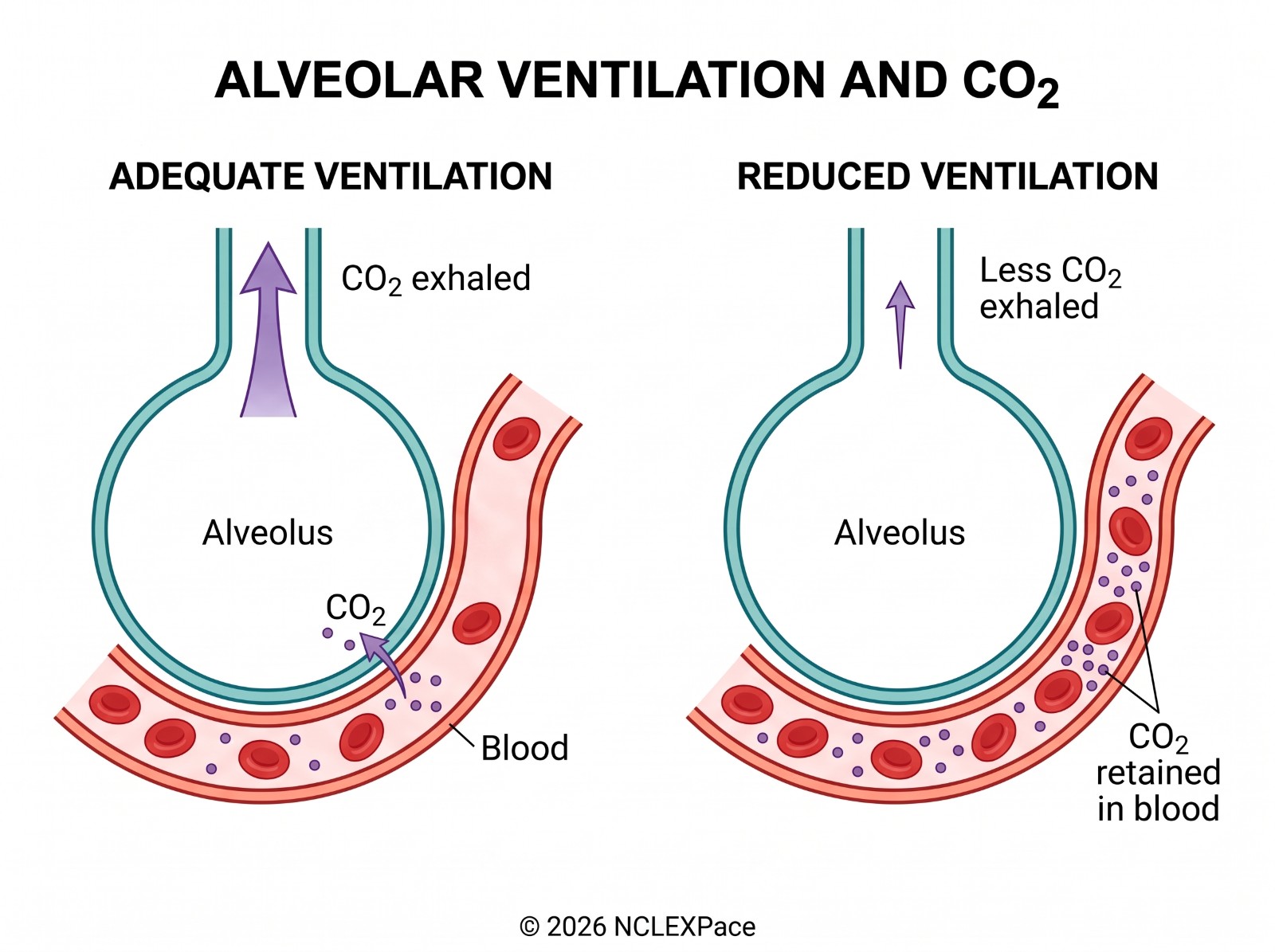
| Respiratory acidosis | Anything that stops you blowing off CO₂: COPD, opioid overdose, respiratory depression, atelectasis, airway obstruction |
| Respiratory alkalosis | Blowing off too much: anxiety and hyperventilation, pain, fever, early sepsis, high altitude |
| Metabolic acidosis | DKA, renal failure, lactic acidosis from shock, severe diarrhea (losing bicarbonate) |
| Metabolic alkalosis | Vomiting and NG suction (losing acid), excess antacids, diuretics |
The pair worth memorising: vomiting causes alkalosis, diarrhea causes acidosis. Stomach contents are acid, so losing them leaves you alkaline; intestinal contents are alkaline, so losing them leaves you acidic.
Work one
pH 7.30, PaCO₂ 34, HCO₃⁻ 17. A client with a two-day history of diarrhea.
pH is low — acidosis. CO₂ is low, which is alkaline, so it is not the cause. Bicarbonate is low, which is acidic and matches the pH. Metabolic acidosis, partially compensated — the low CO₂ is the lungs blowing off acid to help, and it has not brought the pH back yet. The diarrhea fits.
NCLEX tip: Do the steps in order and do not skip to pattern-matching. Students who try to recognise gases at a glance get the compensated ones wrong, because a normal pH looks reassuring when both other values are badly abnormal.
5 NCLEX practice questions on this topic
The same questions, player and partial-credit scoring students use inside NCLEXPace: answer, submit, read the full rationale, then Next. Your score is waiting at the end. No account needed for these.
A free account opens 20 more questions, a case study, a video and a cheat sheet. The full bank has 3,200+ questions with rationales, by topic.
Practice more, free →Ready for the full bank? See NCLEXPace plans and prices: one payment for 1, 2, 3 or 6 months.
Frequently asked questions
Common follow-up questions on Labs, Values & Diagnostics.
What are the four steps to read any ABG?
First look at the pH: under 7.35 is acidosis, over 7.45 is alkalosis. Second, look at CO2: over 45 is acidic, under 35 is alkaline. Third, look at bicarbonate: under 22 is acidic, over 26 is alkaline. Fourth, decide which value matches the pH, because that one is the cause and the other, if abnormal, is compensation.
What does ROME stand for?
ROME is Respiratory Opposite, Metabolic Equal. With a respiratory problem, the pH and CO2 move in opposite directions. With a metabolic problem, the pH and bicarbonate move in the same direction. It is the tool for step four, deciding which disturbance you are looking at.
How do I tell uncompensated from partially or fully compensated?
Uncompensated means the pH is abnormal and only one system is abnormal. Partially compensated means the pH is still abnormal but both values are abnormal, so the response has started and is not enough. Fully compensated means the pH is back inside the range while both values remain abnormal. With a fully compensated gas, decide the original problem by which side of 7.40 the pH sits.
What causes each of the four disturbances?
Respiratory acidosis comes from anything that stops you blowing off CO2, such as COPD or opioid overdose; respiratory alkalosis from blowing off too much, such as anxiety and hyperventilation. Metabolic acidosis comes from DKA, renal failure, lactic acidosis, or severe diarrhea, while metabolic alkalosis comes from vomiting, NG suction, excess antacids, or diuretics. The pair worth memorising is that vomiting causes alkalosis and diarrhea causes acidosis.
How fast does compensation happen?
The lungs compensate in minutes and the kidneys take days. So a metabolic problem with respiratory compensation happens fast, while a respiratory problem with renal compensation means it has been going on a while. Timing therefore helps you judge how long a disturbance has been present.
Sources and references
- Harding MM, Kwong J, Hagler D, Reinisch C. Lewis's Medical-Surgical Nursing: Assessment and Management of Clinical Problems. 12th ed. Elsevier; 2023; Chapter: Fluid, Electrolyte, and Acid-Base Imbalances.
- Pagana KD, Pagana TJ, Pagana TN. Mosby's Diagnostic and Laboratory Test Reference. 16th ed. Elsevier; 2023.
Reviewed by the NCLEXPace team, October 2026.
Keep reading


3,200+ NCLEX questions with think-like-a-nurse rationales, unfolding case studies and adaptive readiness exams. Start with free practice questions, then choose a plan when you are ready.
Create Free Account →