Sepsis: Recognize the Pattern and Act Fast
Sepsis is infection plus organ dysfunction, and it does not require a fever. Confusion, a rising respiratory rate, tachycardia, falling urine output or cool mottled skin in a patient with infection are enough to escalate. Hypotension is a late sign: do not wait for it.

Sepsis and septic shock: recognising infection plus organ dysfunction, cultures before antibiotics, fluids, lactate and vasopressors.
From the Intensive NCLEX Course. This lesson is a free sample: watch it with a free account.
Sepsis is the body’s extreme response to infection and a life-threatening medical emergency. It may begin with pneumonia, a urinary infection, an abdominal infection, a skin infection, or another source. The nurse’s advantage is proximity: repeated assessments can reveal deterioration before a single laboratory value tells the whole story.
Think infection plus organ dysfunction
A fever can support suspicion, but sepsis does not require fever. What matters is infection paired with any sign that an organ is starting to fail. Older adults and immunocompromised patients may have muted or atypical presentations — they can look “a little off” rather than dramatically ill.
| Finding | Early or late? | What it tells you |
|---|---|---|
| New confusion or restlessness | Early | The brain is under-perfused — often the first organ to signal |
| Rising respiratory rate | Early | The body compensating for acidosis and poor perfusion |
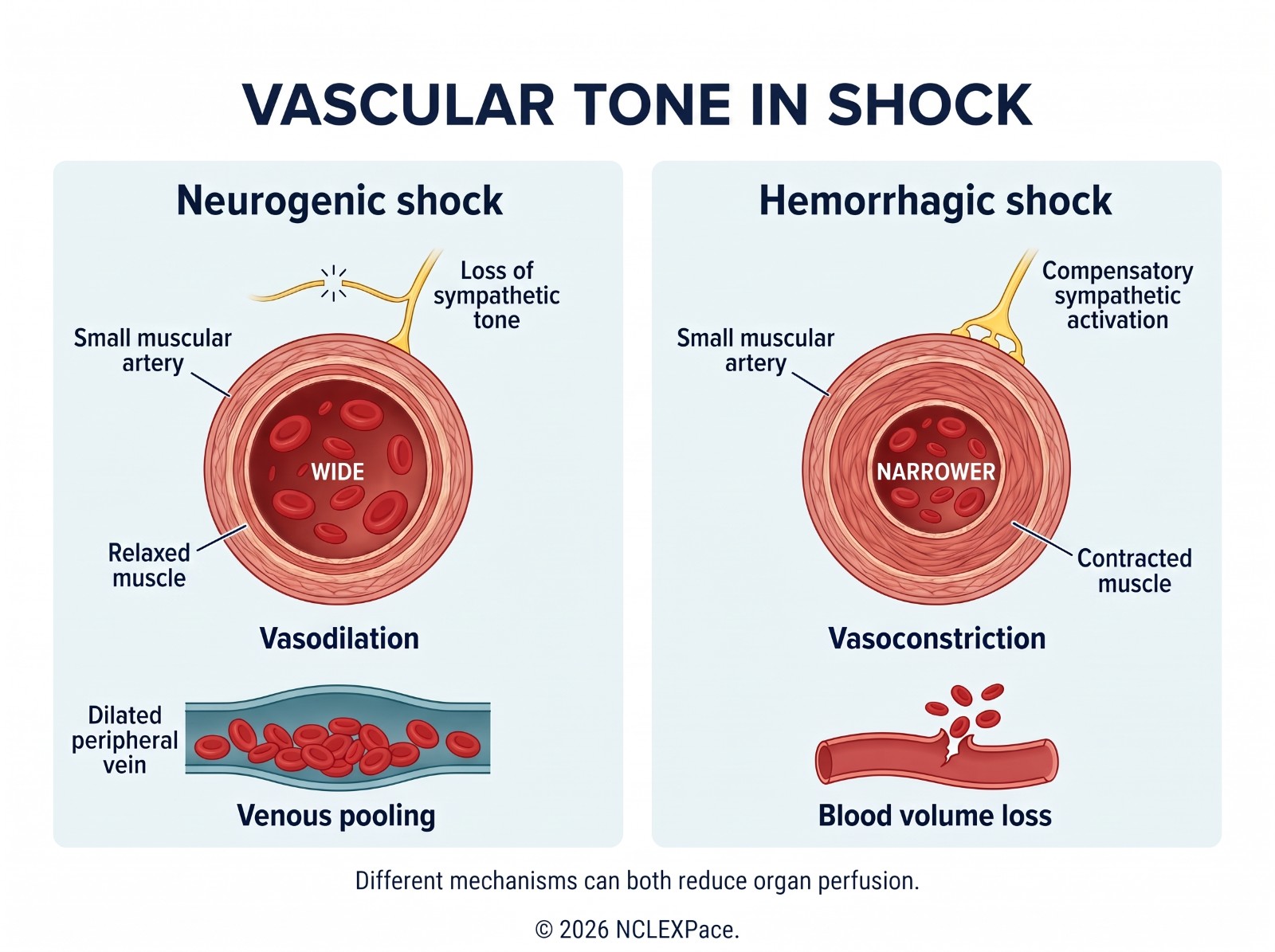
| Tachycardia | Early | Compensation — cardiac output chasing falling vascular tone |
| Falling urine output | Early | The kidneys are being sacrificed to protect core perfusion |
| Cool, mottled skin · rising O₂ needs | Early | Peripheral shutdown and worsening gas exchange |
| Hypotension | Late | Compensation has failed — do not wait for this to escalate |
The nurse’s first priorities
Recognise the change, perform a focused assessment, obtain complete vital signs, escalate immediately according to facility policy, and prepare for urgent diagnostic and treatment steps. These may include blood cultures and other specimens, lactate measurement, antimicrobial therapy, oxygen support, IV access, fluids when indicated, source-control evaluation, and frequent reassessment.
Cultures can help identify the organism, but urgent treatment should not be unnecessarily delayed in a patient with suspected sepsis. The exact timing, fluid volume, antibiotic choice, and escalation pathway belong to the prescriber and the organisation’s current protocol.
Reassessment is part of treatment
A fluid bolus is not the end of the intervention. Reassess blood pressure, perfusion, mental status, lung sounds, oxygenation, urine output, and overall trajectory. A patient may need additional support — or may develop signs that further fluid is unsafe. Trend data matter more than an isolated normal value.
Common NCLEX trap
Do not wait for shock. Hypotension can be a late finding. When infection is paired with acute confusion, tachypnoea, oliguria, or another sign of organ dysfunction, escalation outranks routine tasks.
Sources and further reading
- CDC. About Sepsis. https://www.cdc.gov/sepsis/about/index.html
- CDC. Caring for Patients with Sepsis. https://www.cdc.gov/sepsis/hcp/clinical-care/index.html
Educational use only: this article supports nursing review and does not replace clinical judgment, facility protocols, or instructions from an authorised prescriber.
NCLEX tip: Sepsis questions reward early recognition, rapid escalation, timely treatment, and repeated evaluation. A normal temperature does not rule out sepsis.
5 NCLEX practice questions on this topic
The same questions, player and partial-credit scoring students use inside NCLEXPace: answer, submit, read the full rationale, then Next. Your score is waiting at the end. No account needed for these.
A free account opens 20 more questions, a case study, a video and a cheat sheet. The full bank has 3,200+ questions with rationales, by topic.
Practice more, free →Ready for the full bank? See NCLEXPace plans and prices: one payment for 1, 2, 3 or 6 months.
Frequently asked questions
Common follow-up questions on Body Systems & Clinical Content.
Does sepsis always cause a fever?
No. A fever supports suspicion but sepsis does not require one, and older adults or immunocompromised patients may present with a normal or even low temperature. Infection paired with any sign of organ dysfunction (confusion, tachypnoea, oliguria, mottled skin) is enough to escalate.
What should the nurse do first when sepsis is suspected?
Recognise the change, complete a focused assessment with full vital signs, and escalate immediately per facility policy. Then prepare for the urgent bundle: cultures, lactate, antimicrobials, oxygen, IV access and fluids as prescribed, cultures help identify the organism, but treatment must not be unnecessarily delayed waiting for them.
Why is hypotension considered a late sign of sepsis?
Because the body compensates first: heart rate and respiratory rate climb and blood is shunted away from skin, gut and kidneys to hold the blood pressure up. By the time pressure falls, compensation has failed. NCLEX questions reward escalating on the early pattern, not waiting for shock.
Sources and references
- Harding MM, Kwong J, Hagler D, Reinisch C. Lewis's Medical-Surgical Nursing: Assessment and Management of Clinical Problems. 12th ed. Elsevier; 2023; Chapter: Shock, Sepsis, and Multiple Organ Dysfunction Syndrome.
- Evans L, et al. Surviving Sepsis Campaign: International Guidelines for Management of Sepsis and Septic Shock 2021. Critical Care Medicine. 2021;49(11):e1063-e1143.
Reviewed by the NCLEXPace team, October 2026.
Keep reading


3,200+ NCLEX questions with think-like-a-nurse rationales, unfolding case studies and adaptive readiness exams. Start with free practice questions, then choose a plan when you are ready.
Create Free Account →