
COPD vs Asthma on the NCLEX (and Why Oxygen Orders Differ)
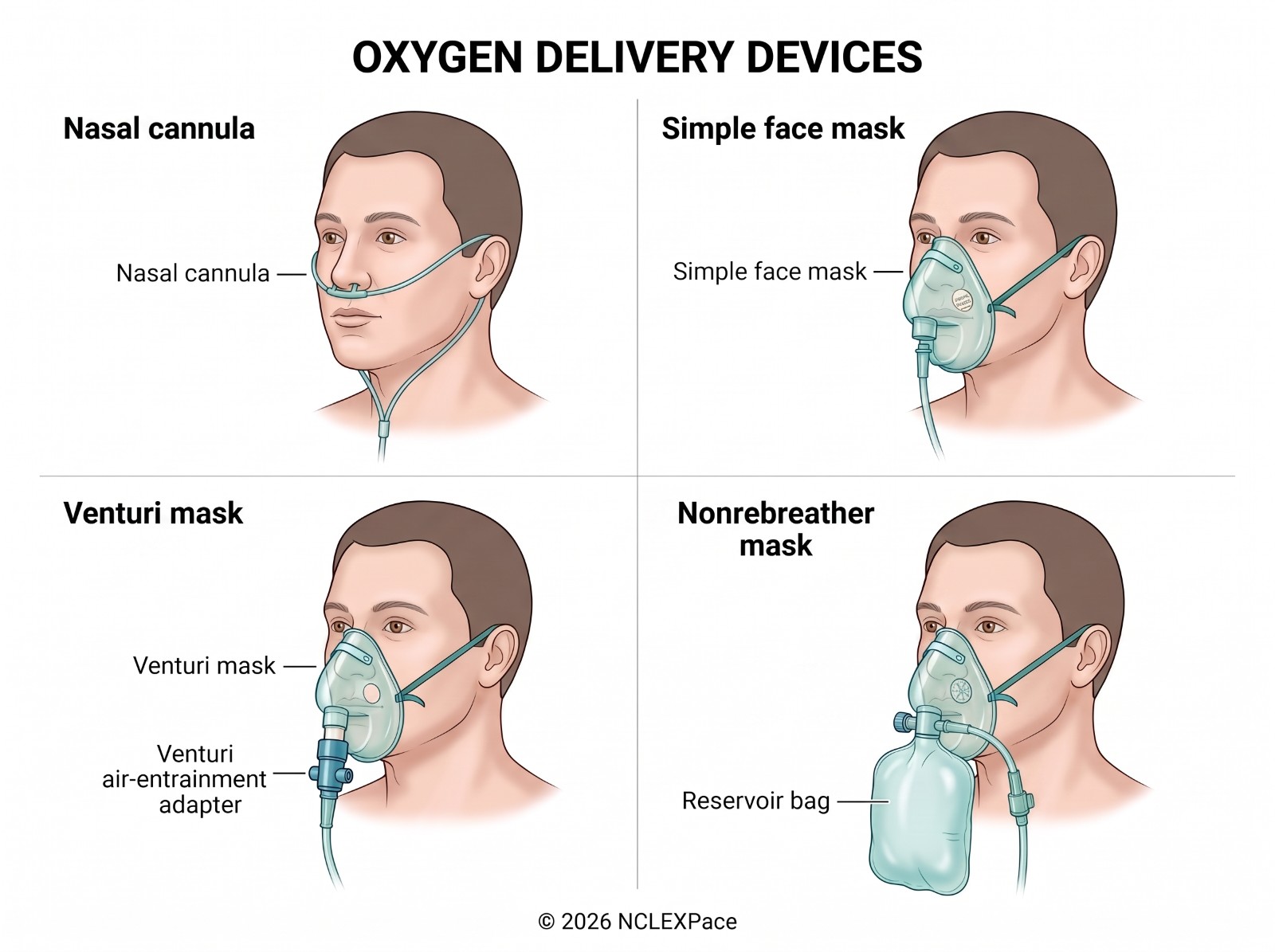
COPD and asthma both narrow the airway and cause wheeze, but the exam separates them on reversibility (asthma is reversible, COPD is not fully reversible) and then tests the consequences. The biggest consequence is that a COPD client's oxygen target is deliberately lower at 88 to 92 percent, because their drive to breathe depends on a low oxygen level, so a saturation of 90 percent is acceptable rather than an emergency.

COPD: the oxygen target and why it is lower, the inhaler order, pursed-lip breathing and the teaching that keeps clients out of hospital.
From the Intensive NCLEX Course. See the course; the full video library is part of Pro and Ultimate.
Both narrow the airway and both cause wheeze. The exam separates them on one idea — reversibility — and then tests the consequences, the biggest of which is that a COPD client's oxygen target is deliberately lower.
Step 1 — Side by side
| Feature | Asthma | COPD |
|---|---|---|
| Airway change | Reversible — bronchospasm and inflammation | Not fully reversible — structural damage |
| Typical age | Often childhood onset | Usually over 40, smoking history |
| Pattern | Episodic — well between attacks | Persistent, progressive |
| Trigger | Allergens, exercise, cold air, infection | Smoking, pollutants; infection causes exacerbation |
| Cough | Dry, often at night | Chronic and productive |
| Chest shape | Normal | Barrel chest, clubbing |
| Target SpO₂ | 94–98% | 88–92% — deliberately lower |
Step 2 — Why the oxygen target is lower in COPD
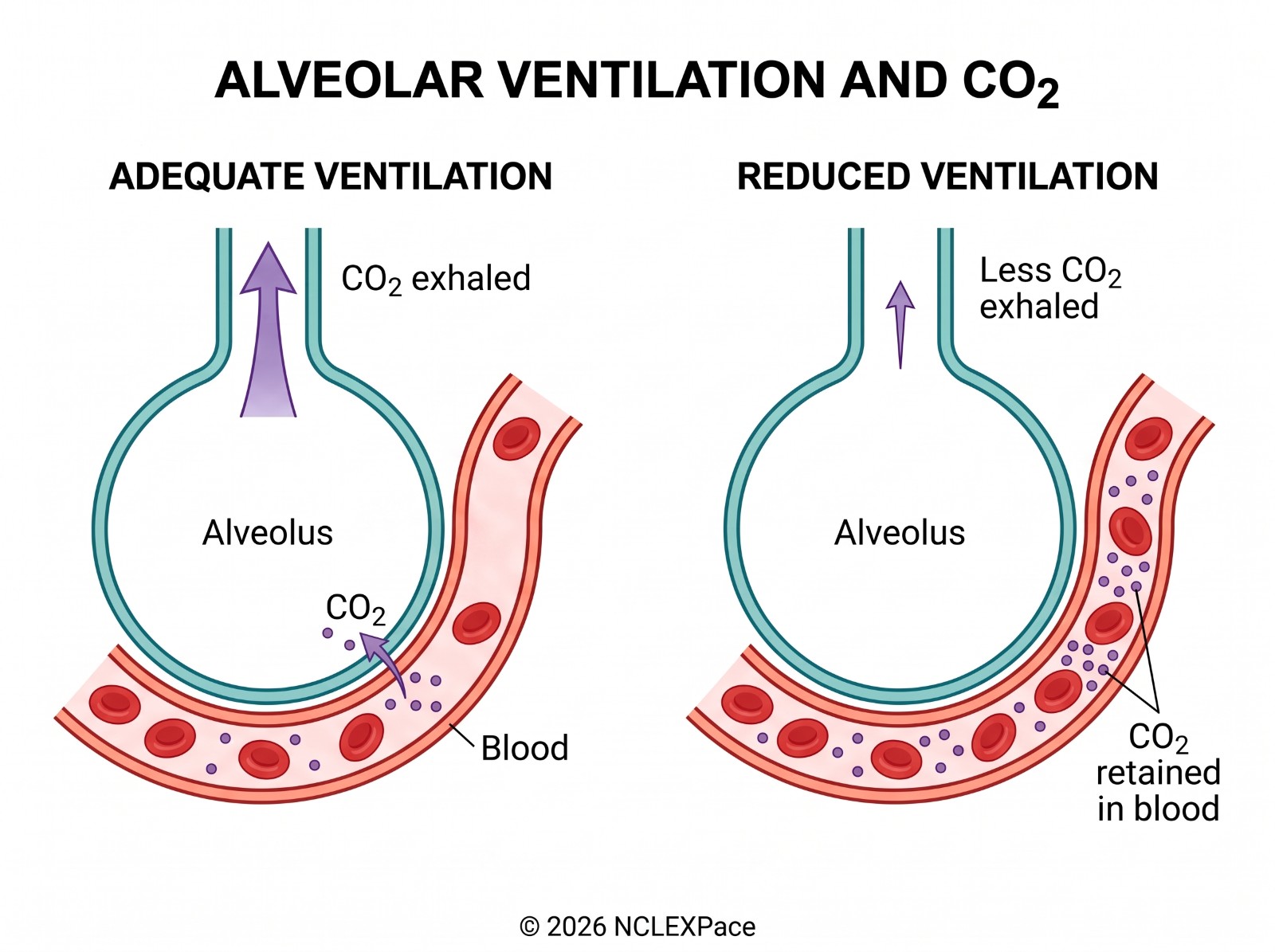
A person with long-standing COPD has adapted to a chronically high carbon dioxide level, and their drive to breathe now depends more on a low oxygen level than on rising CO₂. Give too much oxygen and you remove that drive — respiratory rate falls, CO₂ climbs, and the client becomes drowsy and then unresponsive.
This is why 88–92% is the target, and why an option offering high-flow oxygen to a COPD client with a saturation of 90% is wrong. A COPD saturation of 90% is acceptable. The exam includes that client to see whether you react to the number or understand it.
The finding that matters more than the saturation: a rising respiratory rate that then falls, with growing drowsiness. That is CO₂ retention, and it is an emergency.
Step 3 — Inhalers, and the order that gets asked
| Type | Examples | Role |
|---|---|---|
| Short-acting beta agonist | Albuterol | Rescue. Works in minutes. Expect tremor and tachycardia |
| Long-acting beta agonist | Salmeterol | Maintenance only — never for an acute attack |
| Anticholinergic | Ipratropium | Maintenance, especially COPD. Dry mouth |
| Inhaled corticosteroid | Fluticasone, budesonide | Maintenance. Rinse the mouth after — thrush |
Two teaching rules the exam repeats: when both are ordered, bronchodilator first, then the steroid five minutes later — the open airway lets the steroid reach further. And a client reaching for salmeterol during an attack is the wrong-drug question; salmeterol takes too long.
Step 4 — What the nurse does and teaches
| Intervention | Detail |
|---|---|
| Position | High Fowler's, or tripod — leaning forward on the arms. It gives the diaphragm room |
| Pursed-lip breathing (COPD) | Breathe in through the nose, out slowly through pursed lips. Keeps small airways open and prevents trapping |
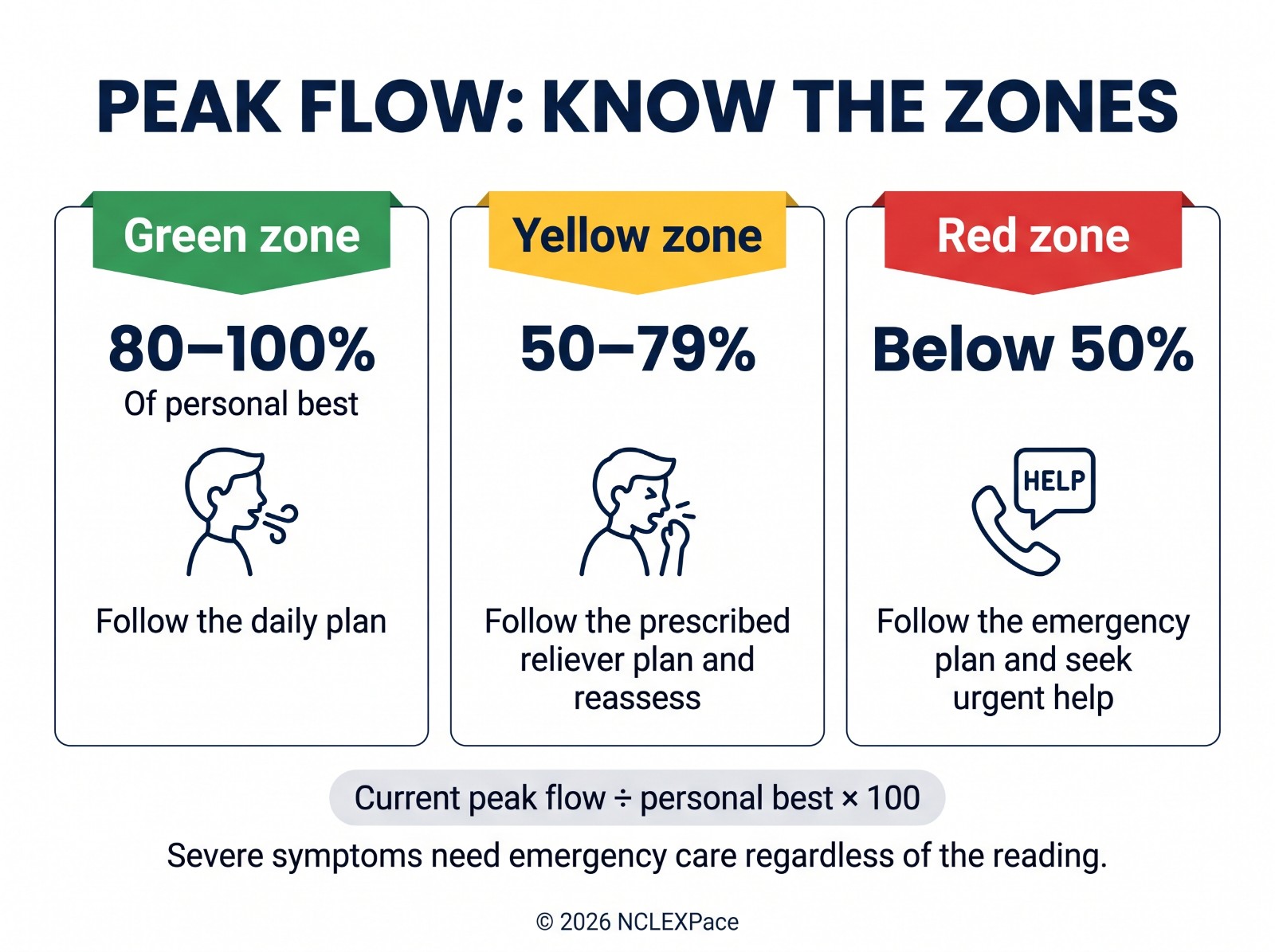
| Peak flow diary (asthma) | Best measure of control at home; a falling reading warns before symptoms do |
| Vaccination | Influenza annually and pneumococcal — infection is the commonest trigger of exacerbation |
| Nutrition (COPD) | Small frequent high-calorie meals. A full stomach pushes on the diaphragm; the work of breathing burns calories |
The silent chest
Worth committing to memory: in a severe asthma attack, the disappearance of wheeze is an emergency, not an improvement. Wheeze requires moving air. A silent chest means almost nothing is moving, and it precedes respiratory arrest.
NCLEX tip: When a question gives you a COPD client with a saturation in the high 80s or low 90s, that is usually the distractor, not the emergency. Look instead for the client whose respiratory rate is falling while drowsiness increases — that one is retaining CO₂.
5 NCLEX practice questions on this topic
The same questions, player and partial-credit scoring students use inside NCLEXPace: answer, submit, read the full rationale, then Next. Your score is waiting at the end. No account needed for these.
A free account opens 20 more questions, a case study, a video and a cheat sheet. The full bank has 3,200+ questions with rationales, by topic.
Practice more, free →Ready for the full bank? See NCLEXPace plans and prices: one payment for 1, 2, 3 or 6 months.
Frequently asked questions
Common follow-up questions on Body Systems & Clinical Content.
Why is the oxygen target lower in COPD?
A person with long-standing COPD has adapted to a chronically high carbon dioxide level, and their drive to breathe now depends more on a low oxygen level than on rising carbon dioxide. Give too much oxygen and you remove that drive, so the respiratory rate falls, carbon dioxide climbs, and the client becomes drowsy and then unresponsive. That is why 88 to 92 percent is the target and a saturation of 90 percent is acceptable.
What finding matters more than the saturation number?
A rising respiratory rate that then falls, with growing drowsiness. That is carbon dioxide retention, and it is an emergency. When a question gives a COPD client with a saturation in the high 80s or low 90s, that is usually the distractor, not the emergency.
What is the rule about inhaler order?
When both are ordered, give the bronchodilator first, then the steroid five minutes later, because the open airway lets the steroid reach further. Short-acting beta agonists such as albuterol are rescue inhalers, while long-acting agents such as salmeterol are maintenance only and never for an acute attack. A client reaching for salmeterol during an attack is the wrong-drug question, because it takes too long.
Why is a silent chest an emergency in asthma?
In a severe asthma attack, the disappearance of wheeze is an emergency, not an improvement. Wheeze requires moving air, so a silent chest means almost nothing is moving, and it precedes respiratory arrest. It is worth committing to memory.
What positioning and breathing techniques are taught?
Position the client in high Fowler's or the tripod position, leaning forward on the arms, which gives the diaphragm room. For COPD, teach pursed-lip breathing, in through the nose and out slowly through pursed lips, which keeps small airways open and prevents trapping. A peak flow diary is the best measure of asthma control at home, and a falling reading warns before symptoms do.
Sources and references
- Harding MM, Kwong J, Hagler D, Reinisch C. Lewis's Medical-Surgical Nursing: Assessment and Management of Clinical Problems. 12th ed. Elsevier; 2023; Chapter: Obstructive Pulmonary Diseases.
- Global Initiative for Chronic Obstructive Lung Disease. Global Strategy for the Diagnosis, Management, and Prevention of COPD: 2025 Report.
- Global Initiative for Asthma. Global Strategy for Asthma Management and Prevention, 2025 update.
Reviewed by the NCLEXPace team, October 2026.
Keep reading



3,200+ NCLEX questions with think-like-a-nurse rationales, unfolding case studies and adaptive readiness exams. Start with free practice questions, then choose a plan when you are ready.
Create Free Account →