
Endocrine Map: DKA vs. HHS, Addison’s vs. Cushing’s, Thyroid Emergencies
Most endocrine questions come down to telling two similar conditions apart. DKA has ketones and acidosis while HHS does not, though both are treated fluids first, then insulin, watching potassium closely; Addison's is too little cortisol and Cushing's is too much; and thyroid storm runs hot and fast while myxedema coma runs cold and slow.

Addison disease and adrenal crisis: the findings, the steroid rules, and pheochromocytoma for comparison.
From the Intensive NCLEX Course. See the course; the full video library is part of Pro and Ultimate.
Endocrine questions are mostly about telling two similar conditions apart. Here are the three pairs.
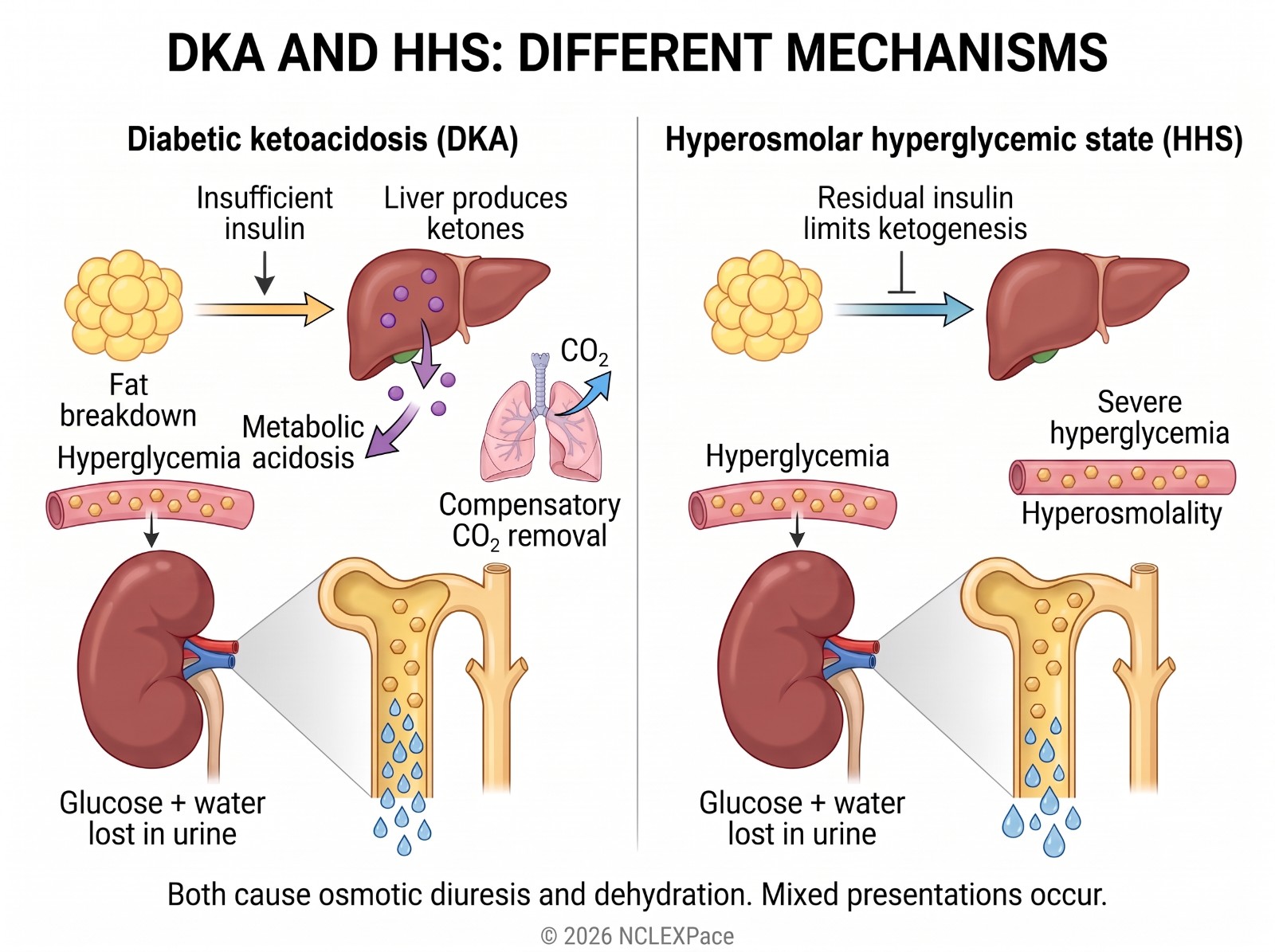
DKA vs. HHS
Both are diabetes emergencies with very high blood sugar. They are different.
| DKA | HHS | |
|---|---|---|
| Usually which diabetes | Type 1 | Type 2 |
| Blood sugar | Usually above 250 | Often very high, above 600 |
| Ketones | Yes | No significant ketones |
| Acidosis | Yes — pH low | No |
| Breathing | Deep, rapid (Kussmaul) | Normal |
| Breath smell | Fruity | Normal |
| Mental status | Alert to drowsy | Often very altered |
| Onset | Hours to a day | Days |
| Dehydration | Severe | Even more severe |
Memory aid: DKA has Ketones and Acidosis. HHS does not.
Treatment for both, in order:
- IV fluids first — the client is severely dehydrated and this is the priority
- Insulin — regular insulin by IV infusion
- Watch potassium closely
The potassium point is heavily tested. Insulin drives potassium into cells. The blood potassium can drop dangerously fast once insulin starts, even if it looked normal or high at the beginning.
Monitor potassium and cardiac rhythm throughout treatment.
Addison’s vs. Cushing’s
Both involve the adrenal glands and the hormone cortisol.
Addison’s = NOT ENOUGH. Cushing’s = TOO MUCH.
| Addison’s (too little) | Cushing’s (too much) | |
|---|---|---|
| Blood pressure | Low | High |
| Blood sugar | Low | High |
| Sodium | Low | High |
| Potassium | High | Low |
| Weight | Loss | Gain — moon face, buffalo hump, round trunk with thin arms and legs |
| Skin | Darkening (bronze) | Thin, bruises easily, purple stretch marks |
| Other | Fatigue, nausea, salt craving | Osteoporosis, poor healing, infection risk, mood changes |
Memory aid: Addison’s = Add hormones. Cushing’s = Cut them down.
Addisonian crisis — a sudden severe drop in cortisol. Very low blood pressure, severe weakness, confusion, shock. This is an emergency. Treatment is IV fluids and steroids.
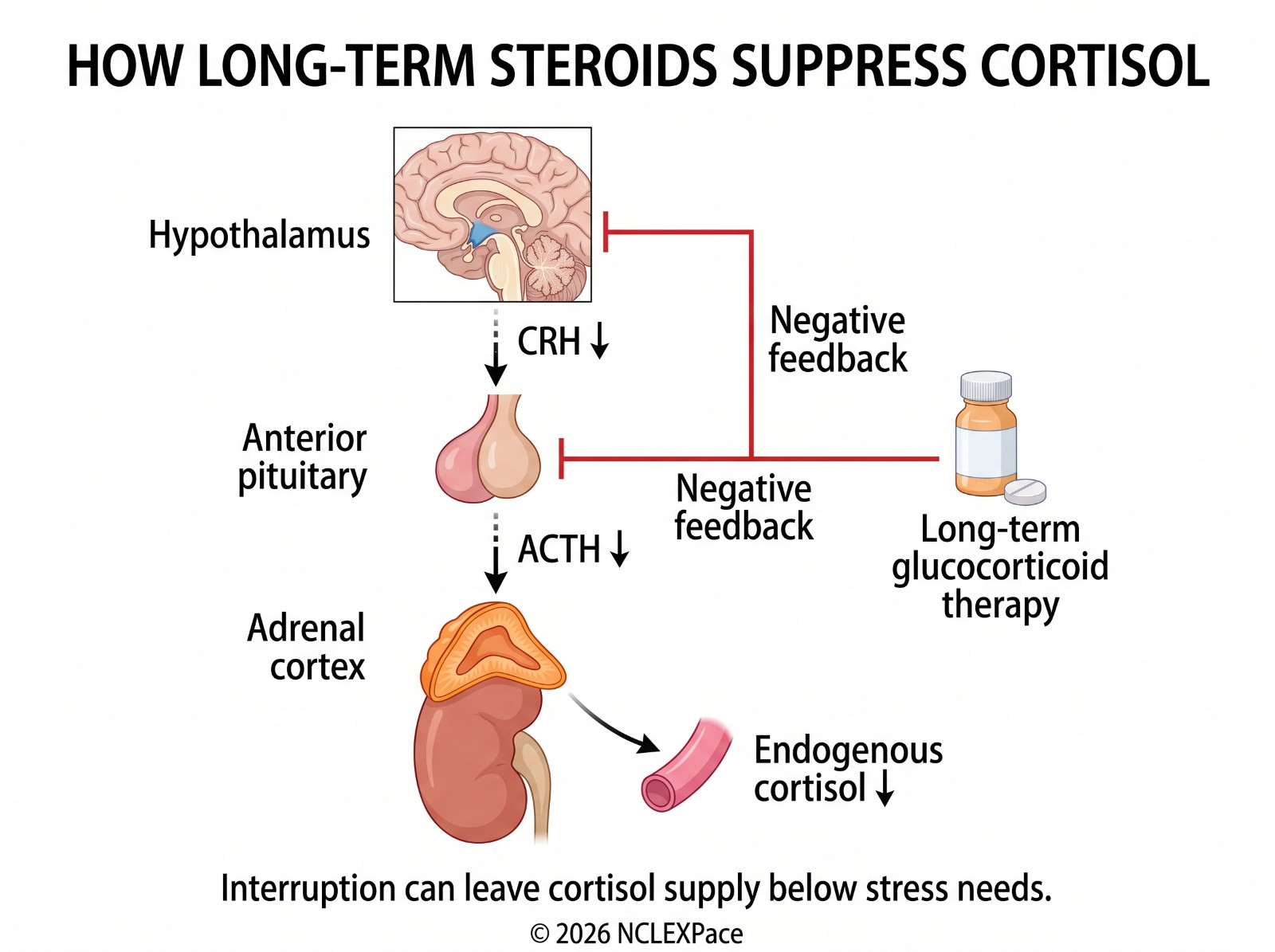
Teaching for Addison’s: never stop steroid medication suddenly, increase the dose during illness or stress as directed, carry emergency identification and emergency steroids.
Teaching for Cushing’s: infection prevention, fall and fracture prevention, monitor blood sugar, skin care.
Note: the most common cause of Cushing-like signs is taking steroid medication long term. So a client on long-term prednisone may show all of these features.
Thyroid emergencies
Hyperthyroid = everything speeds up. Hypothyroid = everything slows down.
| Hyperthyroid | Hypothyroid | |
|---|---|---|
| Heart rate | Fast | Slow |
| Weight | Loss despite eating | Gain |
| Temperature | Feels hot, sweats | Feels cold |
| Gut | Diarrhea | Constipation |
| Mood | Anxious, restless | Tired, depressed, slow |
| Skin | Warm, moist | Dry, coarse |
Thyroid storm — a severe, life-threatening flare of hyperthyroidism.
Signs: very high fever, very fast heart rate, agitation, confusion, possibly heart failure.
Emergency. Cool the client, monitor the heart, give medications as ordered, quiet environment.
Myxedema coma — severe hypothyroidism.
Signs: very low temperature, very slow heart rate, low blood pressure, reduced consciousness, slow breathing.
Emergency. Warm the client gradually, support breathing, give thyroid hormone as ordered.
After thyroid surgery — a heavily tested topic
Watch for three things:
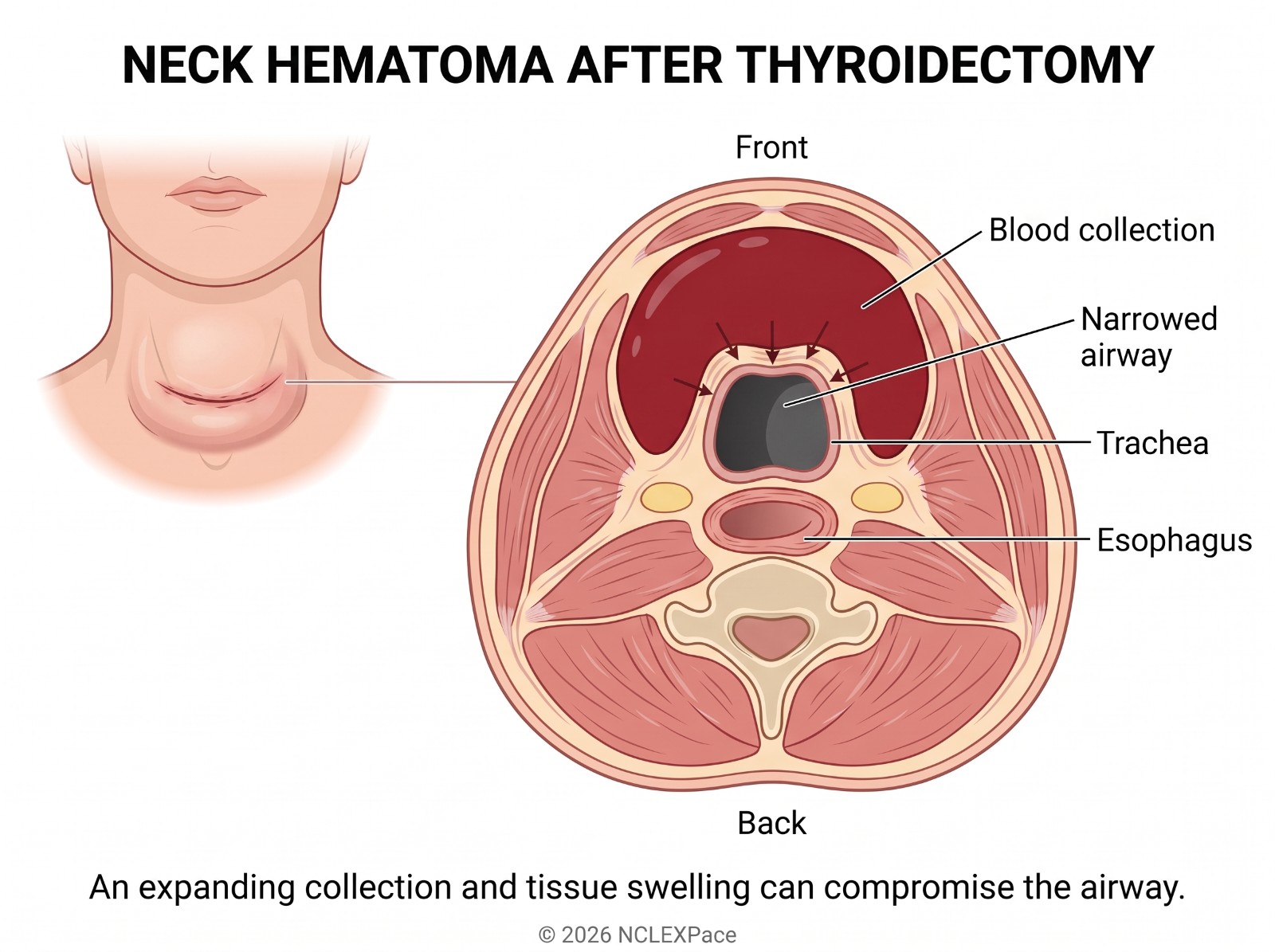
1. Airway problems. Swelling or bleeding in the neck can block the airway. Keep emergency airway equipment at the bedside. Check for difficulty breathing, a feeling of tightness, or noisy breathing.
2. Bleeding. Check behind the neck, not just the front — blood runs backward when the client lies down.
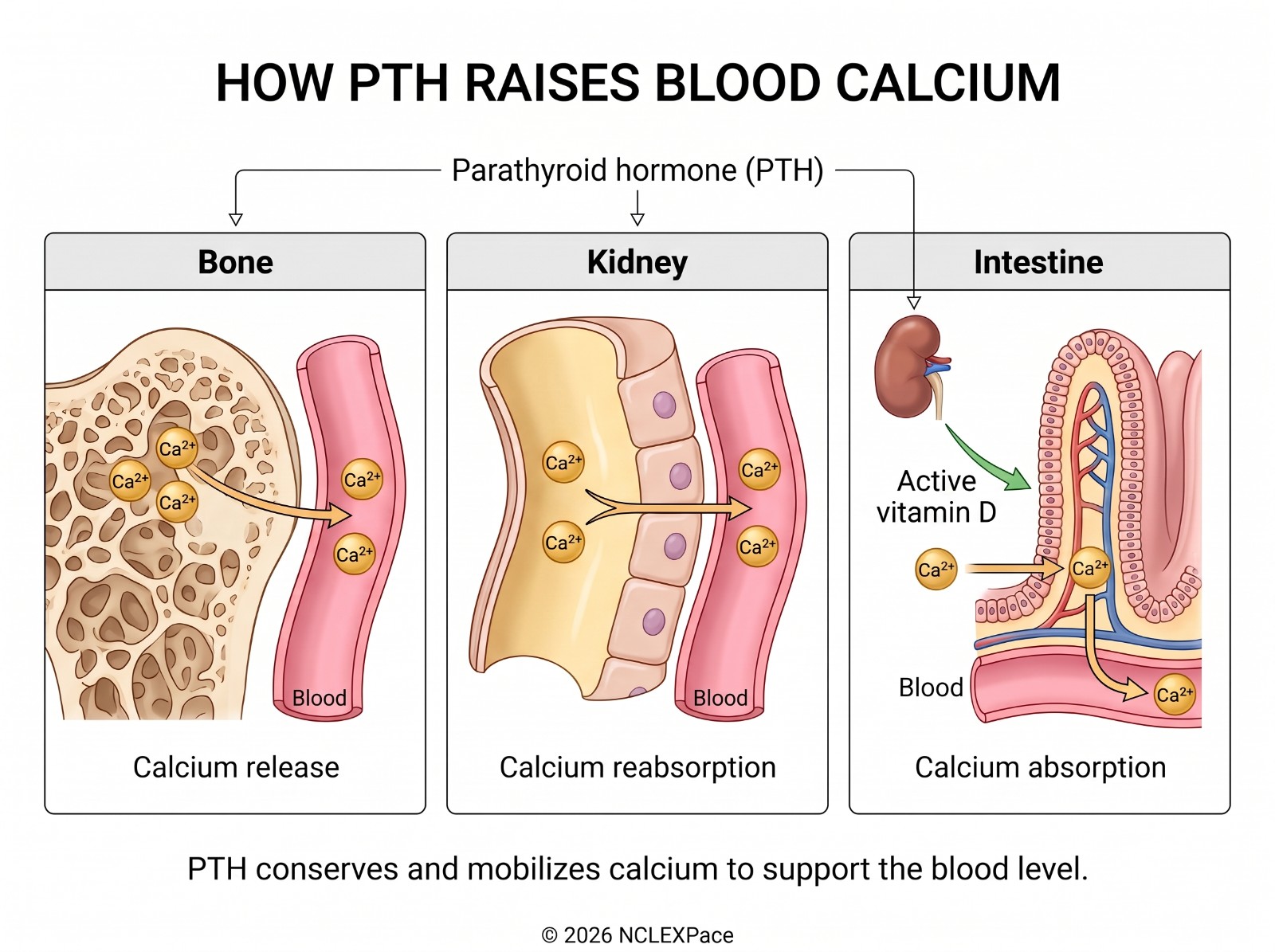
3. Low calcium. The parathyroid glands sit next to the thyroid and can be damaged. Low calcium causes tingling around the mouth and in the fingers, twitching, and muscle spasms. Keep calcium gluconate available.
Position: semi-Fowler’s with the neck supported. Avoid neck flexion and extension.
The short version
- DKA has ketones and acidosis. HHS does not. Both: fluids first, then insulin, watch potassium.
- Addison’s = not enough → low blood pressure, low sodium, high potassium, dark skin
- Cushing’s = too much → high blood pressure, high sugar, low potassium, moon face
- Thyroid storm = hot and fast. Myxedema coma = cold and slow.
- After thyroid surgery: airway, bleeding behind the neck, low calcium
Treatment protocols vary. Follow current clinical guidelines.
5 NCLEX practice questions on this topic
The same questions, player and partial-credit scoring students use inside NCLEXPace: answer, submit, read the full rationale, then Next. Your score is waiting at the end. No account needed for these.
A free account opens 20 more questions, a case study, a video and a cheat sheet. The full bank has 3,200+ questions with rationales, by topic.
Practice more, free →Ready for the full bank? See NCLEXPace plans and prices: one payment for 1, 2, 3 or 6 months.
Frequently asked questions
Common follow-up questions on Body Systems & Clinical Content.
How do you tell DKA from HHS?
Both are diabetes emergencies with very high blood sugar, but DKA has ketones and acidosis and HHS does not. DKA is usually type 1, with Kussmaul breathing and a fruity breath smell, while HHS is usually type 2, with blood sugar often above 600 and a very altered mental status. The memory aid is that DKA has Ketones and Acidosis.
Why is potassium watched so closely in DKA and HHS treatment?
Insulin drives potassium into the cells, so once insulin is started the blood potassium can drop dangerously fast, even if it looked normal or high at the beginning. This point is heavily tested. Monitor potassium and the cardiac rhythm throughout treatment.
What is the difference between Addison's and Cushing's?
Both involve the adrenal glands and cortisol: Addison's is not enough and Cushing's is too much. Addison's brings low blood pressure, low blood sugar, low sodium, high potassium, and darkening skin, while Cushing's brings high blood pressure, high sugar, high sodium, low potassium, moon face, and a buffalo hump. The memory aid is Addison's means add hormones and Cushing's means cut them down.
What is watched for after thyroid surgery?
Three things: airway problems from neck swelling or bleeding, bleeding checked behind the neck because blood runs backward when the client lies down, and low calcium because the nearby parathyroid glands can be damaged. Keep emergency airway equipment and calcium gluconate available, and position the client in semi-Fowler's with the neck supported. Low calcium causes tingling around the mouth and fingers, twitching, and muscle spasms.
What are thyroid storm and myxedema coma?
Thyroid storm is a severe, life-threatening flare of hyperthyroidism with very high fever, a very fast heart rate, agitation, and confusion; you cool the client, monitor the heart, give medications as ordered, and keep the environment quiet. Myxedema coma is severe hypothyroidism with very low temperature, a very slow heart rate, low blood pressure, and reduced consciousness; you warm the client gradually, support breathing, and give thyroid hormone as ordered. Both are emergencies.
Sources and references
- Harding MM, Kwong J, Hagler D, Reinisch C. Lewis's Medical-Surgical Nursing: Assessment and Management of Clinical Problems. 12th ed. Elsevier; 2023; Chapter: Diabetes.
- Harding MM, Kwong J, Hagler D, Reinisch C. Lewis's Medical-Surgical Nursing: Assessment and Management of Clinical Problems. 12th ed. Elsevier; 2023; Chapter: Endocrine Problems.
- Umpierrez GE, Davis GM, ElSayed NA, et al. Hyperglycemic Crises in Adults With Diabetes: A Consensus Report. Diabetes Care. 2024;47(8):1257-1275.
Reviewed by the NCLEXPace team, October 2026.
Keep reading



3,200+ NCLEX questions with think-like-a-nurse rationales, unfolding case studies and adaptive readiness exams. Start with free practice questions, then choose a plan when you are ready.
Create Free Account →