
GI and Liver Map: Cirrhosis, Pancreatitis, GI Bleeding, and Ostomies
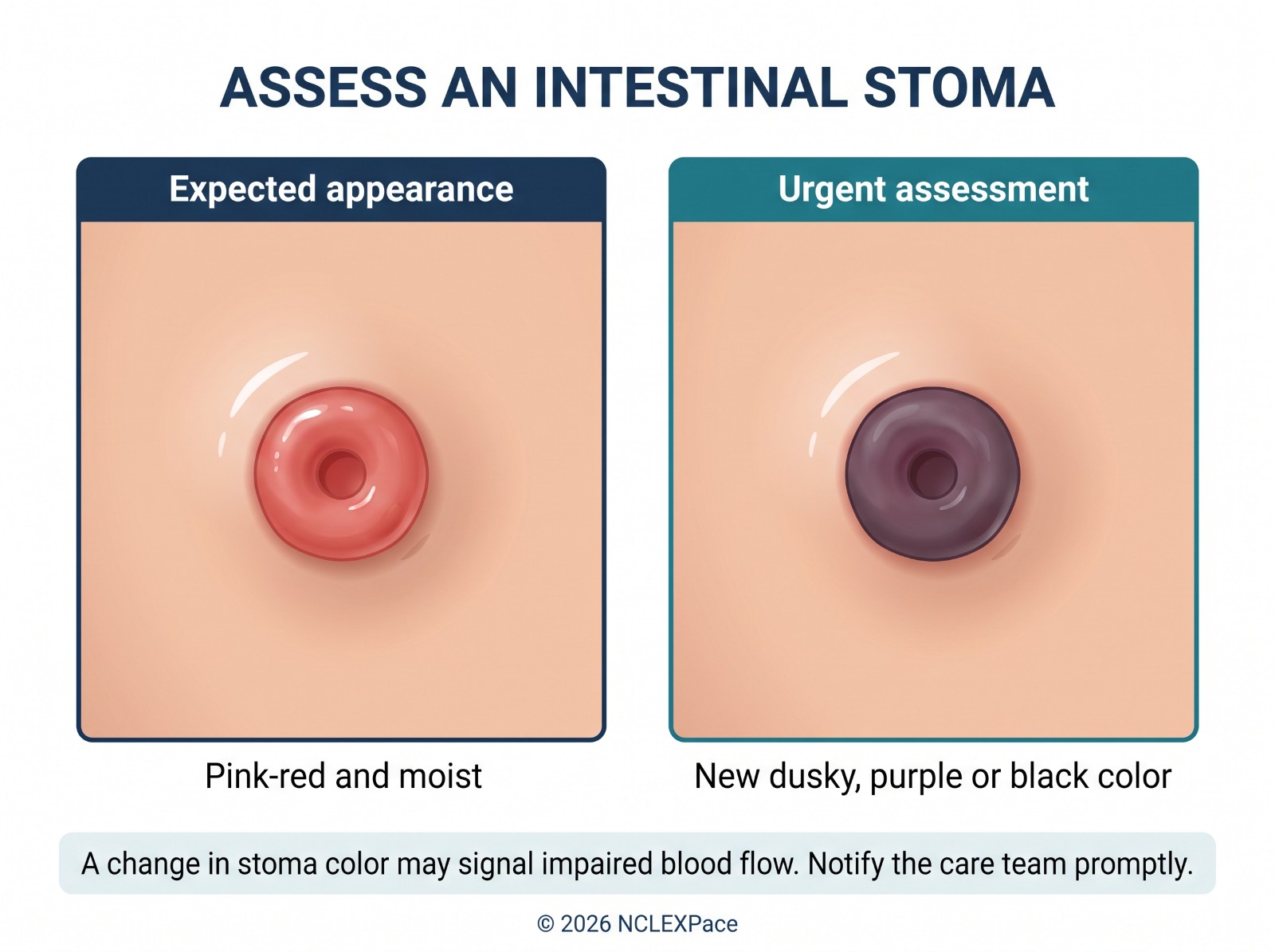
Cirrhosis is long-term liver scarring that causes bleeding risk, ascites, jaundice, and ammonia buildup that leads to confusion treated with lactulose. Pancreatitis brings severe upper abdominal pain radiating to the back that eases when leaning forward, is managed with NPO rest and pain control, and shows elevated amylase and lipase; with a stoma, a pink and moist appearance is healthy while a dusky or dark stoma is an emergency.

Cirrhosis and liver failure: portal hypertension, varices, ascites and encephalopathy, with the nursing care for each.
From the Intensive NCLEX Course. See the course; the full video library is part of Pro and Ultimate.
Cirrhosis
What it is: long-term liver damage. Scar tissue replaces working liver.
The liver does many jobs, so failure causes many problems:
| The liver’s job | What happens when it fails |
|---|---|
| Makes clotting factors | Bleeding easily |
| Filters ammonia | Confusion (encephalopathy) |
| Makes albumin | Fluid leaks into the abdomen (ascites) and tissues |
| Processes bilirubin | Jaundice — yellow skin and eyes, itching |
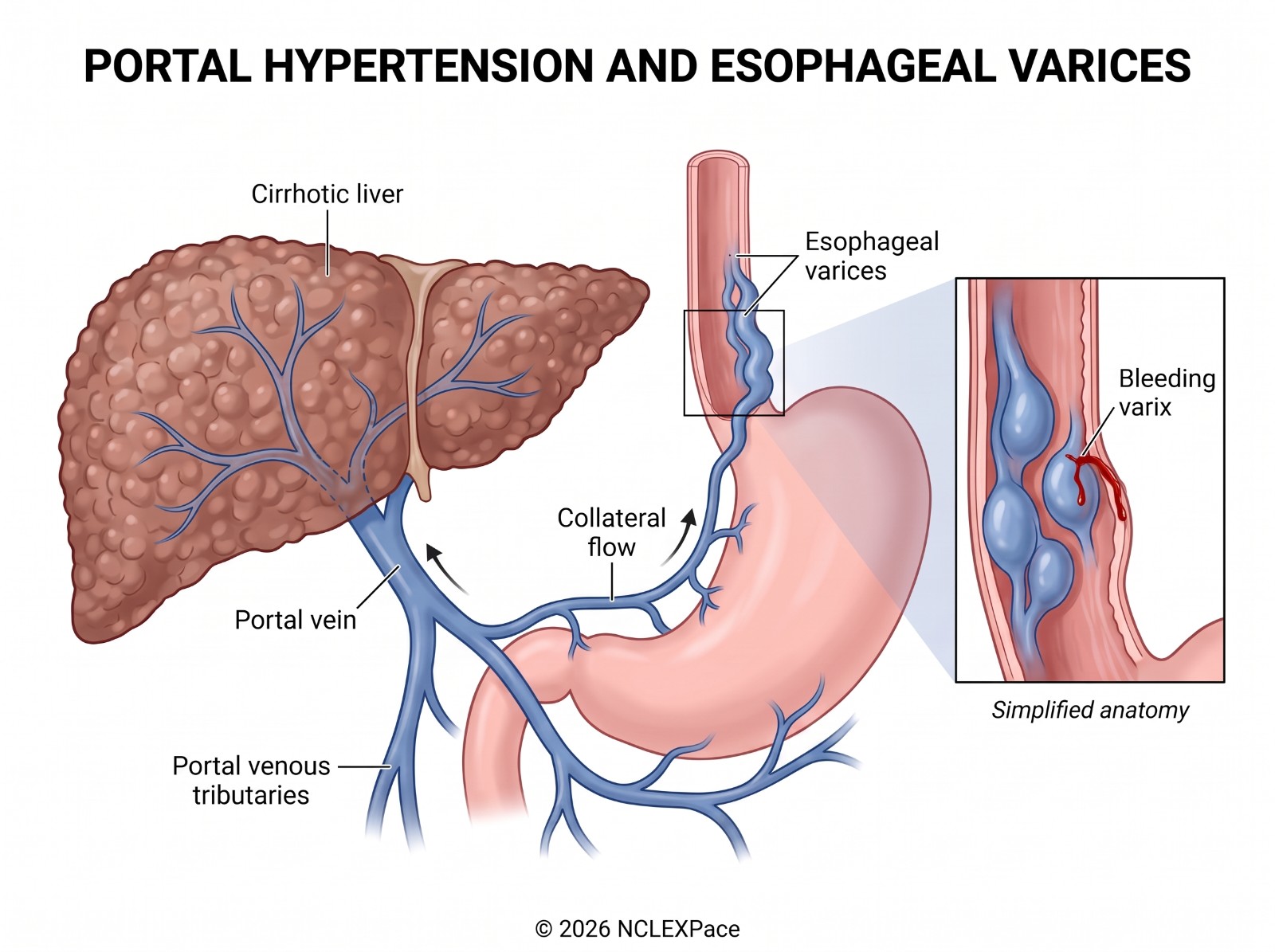
| Handles blood flow | High pressure in the portal vein → swollen veins in the esophagus |
The three dangers to know:
1. Esophageal varices. Swollen veins in the esophagus that can rupture and bleed massively.
Teaching: avoid straining, avoid coughing hard, avoid rough foods, avoid alcohol, no aspirin or NSAIDs. Report any vomiting of blood immediately.
2. Hepatic encephalopathy. Ammonia builds up and affects the brain.
Signs: confusion, personality change, sleepiness, and a flapping tremor of the hands when the wrists are extended.
Treatment: lactulose. It works by causing stools that carry ammonia out of the body.
The key teaching point: the goal is 2 to 3 soft stools a day. Diarrhea is expected and is how the drug works. Clients often stop it because of the diarrhea — teach them not to.
3. Bleeding. The liver makes clotting factors, so clotting studies are abnormal. Use bleeding precautions.
Nursing for ascites: measure abdominal girth daily at the same spot, daily weight, low sodium diet, fluid restriction if ordered, position for easier breathing.
Pancreatitis
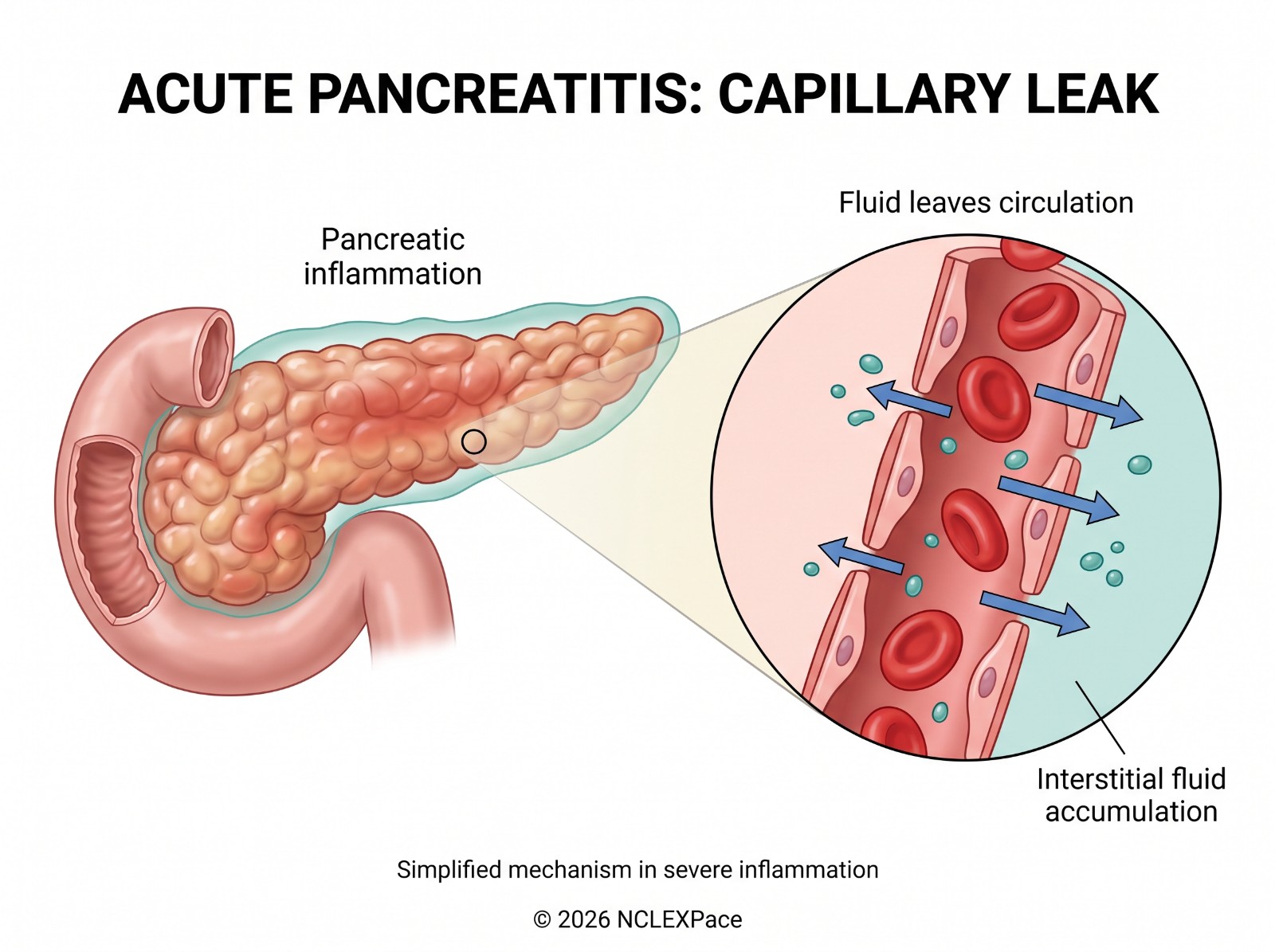
What it is: the pancreas becomes inflamed and starts digesting itself.
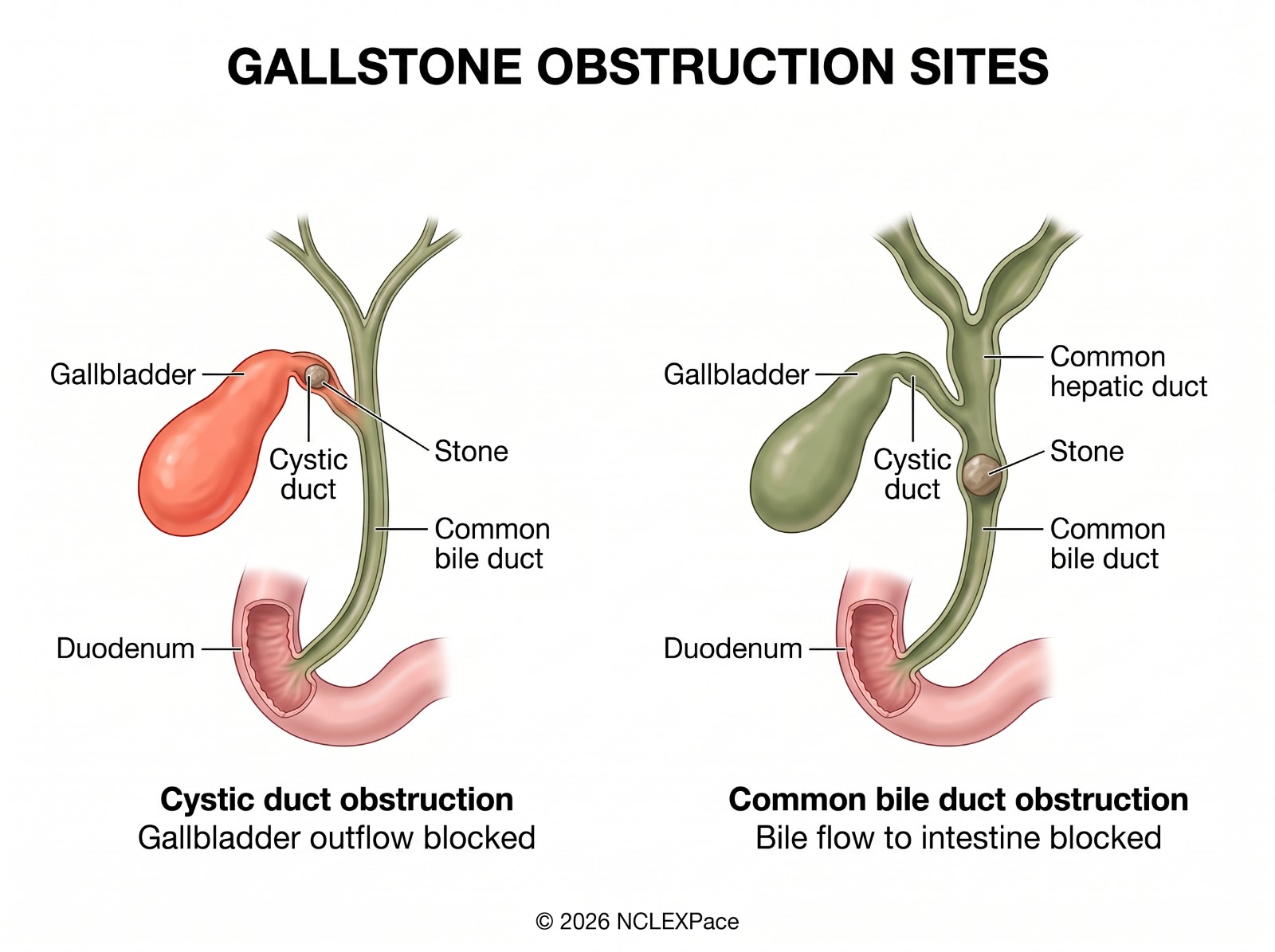
Common causes: gallstones and alcohol use.
What you see:
- Severe pain in the upper middle abdomen, spreading to the back
- Better when leaning forward or curled up — this position clue is commonly tested
- Nausea and vomiting
- Fever
- Abdominal tenderness and distension
The labs: amylase and lipase are elevated. Lipase is more specific.
What you do:
- NPO — resting the gut is the main treatment
- Pain control
- IV fluids
- Nasogastric tube if vomiting
- Position: side-lying with knees drawn up, or leaning forward
- Monitor blood sugar — the pancreas makes insulin
- Monitor calcium — it can drop
Teaching: avoid alcohol completely, low fat diet, small frequent meals.
GI bleeding
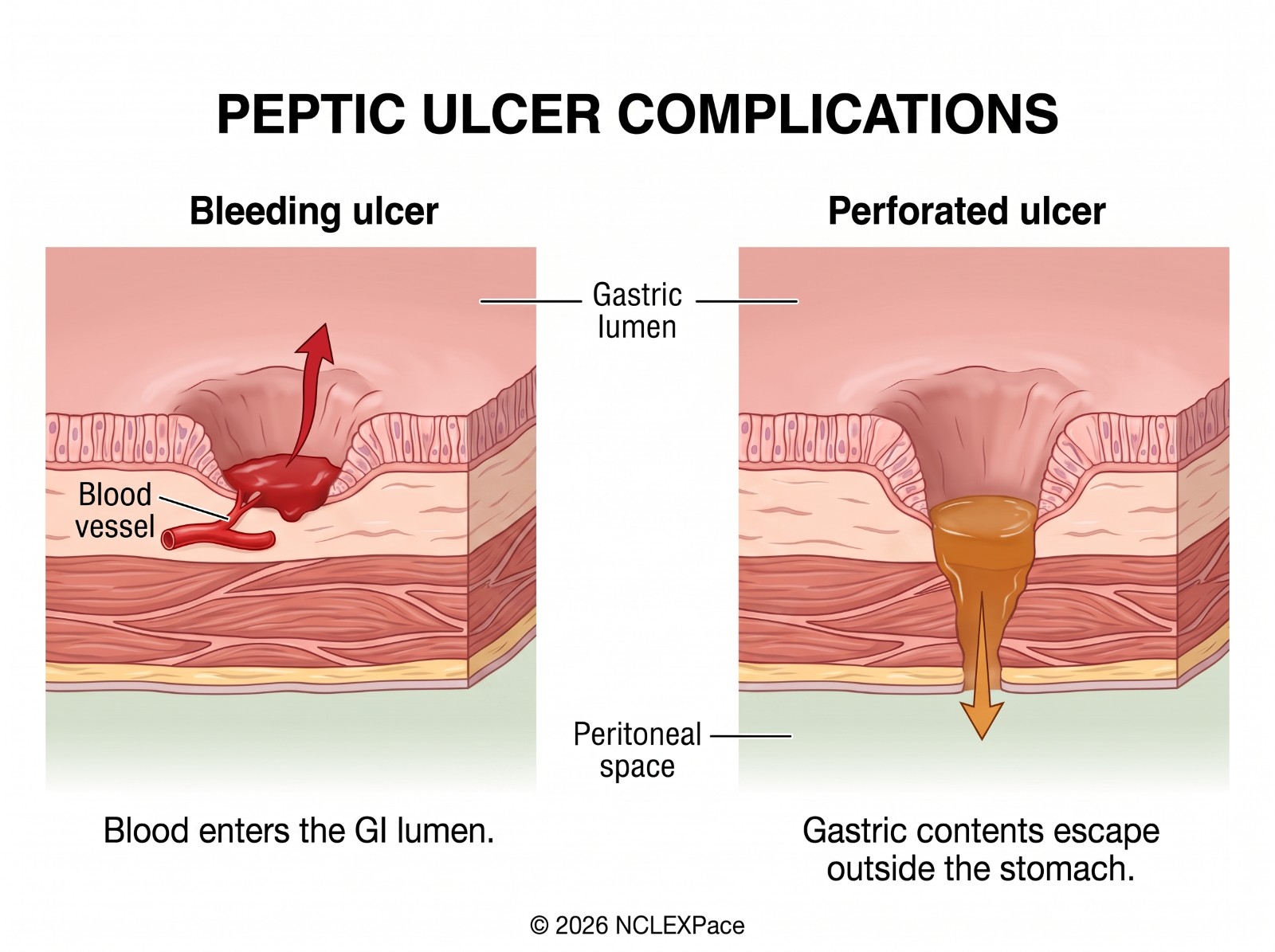
Upper GI bleed (esophagus, stomach, upper small intestine):
- Vomiting blood, which may look like coffee grounds
- Black, tarry stools — the blood has been digested
Lower GI bleed (colon, rectum):
- Bright red blood in the stool
What you do:
- Assess vital signs first — a rising heart rate and falling blood pressure show blood loss before the labs do
- Large-bore IV access
- Monitor hemoglobin and hematocrit — remember they do not fall immediately in acute bleeding
- NPO
- Notify the provider
- Prepare for endoscopy or transfusion
Signs the client is losing significant blood: fast heart rate, falling blood pressure, dizziness, pale skin, cool clammy skin, restlessness, low urine output.
Ostomies
The most tested point is the stoma’s appearance.
| Stoma looks | Meaning |
|---|---|
| Pink or red, moist | Normal and healthy |
| Pale | Possible low hemoglobin |
| Dusky, purple, blue, or black | Blood supply is compromised — EMERGENCY, report immediately |
Some swelling in the first days is normal. A small amount of bleeding when cleaning is normal.
Output differs by type:
- Ileostomy — liquid to paste output, constant, contains digestive enzymes that irritate skin. Higher risk of dehydration and electrolyte loss.
- Colostomy — more formed output, depending on how far along the colon it is. The further along, the more formed.
Skin care is the main nursing focus. The appliance must fit closely around the stoma. A gap lets output touch the skin and cause breakdown.
Teaching:
- Empty the pouch when it is about one third full
- Measure the stoma regularly at first — it shrinks over the first weeks
- Cut the opening to fit snugly
- Drink plenty of fluids, especially with an ileostomy
- Introduce new foods one at a time
- Foods that cause gas or odor vary by person
- Report a dusky or dark stoma, no output, or severe cramping
The short version
- Cirrhosis: bleeding risk, ascites, jaundice, ammonia → confusion → lactulose → 2 to 3 stools a day is the goal
- Esophageal varices: avoid straining, report vomiting blood
- Pancreatitis: upper abdominal pain to the back, better leaning forward, NPO, amylase and lipase
- Upper GI bleed: vomiting blood, black tarry stools. Lower: bright red blood.
- Stoma: pink and moist is good. Dark or dusky is an emergency.
5 NCLEX practice questions on this topic
The same questions, player and partial-credit scoring students use inside NCLEXPace: answer, submit, read the full rationale, then Next. Your score is waiting at the end. No account needed for these.
A free account opens 20 more questions, a case study, a video and a cheat sheet. The full bank has 3,200+ questions with rationales, by topic.
Practice more, free →Ready for the full bank? See NCLEXPace plans and prices: one payment for 1, 2, 3 or 6 months.
Frequently asked questions
Common follow-up questions on Body Systems & Clinical Content.
Why is diarrhea expected with lactulose in cirrhosis?
In hepatic encephalopathy, ammonia builds up and affects the brain, and lactulose works by causing stools that carry ammonia out of the body. The goal is 2 to 3 soft stools a day, so diarrhea is expected and is how the drug works. Clients often stop it because of the diarrhea, so teach them not to.
What teaching protects a client with esophageal varices?
Esophageal varices are swollen veins in the esophagus that can rupture and bleed massively, so teach the client to avoid straining, avoid coughing hard, avoid rough foods, avoid alcohol, and avoid aspirin or NSAIDs. Report any vomiting of blood immediately. Because the liver makes clotting factors, clotting studies are abnormal and bleeding precautions are used.
What position eases pancreatitis pain?
The pain of pancreatitis is severe in the upper middle abdomen and spreads to the back, and it is better when the client leans forward or curls up, a position clue that is commonly tested. Care includes NPO to rest the gut, pain control, IV fluids, and a nasogastric tube if vomiting. Monitor blood sugar and calcium, since the pancreas makes insulin and calcium can drop.
How do upper and lower GI bleeds present differently?
An upper GI bleed causes vomiting of blood that may look like coffee grounds and black, tarry stools where the blood has been digested. A lower GI bleed causes bright red blood in the stool. Assess vital signs first, because a rising heart rate and falling blood pressure show blood loss before the labs do, and remember hemoglobin and hematocrit do not fall immediately in acute bleeding.
What does the color of a stoma indicate?
A pink or red, moist stoma is normal and healthy, a pale stoma may mean low hemoglobin, and a dusky, purple, blue, or black stoma means the blood supply is compromised and is an emergency to report immediately. Some swelling and a small amount of bleeding when cleaning are normal in the first days. Ileostomy output is liquid to paste and irritating with a higher risk of dehydration, while colostomy output is more formed.
Sources and references
- Harding MM, Kwong J, Hagler D, Reinisch C. Lewis's Medical-Surgical Nursing: Assessment and Management of Clinical Problems. 12th ed. Elsevier; 2023; Chapter: Liver, Biliary Tract, and Pancreas Problems.
- Harding MM, Kwong J, Hagler D, Reinisch C. Lewis's Medical-Surgical Nursing: Assessment and Management of Clinical Problems. 12th ed. Elsevier; 2023; Chapter: Upper Gastrointestinal Problems.
- Biggins SW, et al. Diagnosis, Evaluation, and Management of Ascites, Spontaneous Bacterial Peritonitis and Hepatorenal Syndrome: 2021 AASLD Practice Guidance. Hepatology. 2021;74(2):1014-1048.
Reviewed by the NCLEXPace team, October 2026.
Keep reading



3,200+ NCLEX questions with think-like-a-nurse rationales, unfolding case studies and adaptive readiness exams. Start with free practice questions, then choose a plan when you are ready.
Create Free Account →