
NCLEX Drug Suffixes: The Endings That Answer Questions For You
Drug endings tell you the family, and the family tells you the nursing care: -olol is a beta blocker, -pril an ACE inhibitor, -sartan an ARB, -dipine a calcium channel blocker, -statin a lipid-lowering agent, -prazole a proton pump inhibitor, -cillin a penicillin antibiotic. Recognizing the suffix lets you answer questions about drugs you have never seen before.

The most-tested endings are cardiovascular: the -olol, -pril, -sartan, -dipine and -statin families, their mechanisms and adverse effects.
From the Intensive NCLEX Course. See the course; the full video library is part of Pro and Ultimate.
You will not be asked to recall 200 drug names on the NCLEX. You will be asked what to do about one. The fastest route from an unfamiliar drug to a safe action is its ending — the suffix tells you the class, the class tells you the mechanism, and the mechanism tells you the side effect the question is really about.
Step 1 — Read the ending before you read the question
A student who reads "the client is prescribed enalapril" and thinks -pril, that's an ACE inhibitor, ACE inhibitors cause a dry cough and raise potassium has already narrowed four options to one before finishing the stem. That is the whole skill.
Step 2 — The cardiovascular endings (the most tested group)
| Suffix | Class | What the NCLEX asks about |
|---|---|---|
| -olol (metoprolol, atenolol) | Beta blocker | Hold for HR < 60 or low BP; masks hypoglycemia in diabetics; never stop abruptly (rebound) |
| -pril (lisinopril, enalapril) | ACE inhibitor | Dry persistent cough; hyperkalemia; angioedema is the emergency |
| -sartan (losartan, valsartan) | ARB | Same job as an ACE inhibitor without the cough — that is why a client gets switched |
| -dipine (amlodipine, nifedipine) | Calcium channel blocker | Peripheral edema, headache, flushing; hold for hypotension |
| -statin (atorvastatin) | Antilipemic | Muscle pain — report it, rhabdomyolysis; check liver enzymes |
| -osin (doxazosin, tamsulosin) | Alpha blocker | First-dose orthostatic hypotension — give at bedtime, rise slowly |
Step 3 — The rest of the high-yield endings
| Suffix | Class | What the NCLEX asks about |
|---|---|---|
| -prazole (omeprazole) | Proton pump inhibitor | Long-term use: low magnesium, B12 deficiency, fracture risk |
| -tidine (famotidine) | H2 blocker | Give before meals; confusion in older adults |
| -cillin (amoxicillin) | Penicillin antibiotic | Allergy — always the first assessment question |
| -mycin / -micin (gentamicin, vancomycin) | Aminoglycoside / glycopeptide | Nephrotoxic and ototoxic — trough levels, creatinine, hearing |
| -floxacin (levofloxacin) | Fluoroquinolone | Tendon rupture; avoid in children; photosensitivity |
| -azole (fluconazole, metronidazole) | Antifungal / antiprotozoal | Liver enzymes; metronidazole + alcohol = severe reaction |
| -pam / -lam (lorazepam, midazolam) | Benzodiazepine | Respiratory depression; antidote flumazenil; fall risk |
| -caine (lidocaine) | Local anesthetic | Numbness beyond the site, metallic taste = toxicity |
| -ase (alteplase) | Thrombolytic | Bleeding — the contraindication list is the question |
| -parin (heparin, enoxaparin) | Anticoagulant | aPTT for heparin; antidote protamine sulfate; watch platelets (HIT) |
| -tropin (somatropin) | Hormone | Growth and glucose monitoring |
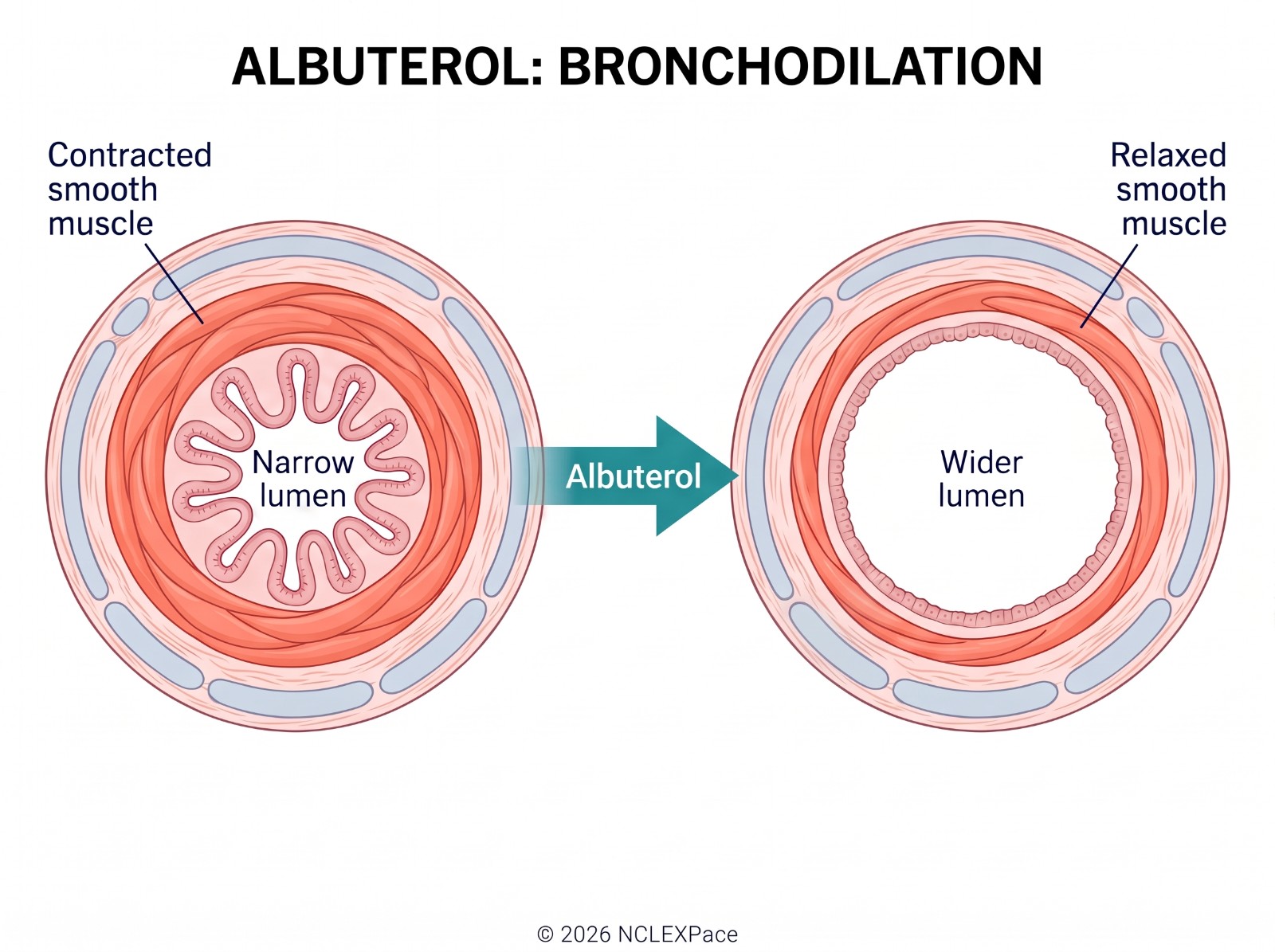
| -terol (albuterol, salmeterol) | Beta-2 agonist | Tachycardia and tremor are expected; albuterol rescues, salmeterol never does |
| -sone / -solone (prednisone) | Corticosteroid | High glucose, infection risk, never stop abruptly (taper) |
Step 4 — Where suffixes stop working
Two traps. First, some of the most-tested drugs have no useful suffix at all — digoxin, furosemide, warfarin, insulin, lithium, levothyroxine. Those you learn individually, and they are worth the effort because they appear constantly.
Second, a suffix gives you the class, not the client. -olol tells you beta blocker; it does not tell you whether this client should get it. A metoprolol question about a client with a heart rate of 52 is a hold question, and no amount of suffix knowledge substitutes for checking the vital signs the stem gave you.
The two-second habit
When any drug name appears, say three things to yourself before reading the options: class → mechanism → the one thing that goes wrong. Enalapril → ACE inhibitor → blocks angiotensin → cough and high potassium. You now know what the answer choices are fishing for.
NCLEX tip: When a question gives you a drug you have genuinely never seen, do not panic and do not guess randomly — read the ending. An unfamiliar name with a familiar suffix is a question you can still answer safely, and the exam writes those on purpose to test exactly this skill.
5 NCLEX practice questions on this topic
The same questions, player and partial-credit scoring students use inside NCLEXPace: answer, submit, read the full rationale, then Next. Your score is waiting at the end. No account needed for these.
A free account opens 20 more questions, a case study, a video and a cheat sheet. The full bank has 3,200+ questions with rationales, by topic.
Practice more, free →Ready for the full bank? See NCLEXPace plans and prices: one payment for 1, 2, 3 or 6 months.
Frequently asked questions
Common follow-up questions on Pharmacology.
What does the -pril suffix mean?
ACE inhibitor, lisinopril, enalapril, captopril. Watch for a persistent dry cough, angioedema, hyperkalaemia and first-dose hypotension, and remember these are held in pregnancy.
What is the difference between -olol and -dipine drugs?
Both lower blood pressure by different routes. Beta blockers (-olol) slow the heart rate and reduce contractility, so hold for bradycardia and use cautiously in asthma; dihydropyridine calcium channel blockers (-dipine) dilate vessels, causing peripheral oedema, flushing and reflex tachycardia rather than bradycardia.
Which suffixes indicate an antibiotic?
-cillin for penicillins, -cycline for tetracyclines, -mycin or -micin for aminoglycosides and macrolides, -floxacin for fluoroquinolones, and cef- or ceph- as a prefix for cephalosporins. Each family carries its own signature adverse effect, such as nephrotoxicity and ototoxicity with aminoglycosides.
Are drug suffixes reliable on the exam?
They are reliable enough to identify the family and its nursing priorities, which is what most questions test. Treat them as a strong first clue rather than an absolute rule, and confirm against the clinical picture in the stem.
Sources and references
- Burchum JR, Rosenthal LD. Lehne's Pharmacology for Nursing Care. 11th ed. Elsevier; 2022; Chapter: Drug Regulation, Development, Names, and Information.
Reviewed by the NCLEXPace team, October 2026.
Keep reading


3,200+ NCLEX questions with think-like-a-nurse rationales, unfolding case studies and adaptive readiness exams. Start with free practice questions, then choose a plan when you are ready.
Create Free Account →