Psychiatric Medications: The Four Emergencies
Most psych drug questions come down to recognizing one of four dangerous reactions: serotonin syndrome (fast and twitchy, from too much serotonin), neuroleptic malignant syndrome (slow and stiff with a very high fever, from antipsychotics), extrapyramidal symptoms (movement problems from antipsychotics), and lithium toxicity. The most tested distinction is serotonin syndrome versus NMS: fast and twitchy means serotonin, slow and stiff means NMS.

Antidepressants, antipsychotics and lithium: the therapeutic effects, the adverse effects, and the emergencies they can cause.
From the Intensive NCLEX Course. See the course; the full video library is part of Pro and Ultimate.
Psych drug questions usually come down to recognizing one of four dangerous reactions.
Learn to tell them apart and you have most of this content.
The four emergencies at a glance
| Serotonin syndrome | Neuroleptic malignant syndrome (NMS) | EPS | Lithium toxicity | |
|---|---|---|---|---|
| Caused by | Too much serotonin — SSRIs, and worse when combined | Antipsychotics | Antipsychotics | Lithium |
| How fast | Hours | Days to weeks | Varies | Varies |
| Muscles | Twitchy, overactive reflexes, clonus | Stiff, “lead pipe” rigid | Tremor, stiffness, restlessness | Tremor |
| Temperature | High | Very high | Normal | Normal |
| Key extra | Agitation, diarrhea, sweating | Confusion, unstable vital signs, high CK | Movement problems | Vomiting, diarrhea, confusion |
Serotonin syndrome
Cause: too much serotonin. Often when two serotonin drugs are combined — for example an SSRI plus another antidepressant, or an SSRI plus certain migraine drugs, tramadol, or St. John’s wort.
Signs: agitation, confusion, fast heart rate, high blood pressure, high temperature, sweating, overactive reflexes, muscle twitching, tremor, diarrhea.
The clue: it comes on FAST — within hours of a new drug or a dose increase.
Action: stop the drug, tell the provider, supportive care.
Neuroleptic malignant syndrome (NMS)
Cause: antipsychotic drugs.
Signs: very high fever, severe muscle rigidity (often described as “lead pipe”), confusion or reduced consciousness, unstable blood pressure and heart rate, sweating, high creatine kinase (CK).
The clue: it comes on SLOWLY — over days to weeks — and the muscles are STIFF, not twitchy.
Action: this is a medical emergency. Stop the antipsychotic. Cool the client. Supportive care. Specific medications may be ordered.
Telling serotonin syndrome from NMS
This is the most tested distinction.
| Serotonin syndrome | NMS |
|---|---|
| Fast — hours | Slow — days to weeks |
| Muscles twitchy, reflexes overactive | Muscles rigid and stiff |
| Often diarrhea | Usually not |
| Serotonin drugs | Antipsychotic drugs |
Simple version: fast and twitchy = serotonin. Slow and stiff = NMS.
EPS (extrapyramidal symptoms)
Movement problems caused by antipsychotics. Four types:
Acute dystonia — sudden severe muscle spasms, often of the neck, jaw, or eyes. Can affect the throat and airway. This is urgent. Treated with anticholinergic medication.
Akathisia — inner restlessness. The client cannot sit still and paces. Often mistaken for anxiety or worsening illness.
Pseudoparkinsonism — tremor, stiffness, shuffling walk, blank face. Looks like Parkinson’s disease.
Tardive dyskinesia — repetitive involuntary movements, often of the face, tongue, and mouth. Appears after long-term use and may be permanent.
Key nursing point: report EPS early. Tardive dyskinesia may not go away, so early recognition matters.
Lithium
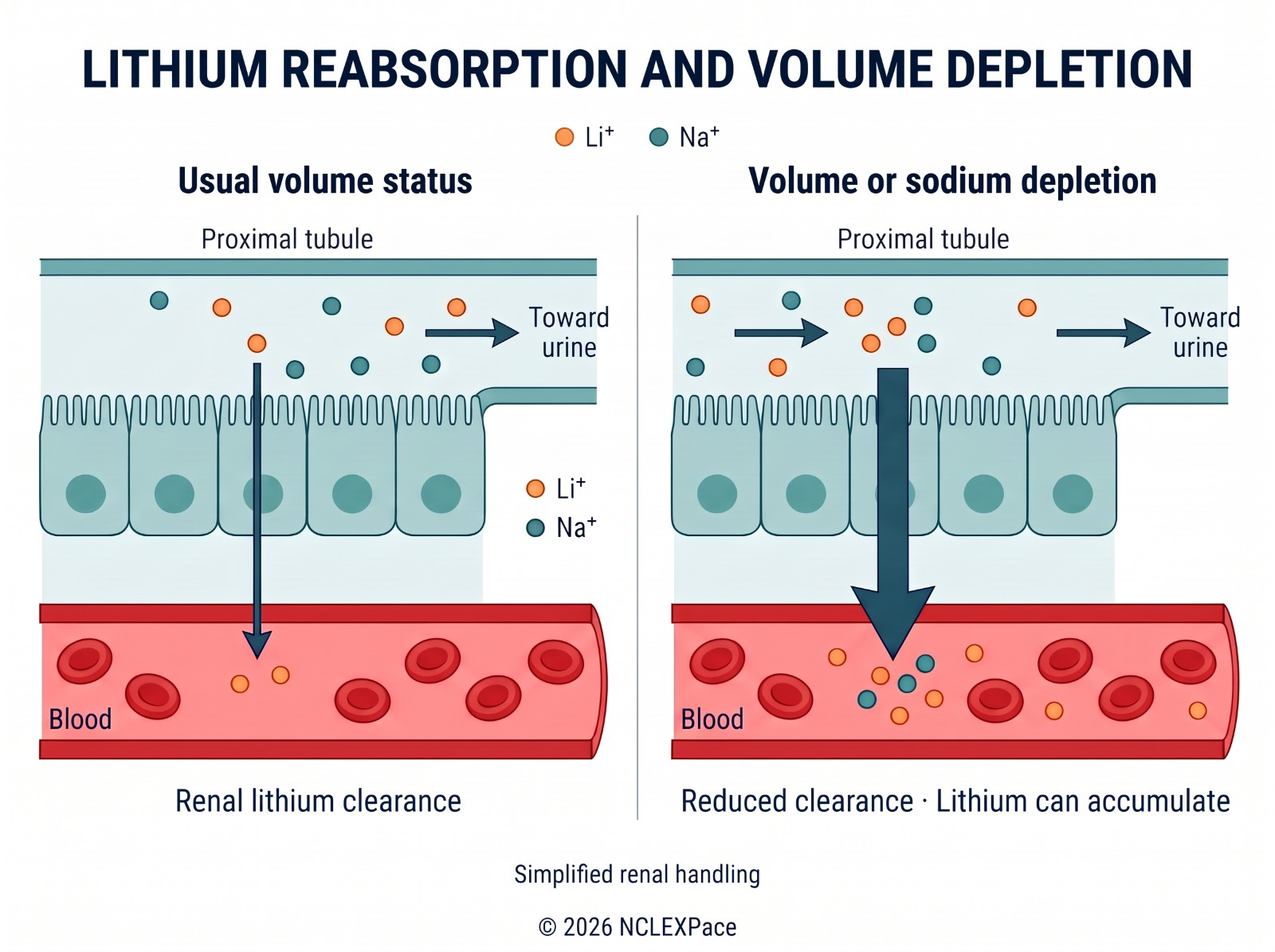
Lithium has a narrow safety range. The therapeutic level is roughly 0.6 to 1.2 mEq/L. Toxicity generally begins above about 1.5.
Early toxicity: nausea, vomiting, diarrhea, tremor, drowsiness, muscle weakness.
Severe toxicity: confusion, poor coordination, slurred speech, seizures, irregular heart rhythm, coma.
What raises lithium levels — heavily tested:
- Dehydration — vomiting, diarrhea, sweating, hot weather, exercise
- Low sodium intake — the body holds onto lithium when sodium is low
- Diuretics, especially thiazides
- NSAIDs — ibuprofen and similar
- ACE inhibitors
Teaching:
- Drink plenty of fluids — usually 2 to 3 liters a day
- Keep salt intake consistent — do not start a low-salt diet
- Report vomiting, diarrhea, or heavy sweating
- Avoid NSAIDs — use acetaminophen instead unless told otherwise
- Have levels checked regularly
- Take it with food if it upsets the stomach
Memory aid: lithium follows sodium and water. Lose salt or water, lithium goes up.
MAO inhibitors
Less common now, but heavily tested because of one thing.
Tyramine causes a dangerous rise in blood pressure.
Foods high in tyramine: aged cheese, cured or smoked meats, fermented foods, soy sauce, sauerkraut, tap beer, some wines.
Signs of hypertensive crisis: severe headache, very high blood pressure, stiff neck, sweating, chest pain, nausea.
Teaching: avoid tyramine foods and report a severe headache immediately.
Also: MAO inhibitors interact with many drugs, including other antidepressants and some cold medications. A washout period is needed when switching.
SSRIs and general antidepressant points
They take 2 to 6 weeks to work. Clients often stop early because they feel nothing. This is heavily tested teaching.
Suicide risk can rise early in treatment, as energy returns before mood improves. Monitor closely in the first weeks.
Do not stop suddenly. Stopping abruptly causes withdrawal symptoms.
The short version
- Fast and twitchy = serotonin syndrome
- Slow and stiff with high fever = NMS
- Movement problems on antipsychotics = EPS; tardive dyskinesia may be permanent
- Lithium follows salt and water — dehydration and low sodium raise the level
- MAO inhibitors — no aged, cured, or fermented foods
- Antidepressants take weeks to work and must not be stopped suddenly
Therapeutic ranges and treatment protocols vary. Check a current drug reference before clinical use.
5 NCLEX practice questions on this topic
The same questions, player and partial-credit scoring students use inside NCLEXPace: answer, submit, read the full rationale, then Next. Your score is waiting at the end. No account needed for these.
A free account opens 20 more questions, a case study, a video and a cheat sheet. The full bank has 3,200+ questions with rationales, by topic.
Practice more, free →Ready for the full bank? See NCLEXPace plans and prices: one payment for 1, 2, 3 or 6 months.
Frequently asked questions
Common follow-up questions on Pharmacology.
How do I tell serotonin syndrome from neuroleptic malignant syndrome?
Serotonin syndrome comes on fast (within hours of a new serotonin drug or dose increase) with twitchy muscles and overactive reflexes, and often diarrhea. NMS comes on slowly, over days to weeks, from antipsychotic drugs, with rigid, stiff muscles and a very high fever. The simple version: fast and twitchy equals serotonin, slow and stiff equals NMS.
What are the four types of extrapyramidal symptoms?
Acute dystonia is sudden severe muscle spasms of the neck, jaw, or eyes that can affect the airway and is urgent, treated with anticholinergic medication. Akathisia is inner restlessness where the client cannot sit still. Pseudoparkinsonism is tremor, stiffness, shuffling walk, and a blank face. Tardive dyskinesia is repetitive involuntary movements of the face, tongue, and mouth that appear after long-term use and may be permanent, which is why reporting EPS early matters.
What raises lithium levels?
Dehydration (vomiting, diarrhea, sweating, hot weather, exercise), low sodium intake because the body holds onto lithium when sodium is low, diuretics especially thiazides, NSAIDs, and ACE inhibitors. The therapeutic level is roughly 0.6 to 1.2 mEq/L, and toxicity generally begins above about 1.5. The memory aid is that lithium follows sodium and water: lose salt or water and lithium goes up.
What foods must a client on an MAO inhibitor avoid?
Foods high in tyramine: aged cheese, cured or smoked meats, fermented foods, soy sauce, sauerkraut, tap beer, and some wines. Tyramine causes a dangerous rise in blood pressure. Teach the client to avoid these foods and report a severe headache immediately, since severe headache, very high blood pressure, stiff neck, sweating, chest pain, and nausea signal a hypertensive crisis.
What should clients know about starting antidepressants?
They take 2 to 6 weeks to work, and clients often stop early because they feel nothing, which is heavily tested teaching. Suicide risk can rise early in treatment as energy returns before mood improves, so monitor closely in the first weeks. Antidepressants must not be stopped suddenly, because stopping abruptly causes withdrawal symptoms.
Sources and references
- Burchum JR, Rosenthal LD. Lehne's Pharmacology for Nursing Care. 11th ed. Elsevier; 2022; Chapter: Antipsychotic Agents and Their Use in Schizophrenia.
- Burchum JR, Rosenthal LD. Lehne's Pharmacology for Nursing Care. 11th ed. Elsevier; 2022; Chapter: Antidepressants.
- Burchum JR, Rosenthal LD. Lehne's Pharmacology for Nursing Care. 11th ed. Elsevier; 2022; Chapter: Drugs for Bipolar Disorder.
Reviewed by the NCLEXPace team, October 2026.
Keep reading

3,200+ NCLEX questions with think-like-a-nurse rationales, unfolding case studies and adaptive readiness exams. Start with free practice questions, then choose a plan when you are ready.
Create Free Account →