
Antibiotic Side Effects the NCLEX Tests
The NCLEX mostly tests antibiotic side effects and nursing care rather than which drug treats which bug: aminoglycosides and vancomycin damage the ears and kidneys, tetracyclines stain children's teeth and cause photosensitivity, fluoroquinolones risk tendon rupture, sulfonamides can trigger dangerous skin reactions, and penicillins raise allergy concerns. Isoniazid needs vitamin B6 to prevent nerve damage and rifampin turns body fluids orange-red.

The antibiotic classes with the adverse effects the exam tests, plus the tuberculosis drugs and their monitoring.
From the Intensive NCLEX Course. See the course; the full video library is part of Pro and Ultimate.
You do not need to know which antibiotic treats which bug. The exam mostly asks about side effects and nursing care.
Here are the ones that get tested.
Aminoglycosides (gentamicin, tobramycin, amikacin)
The two dangers: ears and kidneys.
Ototoxicity — damage to hearing and balance. Signs: ringing in the ears, hearing loss, dizziness, balance problems. This can be permanent.
Nephrotoxicity — kidney damage. Watch creatinine, BUN, and urine output.
Nursing:
- Monitor peak and trough levels
- Draw the trough right before the next dose
- Monitor kidney function
- Report any hearing change or ringing immediately
- Keep the client well hydrated
Memory aid: aminoglycosides hit the Audio and the kidneys.
Vancomycin
Dangers: kidneys and ears, plus an infusion reaction.
Infusion reaction: if infused too fast, the client gets flushing, redness of the face and upper body, and itching. It is a histamine reaction, not an allergy.
The fix: slow the infusion. Usually given over at least 60 minutes.
Nursing:
- Monitor trough levels
- Monitor kidney function
- Infuse slowly
- Watch the IV site — it irritates veins
Tetracyclines (doxycycline, tetracycline)
Three teaching points:
1. Stains teeth permanently in children. Avoid in children under 8 and in pregnancy.
2. Photosensitivity. Clients burn easily. Teach sunscreen and protective clothing.
3. Do not take with dairy, antacids, or iron. They bind the drug and it does not work. Separate by a couple of hours.
Fluoroquinolones (ciprofloxacin, levofloxacin)
Tendon problems. Tendon pain, swelling, or rupture — especially the Achilles tendon. Risk is higher in older adults and clients on steroids.
Teach: report tendon pain and stop exercising until evaluated.
Also: can affect heart rhythm, can cause nerve problems, generally avoided in children.
Also affected by dairy, antacids, and iron.
Sulfonamides (sulfamethoxazole-trimethoprim)
Severe skin reactions. A rash on a sulfa drug is never ignored. Stevens-Johnson syndrome starts as a rash and becomes life-threatening.
Teach: report any rash immediately and stop the drug.
Crystals in the urine. Teach the client to drink plenty of fluids.
Sulfa allergy is common. Always ask.
Penicillins and cephalosporins
Allergy is the main issue. Penicillin allergy is the most commonly reported drug allergy.
Always ask about allergy before giving. Ask what happened, not just “are you allergic.” A stomach upset is not the same as anaphylaxis.
Watch for anaphylaxis: trouble breathing, swelling of the face or throat, hives, low blood pressure. This is an emergency — stop the drug, call for help, prepare for epinephrine.
Some people with penicillin allergy react to cephalosporins. Ask about both.
TB drugs
Isoniazid (INH)
- Liver damage. Monitor liver enzymes. Teach clients to report yellowing of the skin or eyes, dark urine, nausea, or belly pain. Avoid alcohol.
- Nerve damage in the hands and feet. Prevented with vitamin B6 (pyridoxine). This pairing is heavily tested.
Rifampin
- Turns body fluids orange-red — urine, sweat, tears. Harmless, but it stains soft contact lenses permanently. Teach this in advance so the client is not frightened.
- Liver damage.
- Makes birth control pills less effective. Teach another method.
General antibiotic teaching
Finish the whole course, even if feeling better. Stopping early is the classic wrong answer in teaching questions.
Take at even intervals to keep the blood level steady.
Report severe or watery diarrhea. This can be a serious infection caused by the antibiotic itself.
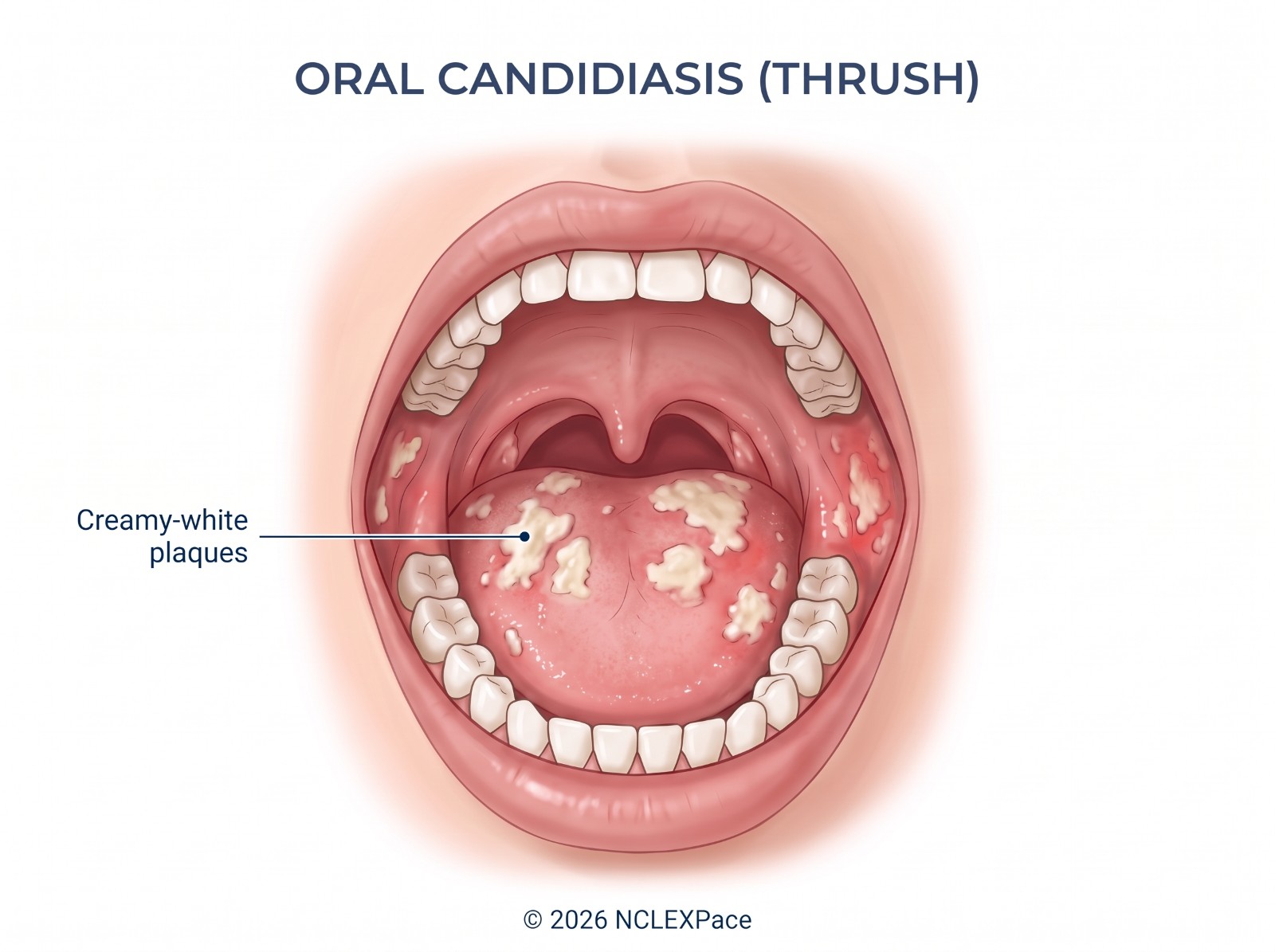
Yeast infections are common after antibiotics.
Get cultures before the first dose where ordered. If you give the antibiotic first, the culture may be useless.
The short version
- Aminoglycosides → ears and kidneys, peak and trough
- Vancomycin → ears, kidneys, infuse slowly
- Tetracyclines → teeth in children, sun, no dairy
- Fluoroquinolones → tendon rupture
- Sulfonamides → rash is an emergency, push fluids
- Penicillins → allergy
- Isoniazid → liver, plus B6 for nerves
- Rifampin → orange fluids, liver, birth control
Antibiotic guidance changes. Check a current drug reference before clinical use.
5 NCLEX practice questions on this topic
The same questions, player and partial-credit scoring students use inside NCLEXPace: answer, submit, read the full rationale, then Next. Your score is waiting at the end. No account needed for these.
A free account opens 20 more questions, a case study, a video and a cheat sheet. The full bank has 3,200+ questions with rationales, by topic.
Practice more, free →Ready for the full bank? See NCLEXPace plans and prices: one payment for 1, 2, 3 or 6 months.
Frequently asked questions
Common follow-up questions on Pharmacology.
What are the main dangers of aminoglycosides and vancomycin?
Both hit the ears and kidneys. Aminoglycosides such as gentamicin cause ototoxicity, which can be permanent and shows as ringing, hearing loss, dizziness, and balance problems, plus nephrotoxicity. Vancomycin adds an infusion reaction: given too fast it causes flushing, redness of the face and upper body, and itching, which is a histamine reaction fixed by slowing the infusion. For both, monitor trough levels and kidney function.
What must clients on tetracyclines and fluoroquinolones be taught?
Tetracyclines stain teeth permanently in children, so they are avoided under age 8 and in pregnancy, cause photosensitivity, and must not be taken with dairy, antacids, or iron, which bind the drug. Fluoroquinolones such as ciprofloxacin can cause tendon pain, swelling, or rupture, especially the Achilles tendon and especially in older adults or clients on steroids; teach clients to report tendon pain and stop exercising until evaluated.
Why is a rash on a sulfa drug an emergency?
A rash on a sulfonamide is never ignored because Stevens-Johnson syndrome starts as a rash and becomes life-threatening. Teach clients to report any rash immediately and stop the drug. Sulfonamides can also cause crystals in the urine, so teach clients to drink plenty of fluids, and always ask about sulfa allergy, which is common.
What are the two heavily tested points about TB drugs?
Isoniazid causes liver damage, so monitor liver enzymes and teach clients to report yellowing skin or eyes, dark urine, nausea, or belly pain and to avoid alcohol; it also causes nerve damage in the hands and feet, prevented with vitamin B6 (pyridoxine), a pairing that is heavily tested. Rifampin turns urine, sweat, and tears orange-red, which is harmless but stains soft contact lenses, causes liver damage, and makes birth control pills less effective.
What general antibiotic teaching does the exam expect?
Finish the whole course even if feeling better, because stopping early is the classic wrong answer in teaching questions. Take doses at even intervals to keep the blood level steady, and report severe or watery diarrhea, which can be a serious infection caused by the antibiotic itself. Get cultures before the first dose where ordered, since giving the antibiotic first can make the culture useless.
Sources and references
- Burchum JR, Rosenthal LD. Lehne's Pharmacology for Nursing Care. 11th ed. Elsevier; 2022; Chapter: Basic Principles of Antimicrobial Therapy.
- Burchum JR, Rosenthal LD. Lehne's Pharmacology for Nursing Care. 11th ed. Elsevier; 2022; Chapter: Antimycobacterial Agents: Drugs for Tuberculosis, Leprosy, and Mycobacterium avium Complex Infection.
Reviewed by the NCLEXPace team, October 2026.
Keep reading

3,200+ NCLEX questions with think-like-a-nurse rationales, unfolding case studies and adaptive readiness exams. Start with free practice questions, then choose a plan when you are ready.
Create Free Account →