
Withdrawal Timelines: Alcohol, Opioids, and Benzodiazepines
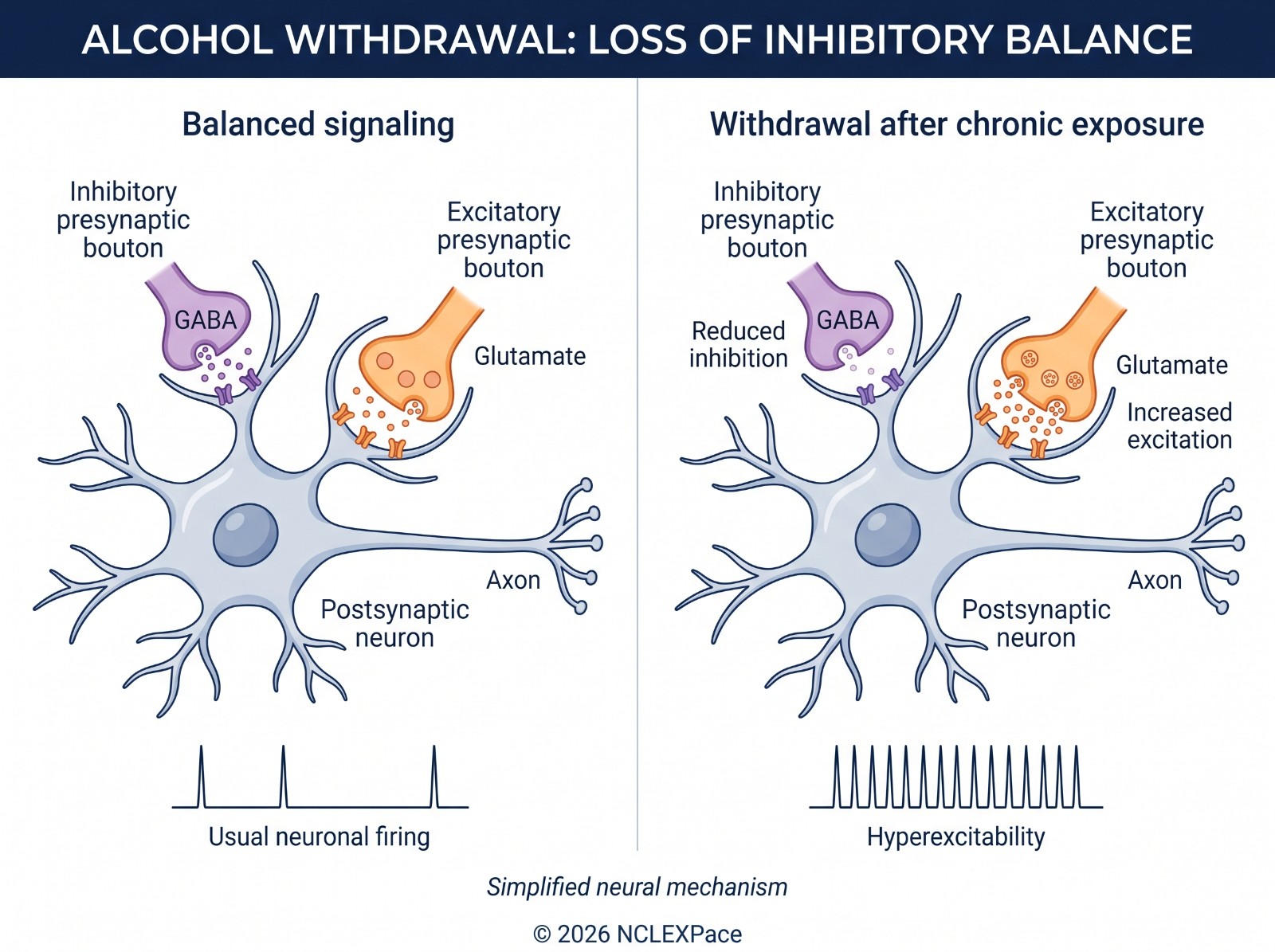
The exam tests two things: when withdrawal starts, and which withdrawals can kill. Alcohol and benzodiazepine withdrawal can be fatal, while opioid withdrawal is miserable but rarely fatal. Alcohol withdrawal runs from tremors at 6 to 24 hours to seizures at 12 to 48 hours to delirium tremens at 48 to 96 hours, and thiamine is given before glucose because glucose first can worsen the deficiency.

Alcohol withdrawal and recovery: the timeline, delirium tremens, the medications and the teaching.
From the Intensive NCLEX Course. See the course; the full video library is part of Pro and Ultimate.
The exam tests two things: when withdrawal starts, and which withdrawals can kill.
The one that matters most
Alcohol and benzodiazepine withdrawal can be fatal. Opioid withdrawal is miserable but rarely fatal.
That single fact answers a large share of these questions. If a question asks which client needs the most urgent attention, it is usually the alcohol or benzodiazepine withdrawal.
Alcohol withdrawal
Timeline:
| When | What happens |
|---|---|
| 6–24 hours | Tremors, anxiety, sweating, nausea, fast heart rate, high blood pressure, headache |
| 12–48 hours | Seizures — risk is highest here |
| 24–48 hours | Symptoms peak |
| 48–96 hours | Delirium tremens |
Delirium tremens is the dangerous one.
Signs: severe confusion and disorientation, hallucinations (often visual — insects or animals), severe agitation, high fever, very fast heart rate, high blood pressure, heavy sweating.
This can be fatal. It is a medical emergency.
Nursing care:
- Seizure precautions
- Frequent vital signs — rising heart rate and blood pressure signal worsening withdrawal
- Quiet, well-lit room — shadows worsen hallucinations
- Reorient frequently
- Do not leave alone when severe
- Benzodiazepines are the standard treatment
- Thiamine (vitamin B1) — long-term alcohol use depletes it, and deficiency causes serious brain damage. Thiamine is given before glucose, because giving glucose first can worsen the deficiency.
- Fluids, electrolytes, nutrition
The thiamine point is commonly tested.
A key assessment question: “When was your last drink?” The timeline depends on it.
Benzodiazepine withdrawal
Also potentially fatal. Similar to alcohol — anxiety, tremor, sweating, and seizures.
Timing depends on the drug. Short-acting benzodiazepines produce withdrawal within a day or two. Long-acting ones may take several days to a week.
Never stop a benzodiazepine abruptly. They are tapered slowly.
This is why flumazenil, the benzodiazepine reversal agent, is used cautiously — it can trigger seizures in a dependent person. See Article 63.
Opioid withdrawal
Uncomfortable but rarely life-threatening in an otherwise healthy adult.
Timeline for short-acting opioids: begins within 8 to 24 hours, peaks in 1 to 3 days. Longer-acting opioids start later and last longer.
What you see:
- Yawning, watery eyes, runny nose
- Sweating, goosebumps
- Muscle and bone aches
- Nausea, vomiting, diarrhea, abdominal cramping
- Large pupils
- Restlessness, anxiety, insomnia
- Fast heart rate, high blood pressure
Nursing care: supportive — fluids, comfort measures, medications to ease symptoms, monitoring for dehydration from vomiting and diarrhea.
Important exception: opioid withdrawal in a newborn is serious and requires specific management, and withdrawal in pregnancy can harm the fetus.
Stimulant withdrawal
Cocaine and methamphetamine. Not physically dangerous in the same way, but psychologically severe.
What you see: intense fatigue, heavy sleep, increased appetite, depression, strong cravings, and suicidal thinking.
The risk here is suicide. Assess for it. See Article 93.
The comparison table
| Can it kill? | Starts | Key signs | |
|---|---|---|---|
| Alcohol | YES | 6–24 hr | Tremor → seizures → delirium tremens |
| Benzodiazepines | YES | Varies by drug | Anxiety, tremor, seizures |
| Opioids | Rarely | 8–24 hr (short-acting) | Flu-like, gut symptoms, big pupils |
| Stimulants | Rarely directly | Hours to days | Fatigue, depression, suicide risk |
The exam patterns
“Which client needs immediate attention?” — the one in alcohol or benzodiazepine withdrawal, especially with rising vital signs or confusion.
“What is the priority assessment?” — vital signs and level of consciousness for alcohol; suicide risk for stimulants.
“What should the nurse ask?” — when the last use was.
“Which finding indicates worsening?” — rising heart rate and blood pressure, new confusion, hallucinations.
The short version
- Alcohol and benzodiazepines can kill. Opioids usually do not.
- Alcohol: tremors 6–24 hr, seizures 12–48 hr, delirium tremens 48–96 hr
- Give thiamine, and give it before glucose
- Never stop benzodiazepines abruptly
- Opioid withdrawal: flu-like, gut symptoms, large pupils
- Stimulant withdrawal: watch for suicide risk
Withdrawal timelines vary by substance, dose, duration of use, and individual. Treatment protocols vary by facility.
5 NCLEX practice questions on this topic
The same questions, player and partial-credit scoring students use inside NCLEXPace: answer, submit, read the full rationale, then Next. Your score is waiting at the end. No account needed for these.
A free account opens 20 more questions, a case study, a video and a cheat sheet. The full bank has 3,200+ questions with rationales, by topic.
Practice more, free →Ready for the full bank? See NCLEXPace plans and prices: one payment for 1, 2, 3 or 6 months.
Frequently asked questions
Common follow-up questions on Psychosocial & Mental Health.
Which withdrawals can be fatal?
Alcohol and benzodiazepine withdrawal can be fatal; opioid withdrawal is miserable but rarely fatal in an otherwise healthy adult. That single fact answers a large share of these questions: if asked which client needs the most urgent attention, it is usually the alcohol or benzodiazepine withdrawal.
What is the alcohol withdrawal timeline?
Tremors, anxiety, sweating, nausea, and fast heart rate at 6 to 24 hours; seizure risk highest at 12 to 48 hours; symptoms peaking at 24 to 48 hours; and delirium tremens at 48 to 96 hours. Delirium tremens (severe confusion and disorientation, hallucinations, agitation, high fever, and unstable vital signs) can be fatal and is a medical emergency.
Why is thiamine given, and why before glucose?
Long-term alcohol use depletes thiamine (vitamin B1), and deficiency causes serious brain damage. Thiamine is given before glucose because giving glucose first can worsen the deficiency. The article notes this point is commonly tested.
Why should benzodiazepines never be stopped abruptly?
Because benzodiazepine withdrawal is also potentially fatal, similar to alcohol (anxiety, tremor, sweating, and seizures) so the drugs are tapered slowly. This is also why flumazenil, the benzodiazepine reversal agent, is used cautiously: it can trigger seizures in a dependent person.
What does opioid withdrawal look like?
Uncomfortable but rarely life-threatening: yawning, watery eyes, runny nose, sweating, goosebumps, muscle and bone aches, nausea, vomiting, diarrhea, large pupils, restlessness, and insomnia. Care is supportive with fluids and comfort measures, watching for dehydration from vomiting and diarrhea. Important exceptions are newborns and pregnancy, where opioid withdrawal is serious.
Sources and references
- Halter MJ. Varcarolis' Foundations of Psychiatric-Mental Health Nursing: A Clinical Approach. 9th ed. Elsevier; 2022; Chapter: Substance-Related and Addictive Disorders.
- The ASAM Clinical Practice Guideline on Alcohol Withdrawal Management. Journal of Addiction Medicine. 2020;14(3S Suppl 1):1-72.
Reviewed by the NCLEXPace team, October 2026.
Keep reading



3,200+ NCLEX questions with think-like-a-nurse rationales, unfolding case studies and adaptive readiness exams. Start with free practice questions, then choose a plan when you are ready.
Create Free Account →