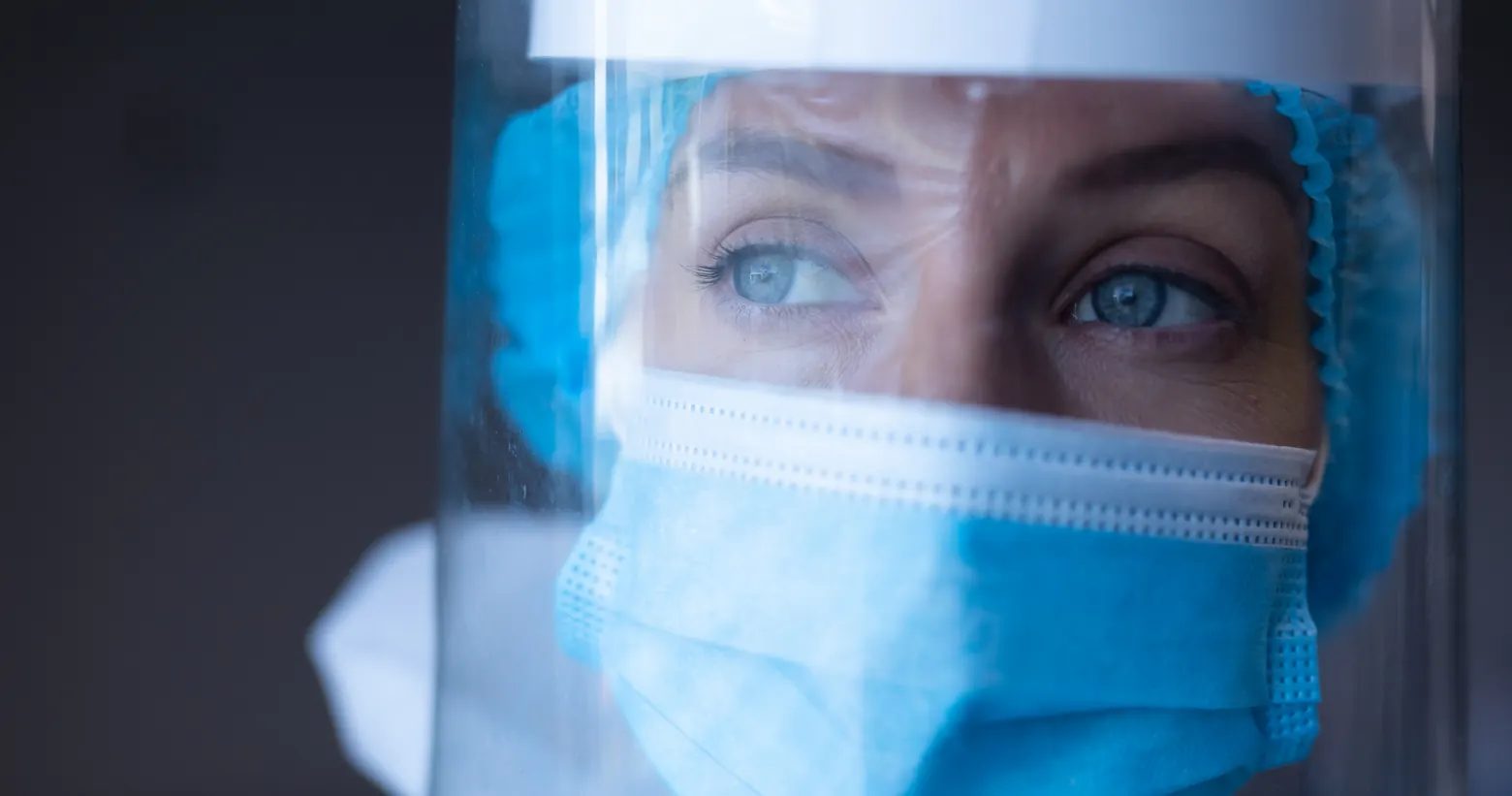
PPE: What to Put On, What to Take Off, and In What Order
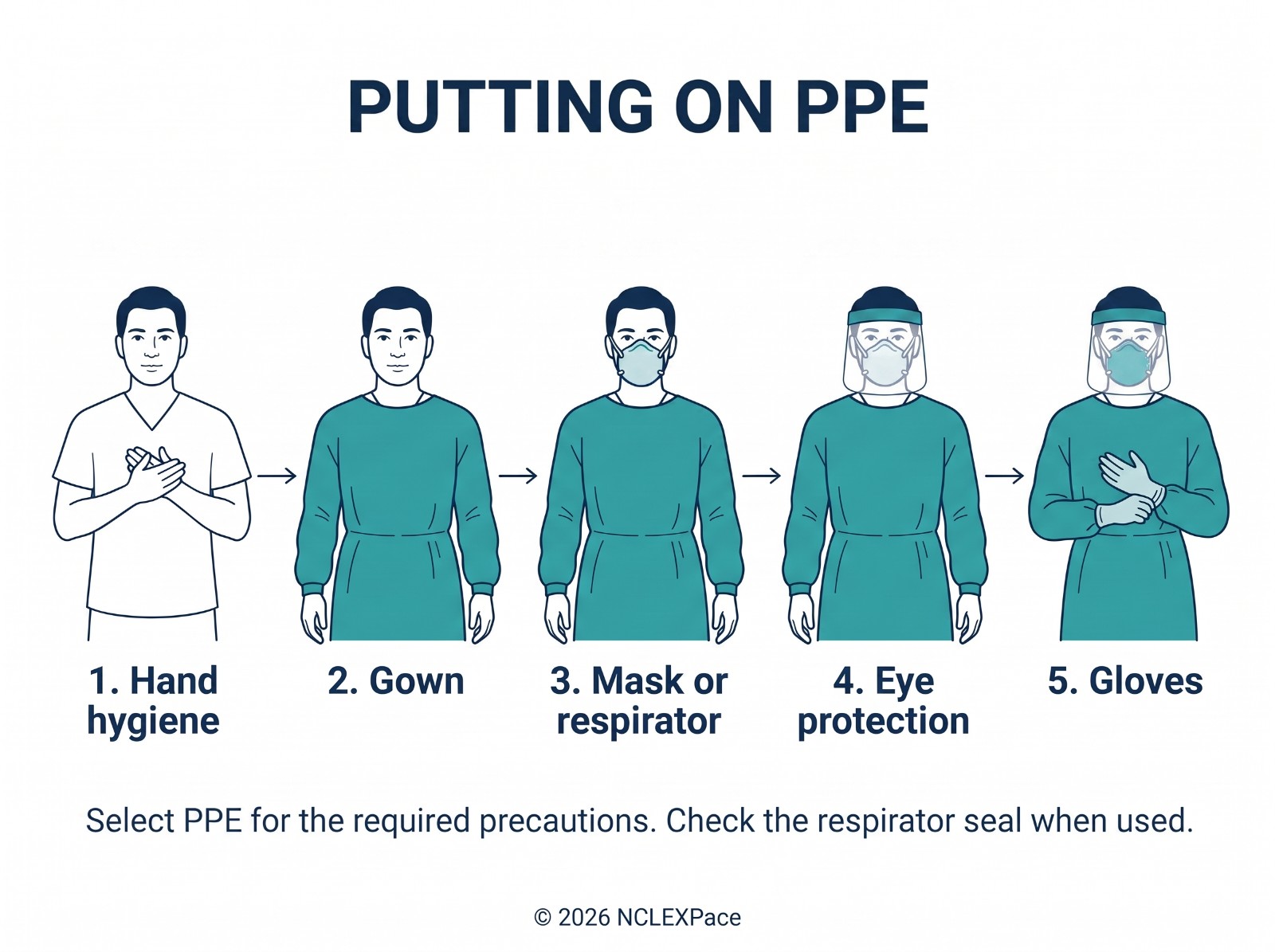
Put PPE on from the inside out: hand hygiene, gown, mask or respirator, goggles or face shield, then gloves last so they stay clean and cover the gown cuffs. Take it off dirtiest-first (gloves, goggles or face shield, gown, mask or respirator, then hand hygiene) touching only ties, straps, and insides, because the front of everything is dirty. When leaving an airborne room, remove everything except the respirator inside the room and take the respirator off after you leave and close the door.

Free sample lesson: infection control, including PPE on and off in order.
From the Intensive NCLEX Course. This lesson is a free sample: watch it with a free account.
The order matters, and it is tested. Here is why each step is where it is.
Putting it ON (donning)
- Hand hygiene
- Gown
- Mask or respirator
- Goggles or face shield
- Gloves — pulled over the gown cuffs
The logic: you build from the inside out, and gloves go last so they stay clean and cover the gown cuffs.
Taking it OFF (doffing)
- Gloves
- Goggles or face shield
- Gown
- Mask or respirator
- Hand hygiene
The logic: the dirtiest item comes off first. Gloves have touched everything. The mask comes off last because you keep it on until you have left the contaminated area.
The key principle
The front of everything is dirty. The ties and the inside are clean.
So when you remove PPE:
- Touch only the ties, straps, and the inside
- Never touch the front of the gown, the front of the mask, or the outside of the goggles
- Roll things inward as you remove them, so the dirty side ends up inside
- Do hand hygiene any time you think you touched something contaminated
Removing gloves without contaminating yourself
- Grasp the outside of one glove near the wrist
- Peel it off, turning it inside out
- Hold it in your gloved hand
- Slide a bare finger inside the other glove at the wrist
- Peel it off over the first glove
- Discard, then wash your hands
Bare skin only touches the inside. Gloved hand only touches the outside.
The mask
Put on: cover the nose and mouth, secure the ties or loops, mold the metal strip over the nose, and make sure it seals.
Take off: touch only the ties or loops. Never touch the front.
N95 respirators need a fit check every time. Breathe in and out — the mask should pull in slightly and no air should leak around the edges.
Facial hair prevents a seal on an N95.
The order when leaving an airborne room
Remove everything except the respirator inside the room. Remove the respirator after you leave and close the door.
This is a specific tested point. The respirator protects you until you are out of the contaminated air.
Common exam errors
Wrong donning order — usually gloves before gown.
Touching the front of the mask when removing it.
Removing the N95 inside an airborne room.
Not doing hand hygiene after removing gloves. Gloves are not a substitute for handwashing — hands can be contaminated during removal.
Wearing the same gloves between clients, or walking down the hall in used gloves.
Not changing gloves between dirty and clean tasks on the same client.
Hand hygiene basics
Soap and water is required for:
- Visibly soiled hands
- C. difficile
- After using the toilet
Alcohol-based rub is acceptable at other times and is often faster and gentler on skin.
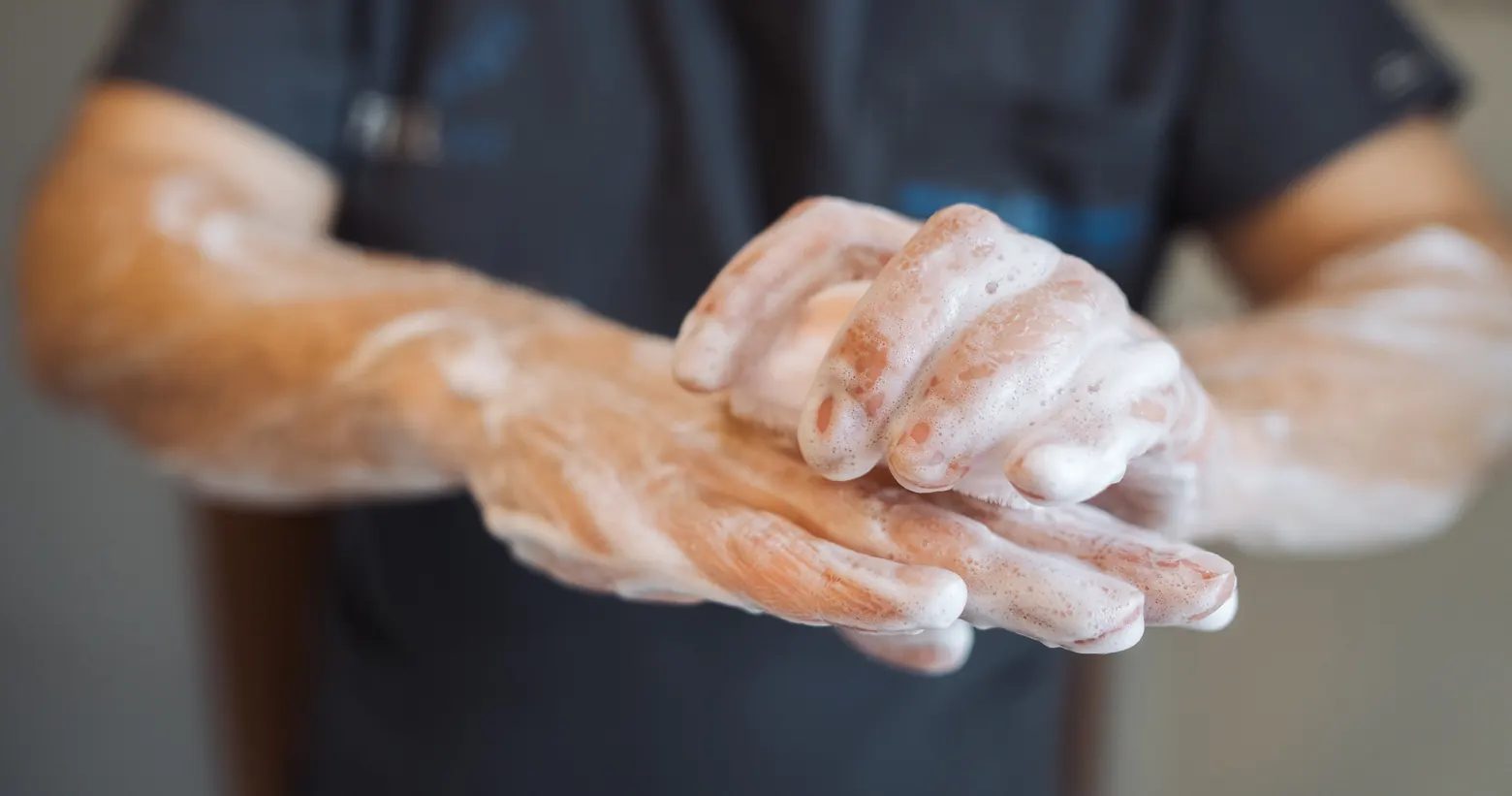
Wash for at least 20 seconds, covering all surfaces, including between the fingers, the thumbs, and under the nails.
Hand hygiene is the single most effective infection control action. If a question asks the most important way to prevent infection, that is the answer.
The short version
- On: hand hygiene → gown → mask → goggles → gloves
- Off: gloves → goggles → gown → mask → hand hygiene
- The front is dirty. Touch only ties and insides.
- Remove the N95 after leaving the room
- Soap and water for soiled hands and C. diff
PPE sequences follow national infection control guidelines. Follow your facility’s current protocol.
5 NCLEX practice questions on this topic
The same questions, player and partial-credit scoring students use inside NCLEXPace: answer, submit, read the full rationale, then Next. Your score is waiting at the end. No account needed for these.
A free account opens 20 more questions, a case study, a video and a cheat sheet. The full bank has 3,200+ questions with rationales, by topic.
Practice more, free →Ready for the full bank? See NCLEXPace plans and prices: one payment for 1, 2, 3 or 6 months.
Frequently asked questions
Common follow-up questions on Infection Control, Safety & Risk Reduction.
What is the correct order to put on PPE?
Hand hygiene, then gown, then mask or respirator, then goggles or face shield, then gloves. You build from the inside out, and gloves go on last so they stay clean and cover the gown cuffs. Putting gloves on before the gown is a common exam error.
What is the correct order to take off PPE?
Gloves, then goggles or face shield, then gown, then mask or respirator, then hand hygiene. The dirtiest item comes off first, because gloves have touched everything. The mask comes off last because you keep it on until you have left the contaminated area.
Which parts of PPE are considered dirty when removing it?
The front of everything is dirty; the ties, straps, and inside are clean. So touch only the ties, straps, and insides, never the front of the gown, the front of the mask, or the outside of the goggles. Roll things inward as you remove them so the dirty side ends up inside, and do hand hygiene any time you think you touched something contaminated.
When do I remove an N95 respirator in an airborne room?
Remove everything except the respirator inside the room, then remove the respirator after you leave and close the door. The respirator protects you until you are out of the contaminated air. Removing the N95 inside an airborne room is a common exam error, and N95 respirators also need a fit check every time, which facial hair prevents.
When is soap and water required instead of alcohol-based rub?
Soap and water is required for visibly soiled hands, for C. difficile, and after using the toilet. Alcohol-based rub is acceptable at other times and is often faster and gentler on skin. Wash for at least 20 seconds, and remember hand hygiene is the single most effective infection control action.
Sources and references
- Potter PA, Perry AG, Stockert PA, Hall AM. Fundamentals of Nursing. 10th ed. Elsevier; 2021; Chapter: Infection Prevention and Control.
- Siegel JD, et al.; Healthcare Infection Control Practices Advisory Committee. 2007 Guideline for Isolation Precautions: Preventing Transmission of Infectious Agents in Healthcare Settings. CDC; 2007 (last updated September 2024).
- World Health Organization. WHO Guidelines on Hand Hygiene in Health Care. Geneva: WHO; 2009.
Reviewed by the NCLEXPace team, October 2026.
Keep reading
3,200+ NCLEX questions with think-like-a-nurse rationales, unfolding case studies and adaptive readiness exams. Start with free practice questions, then choose a plan when you are ready.
Create Free Account →