
Perioperative Nursing: Safety Across the Surgical Journey
Perioperative nursing is continuity of safety across three phases. Before surgery you verify identity, procedure, site, consent, allergies and fasting status. In theatre you protect a patient who cannot protect themselves: asepsis, positioning, counts. In recovery, airway comes first, and restlessness is hypoxaemia until proven otherwise.

Surgical complications and wound care: dehiscence and evisceration, infection, the dressings, and the checks that catch problems early.
From the Intensive NCLEX Course. See the course; the full video library is part of Pro and Ultimate.
Perioperative nursing is one idea across three phases: continuity of safety. Confirm the right patient and procedure, anticipate risk, maintain asepsis, communicate changes and recognise complications early. Each phase has a signature priority the exam tests.
The three phases at a glance
| Phase | The nurse's central job | Signature priority |
|---|---|---|
| Preoperative | Verify identity, procedure, site, consent, allergies, fasting, labs | Nothing proceeds until identity, site and consent are confirmed |
| Intraoperative | Asepsis, positioning, counts, specimen handling, temperature | Protect a patient who cannot protect themselves |
| Postoperative | Airway, breathing, circulation, level of consciousness, bleeding | Airway first — restlessness is hypoxaemia until proven otherwise |
Before surgery: verify and prepare
Confirm identity using approved identifiers, the planned procedure and site, completion of required consent, allergies, relevant medications, fasting status, laboratory and diagnostic results, pregnancy status when applicable, baseline assessment, and availability of blood or special equipment when ordered. Confirm that required preoperative medications and prophylaxis are handled per policy.
The nurse witnesses the signature according to local rules but does not replace the provider's responsibility to explain the procedure and obtain informed consent.
In the operating room: protect the patient who cannot protect themselves
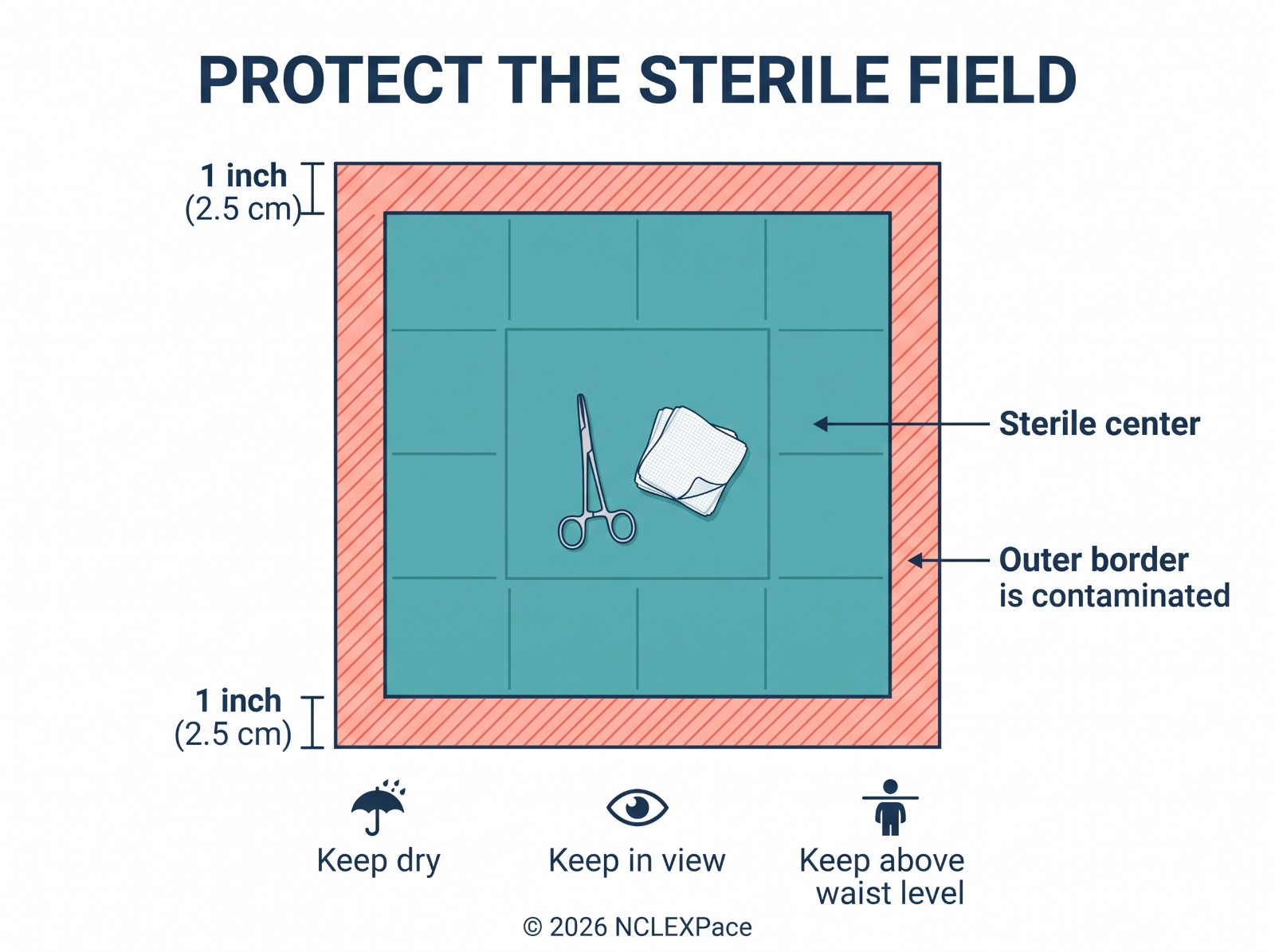
Maintain sterile technique, position the patient to prevent nerve and pressure injury, protect skin and eyes, count instruments and sponges per policy, document specimens accurately, monitor temperature, and communicate changes. Surgical safety checks occur at critical moments: before induction, before incision, and before the patient leaves the operating room.
Recovery: airway comes first
In the immediate postoperative period, prioritise airway patency, breathing, circulation, oxygenation, level of consciousness, pain, nausea, temperature, the incision and drains, urine output, and signs of bleeding. Restlessness may be an early sign of hypoxaemia and should not automatically be attributed to pain or anxiety.
Prevent predictable complications
Support pulmonary hygiene and mobilisation as ordered, use VTE prophylaxis, manage pain sufficiently to permit coughing and movement, monitor for urinary retention and ileus, protect the incision, and watch for infection or haemorrhage. Compare current findings with the preoperative baseline and trend — not just a single number.
The handoff is a clinical intervention
A safe handoff communicates the procedure performed, anaesthesia, allergies, medications, estimated blood loss, fluids, drains and lines, specimens, complications, pain treatment and immediate concerns. Closed-loop communication matters most when the patient is unstable or an unusual event occurred.
NCLEX tip: Across every perioperative phase, verify identity and procedure, protect airway and circulation, maintain asepsis, prevent positioning injury, and communicate risks clearly. In recovery, treat new restlessness as hypoxaemia and check the airway before reaching for the pain medication.
Educational use only: this article supports nursing review and does not replace clinical judgment, facility protocols, or instructions from an authorised prescriber.
5 NCLEX practice questions on this topic
The same questions, player and partial-credit scoring students use inside NCLEXPace: answer, submit, read the full rationale, then Next. Your score is waiting at the end. No account needed for these.
A free account opens 20 more questions, a case study, a video and a cheat sheet. The full bank has 3,200+ questions with rationales, by topic.
Practice more, free →Ready for the full bank? See NCLEXPace plans and prices: one payment for 1, 2, 3 or 6 months.
Frequently asked questions
Common follow-up questions on Body Systems & Clinical Content.
What is verified before surgery?
Identity using approved identifiers, the planned procedure and site, completed consent, allergies, relevant medications, fasting status, laboratory and diagnostic results, pregnancy status when applicable, and the availability of blood or special equipment when ordered.
Who is responsible for obtaining informed consent?
The provider performing the procedure explains it and obtains consent. The nurse may witness the signature according to local policy and confirm the patient understands, but does not take on the provider's duty to explain the procedure.
Why is restlessness important after surgery?
Restlessness in the immediate postoperative period may be an early sign of hypoxaemia, so the airway and oxygenation are checked before it is attributed to pain or anxiety. Airway, breathing and circulation come first in recovery.
When do surgical safety checks happen?
At three critical moments (before induction of anaesthesia, before skin incision, and before the patient leaves the operating room) covering identity, procedure, site, counts and any concerns from the team.
Why is the postoperative handoff considered a clinical intervention?
Because it transfers the information the receiving team needs to keep the patient safe (procedure, anaesthesia, allergies, blood loss, fluids, drains, specimens, complications and immediate concerns) using closed-loop communication, especially when the patient is unstable.
Sources and references
- Potter PA, Perry AG, Stockert PA, Hall AM. Fundamentals of Nursing. 10th ed. Elsevier; 2021; Chapter: Perioperative Nursing Care.
- World Health Organization. WHO Guidelines for Safe Surgery 2009: Safe Surgery Saves Lives. Geneva: WHO; 2009.
- Berrios-Torres SI, et al. Centers for Disease Control and Prevention Guideline for the Prevention of Surgical Site Infection, 2017. JAMA Surg. 2017;152(8):784-791.
Reviewed by the NCLEXPace team, October 2026.
Keep reading



3,200+ NCLEX questions with think-like-a-nurse rationales, unfolding case studies and adaptive readiness exams. Start with free practice questions, then choose a plan when you are ready.
Create Free Account →