Pheochromocytoma NCLEX Questions With Rationales
What it is
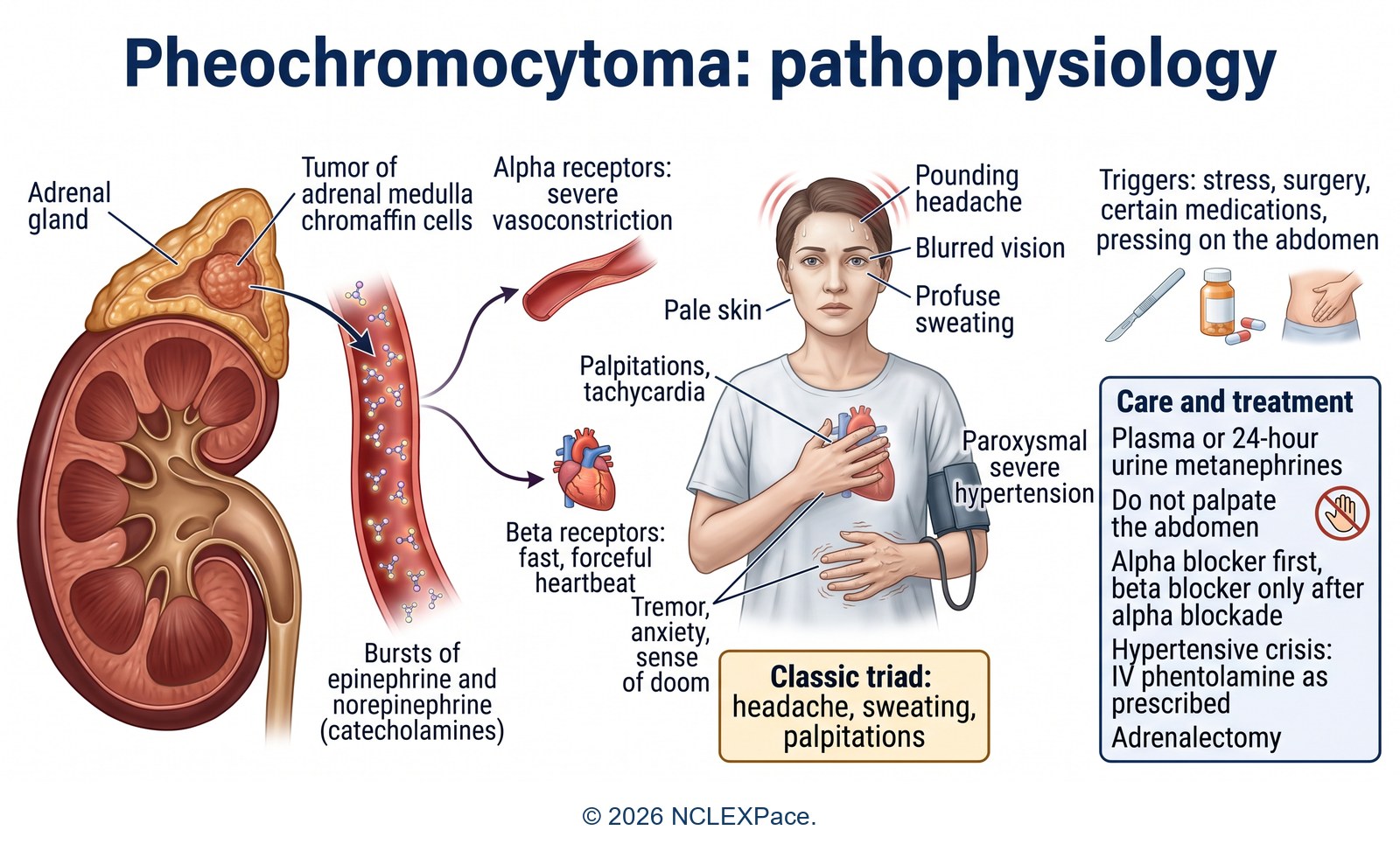
Pheochromocytoma is an uncommon catecholamine-secreting tumor arising from chromaffin cells of the adrenal medulla. Excessive release of epinephrine and norepinephrine causes episodic or sustained hypertension and sympathetic nervous system stimulation. Surgical removal is the primary treatment for most localized tumors, but careful preoperative medication preparation is essential to prevent life-threatening cardiovascular complications.
What the NCLEX focuses on
- Classic manifestations: The characteristic presentation includes severe episodic hypertension, pounding headache, palpitations, profuse sweating, tremor, pallor, and anxiety. Episodes may occur spontaneously or following specific triggers.
- Hypertensive crisis triggers: Physical exertion, emotional stress, trauma, anesthesia, surgery, tumor manipulation, and certain medications can provoke excessive catecholamine release. Tyramine-containing foods, including aged cheese and red wine, may also trigger episodes.
- Abdominal precautions: Never palpate or deeply massage the abdomen when pheochromocytoma is suspected because mechanical stimulation of the tumor may trigger a massive catecholamine release and hypertensive crisis.
- Diagnostic testing: Initial biochemical testing includes plasma free metanephrines or urinary fractionated metanephrines. A 24-hour urine collection may measure fractionated metanephrines and catecholamines. Imaging is performed after biochemical evidence supports the diagnosis.
- Alpha blockade first: Preoperative alpha-adrenergic blockade is essential to control vasoconstriction and hypertension. Phenoxybenzamine or the selective alpha-1 blocker doxazosin may be prescribed.
- Beta blockade second: A beta blocker such as propranolol or metoprolol may be added after adequate alpha blockade if tachycardia persists. Giving a beta blocker first can produce unopposed alpha-adrenergic vasoconstriction and precipitate a severe hypertensive crisis.
- Volume expansion: A high-sodium diet and increased fluid intake are prescribed during preoperative preparation when appropriate to correct catecholamine-related volume contraction and reduce postoperative hypotension. Use caution in clients with cardiac or renal impairment.
- Hypertensive crisis: Acute severe hypertension may require IV phentolamine or sodium nitroprusside under close hemodynamic monitoring. Treatment requires prompt recognition and management of cardiovascular complications.
- Postoperative complications: Following adrenalectomy, abrupt reduction in catecholamine levels can cause hypotension and rebound hypoglycemia. Monitor blood pressure, heart rate, circulating volume, and blood glucose closely. Adrenal insufficiency is also a concern when adrenal cortical function is inadequate, particularly after bilateral adrenalectomy.
Priority nursing actions
- Monitor blood pressure, heart rate, cardiac rhythm, headache, sweating, palpitations, and signs of acute cardiovascular instability.
- Maintain a calm environment, reduce unnecessary stimulation, avoid abdominal palpation, and minimize activities that may provoke catecholamine release.
- Prepare the client for plasma free metanephrine testing or a prescribed 24-hour urine collection and subsequent imaging.
- Administer prescribed alpha blockers first, monitor for orthostatic hypotension, and add beta blockers only after adequate alpha blockade when prescribed.
- Monitor fluid intake, sodium intake, blood pressure, and orthostatic symptoms during preoperative volume expansion.
- After adrenalectomy, closely monitor for hypotension, hypoglycemia, bleeding, and adrenal insufficiency. Administer prescribed IV fluids, glucose, vasopressors, or corticosteroid replacement when indicated.
Numbers to know
| Value | Number | Why it matters |
|---|---|---|
| Preoperative alpha blockade | 7 to 14 days | Recommended preparation period to control blood pressure and heart rate before surgery. |
| Plasma metanephrine preparation | At least 30 minutes supine | Resting in the supine position before blood collection helps reduce false-positive results. |
| Urinary diagnostic collection | 24 hours | Used to measure urinary fractionated metanephrines and catecholamines. |
Common exam traps
- Choosing a beta blocker before an alpha blocker: wrong because unopposed alpha stimulation can cause severe vasoconstriction and hypertensive crisis.
- Choosing to palpate an abdominal mass: wrong because mechanical stimulation may trigger catecholamine release.
- Choosing to perform adrenalectomy without preoperative preparation: wrong because uncontrolled catecholamine release can cause dangerous cardiovascular complications.
- Choosing to restrict sodium and fluids routinely before surgery: wrong because volume expansion is commonly required to correct catecholamine-induced volume contraction.
- Choosing to monitor only blood pressure after surgery: wrong because hypotension and rebound hypoglycemia are important postoperative complications.
What to teach
- Take prescribed alpha blockers consistently and change positions slowly to reduce dizziness and orthostatic hypotension.
- Avoid known triggers, including strenuous exertion, emotional stress, and foods identified by the healthcare team as problematic.
- Do not independently start or stop beta blockers, antihypertensives, or other medications without consulting the prescriber.
- Follow prescribed sodium and fluid recommendations before surgery, while reporting swelling, shortness of breath, or worsening cardiovascular symptoms.
- After surgery, report dizziness, fainting, sweating, shaking, confusion, or weakness because these may indicate hypotension or hypoglycemia.
- Attend long-term follow-up appointments because recurrent or metastatic disease can occur, and periodic biochemical monitoring may be recommended.
2 NCLEX questions with rationales on this topic
From the NCLEXPace question bank. Choose your answer first, then open the correct answer and the full rationale under each question.
A client is admitted for surgical removal of a pheochromocytoma scheduled in three days. Which nursing action is most important to include in the plan of care?
Select the best answer.
- A. Encourage scheduled hallway ambulation several times daily to reduce stress and maintain conditioning before surgery
- B. Maintain clear liquids for the three days before surgery to reduce gastrointestinal stimulation and catecholamine release
- C. Prioritize postoperative relaxation training now so the client can limit sympathetic stimulation during recovery
- D. Post a sign that abdominal palpation must be avoided
Show the correct answer and rationale
Correct answer:
- D. Post a sign that abdominal palpation must be avoided
Rationale
Overview
- Definition: Pheochromocytoma is a catecholamine-secreting tumor of adrenal medullary chromaffin cells. Excessive catecholamine release produces severe hypertension, tachycardia, and dysrhythmias.
- Triggers: Abdominal palpation, tumor manipulation, physical stress, and certain medications or foods trigger catecholamine release and hypertensive crisis.
- Preoperative care: Prescribed alpha blocker therapy usually begins 10 to 14 days before surgery. A beta blocker is added only after adequate alpha blockade when indicated. Increased dietary sodium and fluid intake restore intravascular volume according to the prescribed plan.
| Measure | Why |
|---|---|
| Avoid abdominal palpation | Prevents tumor stimulation and catecholamine release |
| Administer prescribed alpha blocker | Controls vasoconstriction and hypertension |
| Add beta blocker after alpha blockade | Controls tachycardia without unopposed alpha-adrenergic stimulation |
| Increase salt and fluids as prescribed | Restores intravascular volume before surgery |
| Monitor blood pressure and heart rhythm | Detects cardiovascular instability |
Nursing key points
- Post a precaution sign and communicate avoidance of abdominal palpation during handoff.
- Monitor blood pressure, heart rate, and cardiac rhythm as prescribed.
- Administer prescribed alpha blocker therapy before beta blocker therapy.
- Monitor for severe headache, palpitations, diaphoresis, chest pain, and acute hypertension.
- Follow prescribed sodium and fluid loading after adequate alpha blockade.
Answer analysis
| Nursing action | Rationale |
|---|---|
| Encourage scheduled hallway ambulation several times daily to reduce stress and maintain conditioning before surgery | Not correct. Activity requires hemodynamic assessment. Preventing direct tumor stimulation is the immediate priority. |
| Maintain clear liquids for the three days before surgery to reduce gastrointestinal stimulation and catecholamine release | Not correct. Prolonged clear-liquid restriction is not routine preparation and conflicts with prescribed volume expansion. |
| Prioritize postoperative relaxation training now so the client can limit sympathetic stimulation during recovery | Not correct. Relaxation training does not replace immediate precautions against tumor stimulation. |
| Post a sign that abdominal palpation must be avoided | Correct. Abdominal pressure triggers catecholamine release and a hypertensive crisis. |
A client with suspected pheochromocytoma has a blood pressure of 214/118 mm Hg, a severe headache, and diaphoresis. Which actions should the nurse take? Select all that apply.
- A. Notify the provider and prepare to administer an intravenous alpha adrenergic blocker or nitroprusside
- B. Administer a beta blocker first to slow the heart rate
- C. Initiate continuous blood pressure and cardiac monitoring
- D. Keep the environment quiet and the head of the bed elevated
- E. Palpate the abdomen to assess for a mass
- F. Prepare the client for surgical removal of the tumor once the pressure is controlled
Show the correct answer and rationale
Correct answers:
- A. Notify the provider and prepare to administer an intravenous alpha adrenergic blocker or nitroprusside
- C. Initiate continuous blood pressure and cardiac monitoring
- D. Keep the environment quiet and the head of the bed elevated
- F. Prepare the client for surgical removal of the tumor once the pressure is controlled
Rationale
Overview
- Definition: Pheochromocytoma is a catecholamine-secreting adrenal medullary tumor that causes episodic or sustained severe hypertension, headache, palpitations, and diaphoresis.
- Crisis care: Acute management requires monitored blood-pressure reduction with prescribed intravenous alpha adrenergic therapy or vasodilators. Alpha blockade precedes beta blocker administration.
- Surgery: Adrenalectomy is definitive treatment after adequate preoperative alpha blockade, volume preparation, and hemodynamic stabilization.
Nursing key points
- Notify the provider immediately for severe symptomatic hypertension.
- Initiate continuous blood-pressure and cardiac monitoring.
- Assess neurologic status, chest pain, oxygen saturation, and peripheral perfusion.
- Administer prescribed titratable IV antihypertensive medication and monitor the response.
- Avoid abdominal palpation and unnecessary stimulation of the suspected tumor.
- Verify adequate alpha blockade before administering any prescribed beta blocker.
Answer analysis
| Nursing action | Rationale |
|---|---|
| Notify the provider and prepare to administer an intravenous alpha adrenergic blocker or nitroprusside | Include. Severe symptomatic hypertension requires immediate escalation and prescribed intravenous therapy. |
| Administer a beta blocker first to slow the heart rate | Do not include. Beta blocker administration before alpha blockade causes unopposed alpha-mediated vasoconstriction and worsens the hypertensive crisis. |
| Initiate continuous blood pressure and cardiac monitoring | Include. Monitoring detects abrupt hemodynamic changes and dysrhythmias during treatment. |
| Keep the environment quiet and the head of the bed elevated | Include. Reducing stimulation limits catecholamine triggers, and head elevation promotes comfort. |
| Palpate the abdomen to assess for a mass | Do not include. Tumor manipulation triggers catecholamine release and worsens hypertension. |
| Prepare the client for surgical removal of the tumor once the pressure is controlled | Include. Surgery provides definitive treatment after adequate alpha blockade and full preoperative stabilization. |
The NCLEXPace bank has 3,200+ NCLEX questions with full rationales, sorted by topic, with your progress tracked as you practice. Create your account to start.
Create Account →More topics in Medical-Surgical
Lyme Disease NCLEX Questions With RationalesCovers Lyme disease stages, clinical manifestations, doxycycline treatment, tick removal, nursing priorities, and prevention.Influenza NCLEX Questions With RationalesReviews seasonal influenza symptoms, high-risk groups, antiviral treatment, isolation, vaccination, complications, and nursing care.Atopic Dermatitis (Eczema) NCLEX Questions With RationalesReviews childhood eczema manifestations, age-related distribution, triggers, skin care, topical medications, infection prevention, and parent education.Sources
- Endocrine Society. Pheochromocytoma and Paraganglioma: Clinical Practice Guideline. 2014.
- National Cancer Institute. Pheochromocytoma and Paraganglioma Treatment. 2025.
- National Institutes of Health, National Library of Medicine. Emergencies Related to Pheochromocytoma and Paraganglioma. 2017.
3,200+ NCLEX questions with think-like-a-nurse rationales, unfolding case studies and adaptive readiness exams. Start with free practice questions, then choose a plan when you are ready.
Create Account →