Nephrotic Syndrome in Children NCLEX Questions With Rationales
What it is
Nephrotic syndrome is a kidney disorder characterized by massive proteinuria, hypoalbuminemia, edema, and hyperlipidemia. Damage to the glomerular filtration barrier allows large amounts of protein, particularly albumin, to escape into the urine. Primary nephrotic syndrome, commonly associated with minimal change disease, is a frequent cause in children. Loss of circulating albumin reduces plasma oncotic pressure, causing fluid to move into surrounding tissues and produce generalized edema.
What the NCLEX focuses on
- Proteinuria: Excessive urinary protein loss is the defining laboratory finding and may produce persistently foamy urine.
- Hypoalbuminemia: Reduced serum albumin contributes to decreased oncotic pressure and fluid accumulation.
- Edema: Periorbital swelling is often noticeable in the morning, while dependent edema may become more prominent later in the day.
- Hyperlipidemia: The liver increases lipoprotein production in response to reduced circulating protein levels.
- Difference from acute glomerulonephritis: Nephrotic syndrome typically produces massive proteinuria, generalized edema, and hypoalbuminemia, whereas acute glomerulonephritis commonly presents with hematuria, hypertension, oliguria, and reduced kidney function.
- Corticosteroids: Prednisone or prednisolone is commonly prescribed for initial treatment of primary childhood nephrotic syndrome. Many children respond by entering remission.
- Infection risk: Urinary loss of immunoglobulins and complement-related proteins, together with immunosuppressive treatment, increases susceptibility to serious infections, including peritonitis and cellulitis.
- Thromboembolism: Loss of anticoagulant proteins in urine increases the risk of blood clots.
- Relapse: Recurrence of significant proteinuria after remission is common and requires monitoring and follow-up with the kidney specialist.
Priority nursing actions
- Assess respiratory status, oxygenation, circulation, blood pressure, and the extent of edema, identifying respiratory compromise or significant fluid imbalance.
- Monitor daily weight, intake and output, urine protein, abdominal girth when indicated, and prescribed laboratory results.
- Assess for infection, including fever, abdominal pain, tenderness, lethargy, and skin changes. Report suspected infection promptly.
- Administer prescribed corticosteroids and monitor for adverse effects, including increased appetite, weight gain, hypertension, mood changes, and increased infection susceptibility.
- Administer prescribed medications, including diuretics or albumin when indicated, and monitor their effects on fluid balance and circulation.
Numbers to know
| Value | Number | Why it matters |
|---|---|---|
| Nephrotic-range urine protein-to-creatinine ratio | At least 2 g/g | Supports the diagnosis of nephrotic-range proteinuria. |
| Serum albumin | Less than 3 g/dL | Indicates hypoalbuminemia in the diagnostic criteria. |
| Complete remission | Three or more consecutive days | First-morning urine protein is negative or trace, or the urine protein-to-creatinine ratio is at or below 0.2 g/g. |
Common exam traps
- Choosing fluid restriction for every child: wrong because fluid restriction depends on the child's fluid status and the prescribed treatment plan.
- Choosing a high-protein diet: wrong because excessive dietary protein does not correct urinary protein loss and is not routinely recommended.
- Choosing acute glomerulonephritis as the diagnosis when massive proteinuria and hypoalbuminemia dominate: wrong because these findings are characteristic of nephrotic syndrome.
- Choosing antibiotics for every relapse: wrong because relapse is generally managed according to the prescribed nephrotic syndrome treatment plan, not automatically with antibiotics.
What to teach
- Measure and record the child's weight every morning using the same scale, at approximately the same time, under consistent conditions.
- Check first-morning urine protein at home using the prescribed urine dipstick schedule and maintain a written record of results.
- Report increasing proteinuria, worsening swelling, reduced urine output, fever, abdominal pain, or breathing difficulty promptly.
- Follow a low-sodium diet when recommended to help control edema. Maintain adequate nutrition without independently increasing dietary protein.
- Administer corticosteroids exactly as prescribed. Do not abruptly discontinue treatment without instructions from the prescriber.
- Keep the child away from people with chickenpox or measles during high-dose corticosteroid treatment, and report any exposure promptly.
- Understand that relapses can occur. Contact the healthcare team when urine protein increases according to the child's relapse action plan.
2 NCLEX questions with rationales on this topic
From the NCLEXPace question bank. Choose your answer first, then open the correct answer and the full rationale under each question.
Select the best answer.
- A. Periorbital edema becomes less noticeable by midday even though morning swelling continues each day
- B. Serum cholesterol rises above 400 mg/dL while body weight remains elevated from persistent edema
- C. Urine protein falling with weight decreasing toward baseline
- D. Urine becomes dark and cola-colored while the measured protein concentration gradually decreases
Show the correct answer and rationale
Correct answer:
- C. Urine protein falling with weight decreasing toward baseline
Rationale
Overview
- Definition: Nephrotic syndrome is a glomerular disorder characterized by heavy proteinuria, hypoalbuminemia, edema, and hyperlipidemia.
- Signs of response: Effective treatment reduces proteinuria, increases serum albumin, and resolves edema. Weight decreases toward baseline as excess fluid is eliminated.
- Remission: Complete remission is marked by urine protein returning to the normal or near-normal range, often producing negative or trace dipstick findings. Serum albumin and edema also improve.
Nursing key points
- Compare urine protein results with previous measurements.
- Measure daily weight and assess edema consistently.
- Monitor serum albumin and lipid results.
- Maintain prescribed treatment and dietary restrictions.
- Report increasing proteinuria, recurrent edema, or rapid weight gain.
- Teach the client that urine protein and weight trends are important measures of response.
Answer analysis
| Reported finding | Rationale |
|---|---|
| Periorbital edema becomes less noticeable by midday even though morning swelling continues each day | Not correct. Persistent morning edema indicates continued fluid accumulation. |
| Serum cholesterol rises above 400 mg/dL while body weight remains elevated from persistent edema | Not correct. Increasing cholesterol and persistent edema indicate ongoing disease activity. |
| Urine protein falling with weight decreasing toward baseline | Correct. Reduced proteinuria and declining excess fluid weight demonstrate improvement. |
| Urine becomes dark and cola-colored while the measured protein concentration gradually decreases | Not correct. Cola-colored urine indicates hematuria and requires evaluation. |
The nurse has taught the parents of a 5-year-old whose nephrotic syndrome has relapsed and who has just started prednisone 2 mg/kg/day. Several children in the child’s indoor play group currently have chickenpox. For each parent statement, indicate whether it indicates correct understanding or requires follow-up.
For each statement, identify whether it indicates correct understanding or requires follow-up.
| Correct understanding | Requires follow-up | |
|---|---|---|
| "I will weigh her each morning and measure her belly at the same mark." | ||
| "I will take her back to the indoor play group so she is not bored." | ||
| "I will stop the prednisone once the puffiness is gone." | ||
| "I will dipstick her first morning urine daily and write down the result." | ||
| "I will serve her usual protein foods and add no salt at the table." |
Show the correct answer and rationale
Correct answers:
- "I will weigh her each morning and measure her belly at the same mark.": Correct understanding
- "I will take her back to the indoor play group so she is not bored.": Requires follow-up
- "I will stop the prednisone once the puffiness is gone.": Requires follow-up
- "I will dipstick her first morning urine daily and write down the result.": Correct understanding
- "I will serve her usual protein foods and add no salt at the table.": Correct understanding
Rationale
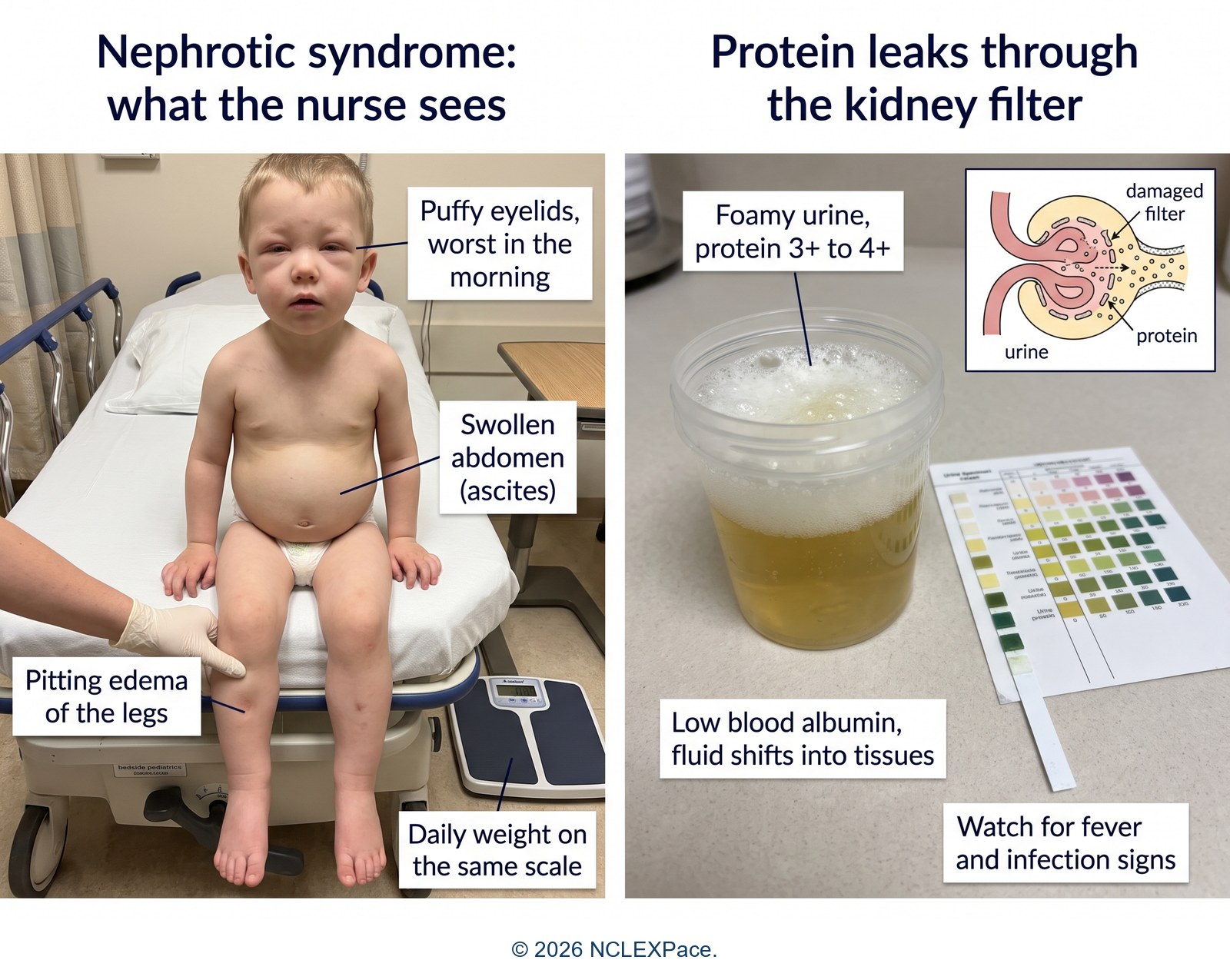
Protein leaks through the damaged glomerular filter, serum albumin falls, and fluid shifts into the tissues; monitor daily weight, swelling, urine protein and signs of infection.
Overview
- Definition: Nephrotic syndrome causes heavy proteinuria, hypoalbuminemia, and edema. Prednisone suppresses inflammation and immune function during relapse treatment.
- Signs and symptoms: Periorbital edema, abdominal distention, weight gain, and increased urinary protein indicate active disease.
- Home monitoring: Daily weight, consistent abdominal girth measurements, and first-morning urine protein testing track fluid retention and treatment response.
- Treatment: Follow the prescribed prednisone regimen and sodium restriction. Avoid known varicella exposure during immunosuppressive therapy.
Nursing key points
- Weigh the child every morning using the same scale and conditions. Measure abdominal girth at the same landmark.
- Test first-morning urine protein daily. Record results; negative or trace protein for 3 consecutive days indicates remission.
- Provide normal age-appropriate protein intake and follow prescribed sodium restrictions.
- Keep the child away from the play group during the chickenpox outbreak.
- Report varicella exposure immediately for assessment of varicella-zoster immune globulin or antiviral prophylaxis.
- Administer prednisone exactly as prescribed. Follow provider-directed dose changes and tapering.
Answer analysis
| Parent statement | Correct understanding or requires follow-up? | Why |
|---|---|---|
| "I will weigh her each morning and measure her belly at the same mark." | Correct understanding. | Consistent measurements detect changes in edema and fluid retention. |
| "I will take her back to the indoor play group so she is not bored." | Requires follow-up. | High-dose prednisone increases the risk of severe varicella infection. |
| "I will stop the prednisone once the puffiness is gone." | Requires follow-up. | Abrupt discontinuation risks adrenal insufficiency and disease relapse. |
| "I will dipstick her first morning urine daily and write down the result." | Correct understanding. | Serial urine testing identifies proteinuria trends and remission. |
| "I will serve her usual protein foods and add no salt at the table." | Correct understanding. | Normal dietary protein supports growth, and sodium restriction reduces edema. |
The NCLEXPace bank has 3,200+ NCLEX questions with full rationales, sorted by topic, with your progress tracked as you practice. Create your account to start.
Create Account →More topics in Pediatrics
Measles and Varicella NCLEX Questions With RationalesReviews measles and chickenpox symptoms, transmission, isolation, complications, treatment, vaccination, and nursing interventions.Pertussis (Whooping Cough) NCLEX Questions With RationalesCovers pertussis stages, transmission, diagnosis, antibiotic treatment, isolation, infant complications, nursing interventions, and vaccination.Wilms Tumor NCLEX Questions With RationalesCovers Wilms tumor manifestations, prevention of tumor rupture, surgical treatment, postoperative nursing care, and long-term kidney protection.Sources
3,200+ NCLEX questions with think-like-a-nurse rationales, unfolding case studies and adaptive readiness exams. Start with free practice questions, then choose a plan when you are ready.
Create Account →