Myasthenia Gravis NCLEX Questions With Rationales
What it is
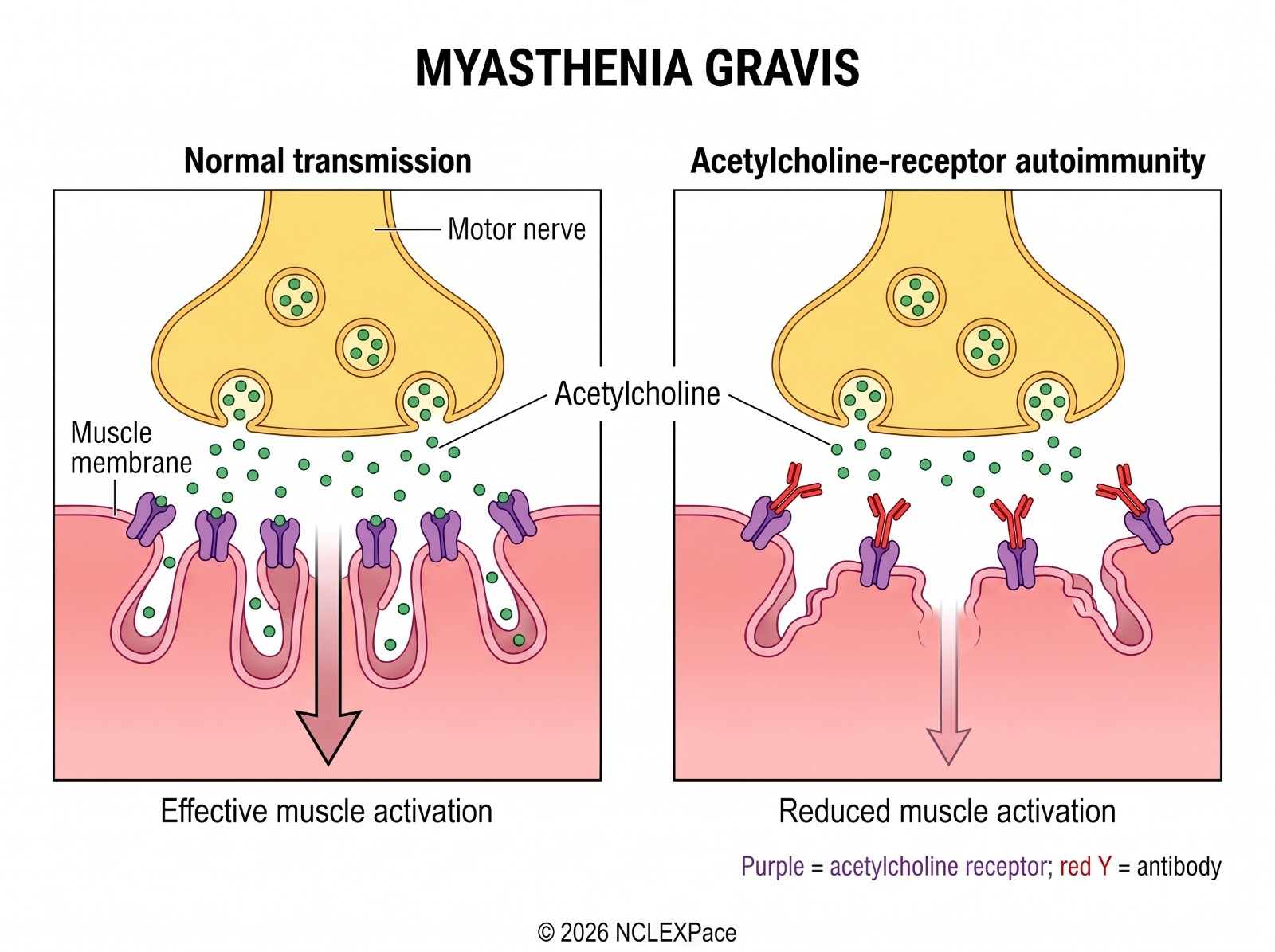
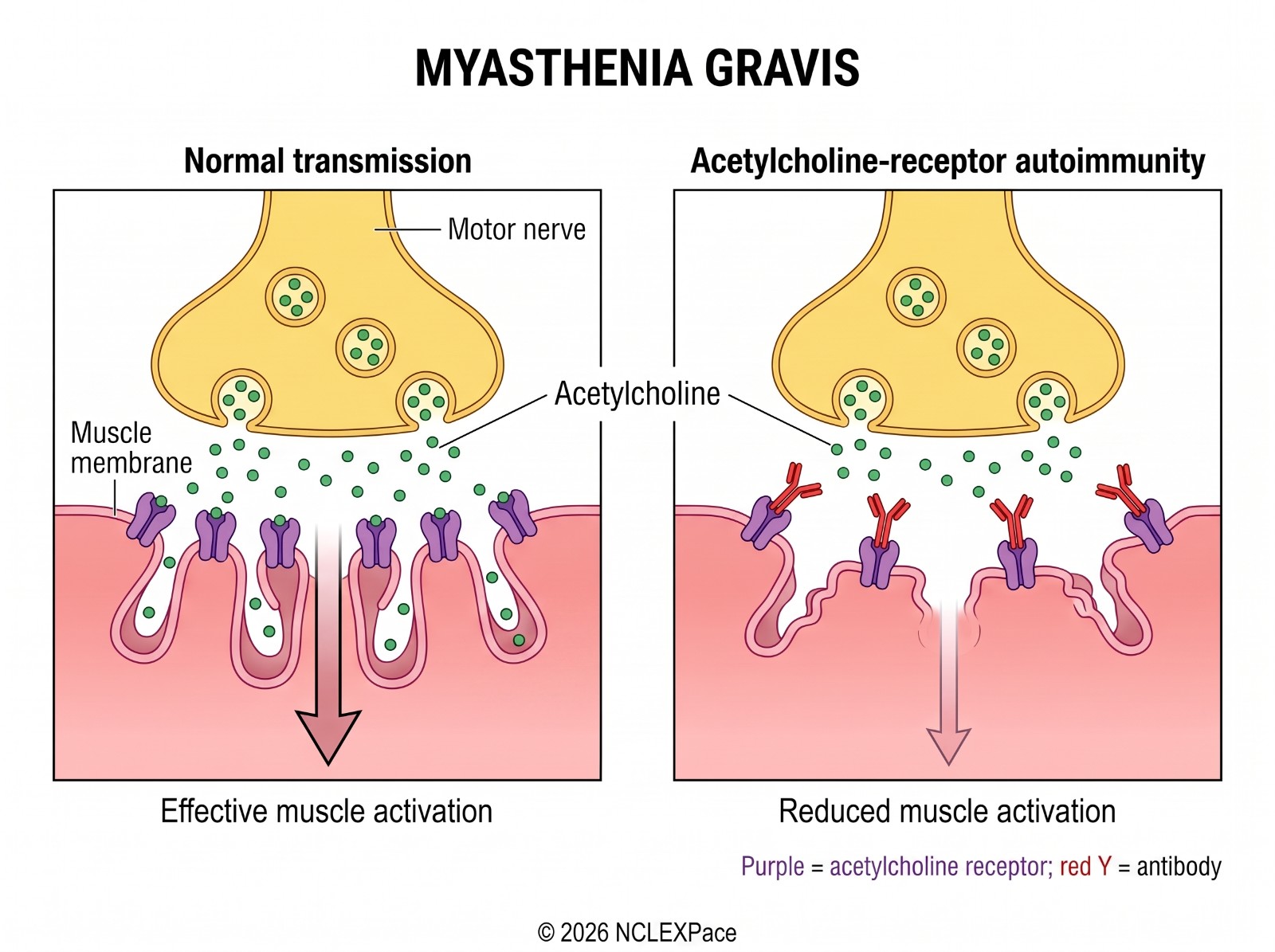
Myasthenia gravis is a chronic autoimmune disease of the neuromuscular junction. Antibodies block, alter or destroy acetylcholine receptors on the muscle, so nerve signals cannot produce a full contraction. The result is weakness of voluntary muscles that worsens with repeated use and improves with rest. About 10% of clients have a thymoma.
What the NCLEX focuses on
- Fatigable weakness is the hallmark: it increases with repetitive use, is most prominent at the end of the day and improves after rest or sleep.
- Ptosis and diplopia are the most common presenting findings.
- Bulbar weakness causes difficulty chewing, dysphagia, voice changes and choking, with a high risk of aspiration.
- Pyridostigmine, a cholinesterase inhibitor, slows the breakdown of acetylcholine and improves strength but does not change the disease process.
- Myasthenic crisis is life-threatening respiratory muscle weakness, often triggered by infection; it is treated with IVIG or plasma exchange.
- Cholinergic crisis is weakness from too much anticholinesterase medication, with increased salivation and tearing, abdominal cramping, diarrhea and muscle fasciculations.
- The two crises can look alike, so airway and ventilation are the priority in both.
- Triggers of worsening include infection, surgery, emotional stress, pregnancy and drugs such as aminoglycosides, fluoroquinolones, beta-blockers and magnesium sulfate.
Priority nursing actions
- Assess airway and breathing first: respiratory rate and effort, oxygen saturation, cough, ability to swallow secretions and bedside forced vital capacity as prescribed.
- Keep suction and emergency airway equipment at the bedside and report declining respiratory function immediately; intubation and mechanical ventilation may be needed.
- Give pyridostigmine on time, with doses scheduled before meals.
- Check swallowing before oral intake, seat the client upright with the chin down, and offer small, frequent meals of soft food.
- If cholinergic crisis is suspected, support ventilation and expect anticholinesterase medication to be stopped as prescribed; atropine may be prescribed.
- Plan care around rest periods and review new prescriptions for drugs that worsen weakness.
Numbers to know
| Value | Number | Why it matters |
|---|---|---|
| Pyridostigmine timing | 30 to 60 minutes before meals | Strength is best during chewing and swallowing |
| Myasthenic crisis | About 15 to 20% of clients, at least once | Emergency; a ventilator may be needed |
| IVIG in crisis | 400 mg/kg once daily for 5 days | Most clients improve in 1 to 2 weeks |
| Ice pack test | Ice on closed eyes for 2 minutes | Positive when ptosis improves |
Common exam traps
- Choosing extra pyridostigmine for weakness with drooling, cramping and diarrhea: wrong because these findings suggest cholinergic crisis, which more drug worsens.
- Choosing the edrophonium test as routine current practice: wrong because it is no longer routinely performed and edrophonium is no longer available in the United States.
- Choosing gentamicin as a safe antibiotic: wrong because aminoglycosides can precipitate worsening weakness.
- Choosing to finish a full neurologic assessment before checking breathing in a client with increasing weakness: wrong because respiratory failure can occur rapidly.
What to teach
- Take pyridostigmine exactly on schedule, timed before meals.
- Balance activity with rest, because fatigue can trigger a crisis.
- Prevent infection with handwashing, a yearly influenza vaccine and recommended vaccinations.
- Tell every provider and pharmacist about the diagnosis before starting any new drug, including antacids and laxatives that contain magnesium.
- Seek emergency care for trouble breathing or swallowing or for rapidly increasing weakness.
2 NCLEX questions with rationales on this topic
From the NCLEXPace question bank. Choose your answer first, then open the correct answer and the full rationale under each question.
A client with myasthenia gravis develops increasing weakness, difficulty swallowing, and shortness of breath. The client missed several medication doses during a recent infection. Which crisis does the nurse suspect?
Select the best answer.
- A. An acute anxiety episode with hyperventilation
- B. Myasthenic crisis from undermedication
- C. Cholinergic crisis from drug accumulation
- D. Hypersensitivity reaction to pyridostigmine
Show the correct answer and rationale
Correct answer:
- B. Myasthenic crisis from undermedication
Rationale
Overview
- Definition: Myasthenic crisis is a life-threatening exacerbation of myasthenia gravis with severe respiratory or bulbar muscle weakness requiring urgent ventilatory assessment and support.
- Triggers: Infection, missed medication doses, surgery, physiologic stress, and medications that impair neuromuscular transmission precipitate worsening weakness.
- Care: Emergency treatment includes airway protection, ventilatory support, intravenous immunoglobulin (IVIG), or plasma exchange.
Nursing key points
- Recognize dysphagia, dysarthria, weak cough, and shortness of breath as warning signs of respiratory compromise.
- Assess vital capacity, respiratory effort, and swallowing. Escalate respiratory deterioration immediately.
- Prepare suction, airway protection, and mechanical ventilation when indicated.
- Administer prescribed IVIG or plasma exchange for acute crisis treatment.
- Review missed medication doses and recent infections.
- Identify drugs that worsen myasthenic weakness, including aminoglycosides, magnesium, and certain beta blockers.
Answer analysis
| Interpretation | Rationale |
|---|---|
| An acute anxiety episode with hyperventilation | Not correct. Progressive swallowing difficulty and respiratory weakness indicate a neuromuscular crisis. |
| Myasthenic crisis from undermedication | Correct. Missed medication doses and infection trigger severe myasthenic worsening with bulbar and respiratory weakness. |
| Cholinergic crisis from drug accumulation | Not correct. The client missed doses and has no findings of excessive muscarinic activity. |
| Hypersensitivity reaction to pyridostigmine | Not correct. The history and neuromuscular findings indicate myasthenic worsening rather than hypersensitivity. |
A client with myasthenia gravis takes pyridostigmine. When should the nurse plan to administer the dose relative to meals?
Select the best answer.
- A. About 30 to 60 minutes before meals
- B. Only when weakness becomes noticeable
- C. Immediately after each meal
- D. Once a day at bedtime
Show the correct answer and rationale
Correct answer:
- A. About 30 to 60 minutes before meals
Rationale
Overview
- Definition: Pyridostigmine is an acetylcholinesterase inhibitor that increases acetylcholine availability at the neuromuscular junction and improves skeletal muscle strength in myasthenia gravis.
- Timing: Immediate-release pyridostigmine is commonly administered 30 to 60 minutes before meals to improve chewing and swallowing strength during eating.
- Administration: Consistent dosing maintains neuromuscular function. Follow the prescribed individualized dosing interval and formulation.
Nursing key points
- Administer prescribed immediate-release pyridostigmine approximately 30 to 60 minutes before meals.
- Give every scheduled dose on time and verify the prescribed formulation.
- Assess chewing strength, swallowing, and aspiration risk before meals.
- Position the client upright during meals and follow the prescribed swallowing plan.
- Report delayed doses, increasing dysphagia, weak cough, or respiratory weakness promptly.
Answer analysis
| Dosing schedule | Rationale |
|---|---|
| About 30 to 60 minutes before meals | Correct. Premeal administration improves neuromuscular strength when chewing and swallowing are required. |
| Only when weakness becomes noticeable | Not correct. Symptom-based administration disrupts the prescribed schedule and leaves swallowing strength inadequate. |
| Immediately after each meal | Not correct. Postmeal administration delays improvement until after the period of greatest swallowing demand. |
| Once a day at bedtime | Not correct. Bedtime-only dosing does not provide adequate daytime strength with a prescribed multiple-dose regimen. |
The NCLEXPace bank has 3,200+ NCLEX questions with full rationales, sorted by topic, with your progress tracked as you practice. Create your account to start.
Create Account →More topics in Medical-Surgical
Lyme Disease NCLEX Questions With RationalesCovers Lyme disease stages, clinical manifestations, doxycycline treatment, tick removal, nursing priorities, and prevention.Influenza NCLEX Questions With RationalesReviews seasonal influenza symptoms, high-risk groups, antiviral treatment, isolation, vaccination, complications, and nursing care.Atopic Dermatitis (Eczema) NCLEX Questions With RationalesReviews childhood eczema manifestations, age-related distribution, triggers, skin care, topical medications, infection prevention, and parent education.Sources
- Merck Manual Professional Edition. Myasthenia Gravis. 2026.
- National Institute of Neurological Disorders and Stroke (NIH). Myasthenia Gravis. Last reviewed 2026.
- Open RN (NCBI Bookshelf). Health Alterations, Chapter 9: Nervous System Alterations. 2024.
- StatPearls (NCBI Bookshelf). Myasthenia Gravis. Last update 2023.
3,200+ NCLEX questions with think-like-a-nurse rationales, unfolding case studies and adaptive readiness exams. Start with free practice questions, then choose a plan when you are ready.
Create Account →