Lithium NCLEX Questions With Rationales
What it is
Lithium is a mood stabilizer used to treat acute manic episodes and for maintenance treatment of bipolar I disorder. It has a narrow therapeutic index, meaning toxic concentrations are close to therapeutic concentrations. Lithium is eliminated primarily through the kidneys, and changes in sodium balance, hydration, or renal function can increase toxicity risk.
What the NCLEX focuses on
- The target serum lithium concentration for acute mania is 0.8 to 1.2 mEq/L, while the maintenance target is 0.8 to 1.0 mEq/L.
- Lithium toxicity can occur at concentrations of 1.5 mEq/L or higher, although clinical toxicity may occur within the therapeutic range.
- Early toxicity manifestations include nausea, vomiting, diarrhea, lethargy, and worsening tremor.
- Severe toxicity can cause marked ataxia, confusion, seizures, decreased consciousness, and cardiac dysrhythmias.
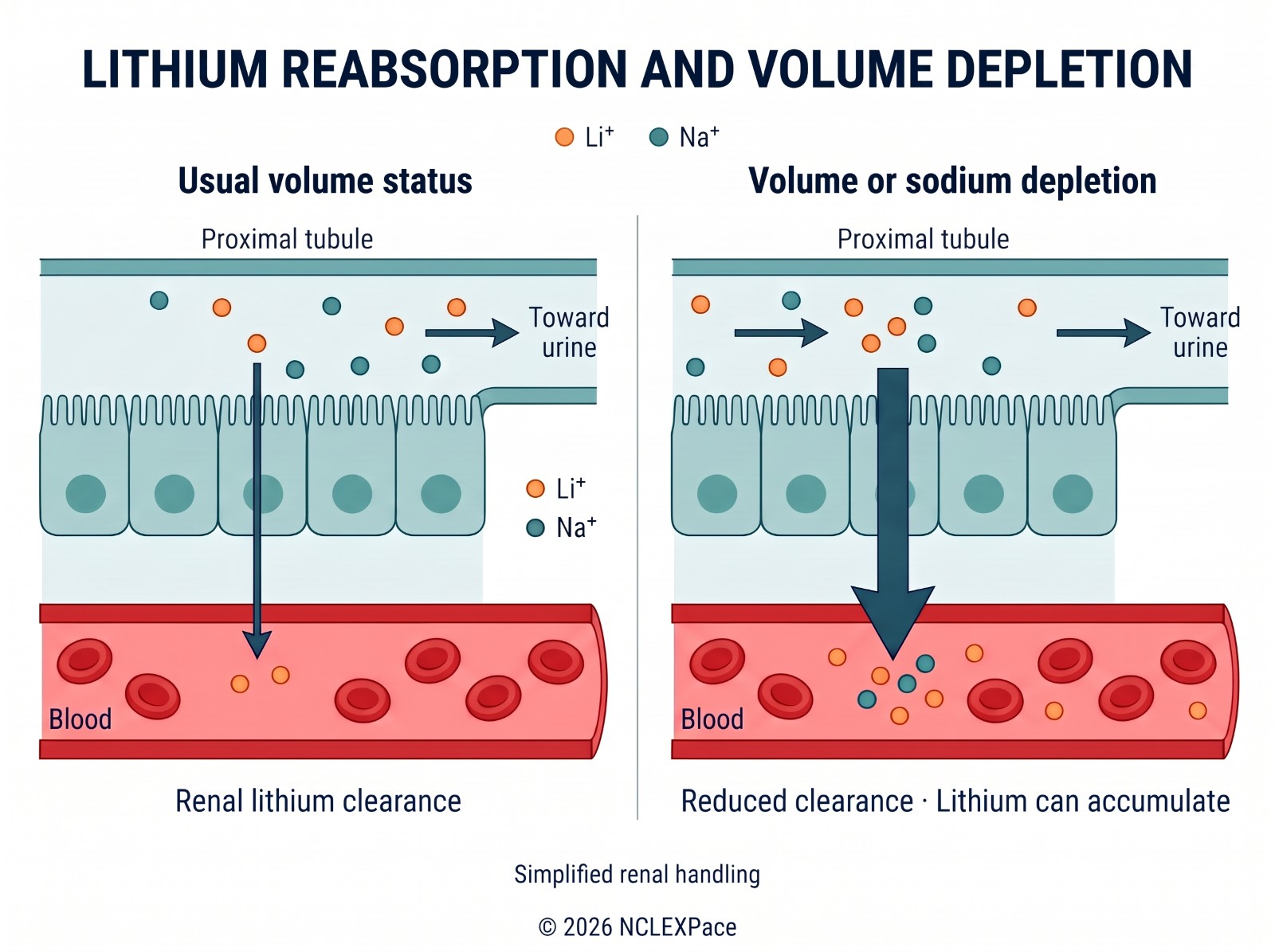
- Dehydration and sodium depletion increase lithium reabsorption and toxicity risk.
- Nonsteroidal anti-inflammatory drugs, thiazide diuretics, and angiotensin-converting enzyme inhibitors can increase lithium concentrations.
- Long-term lithium therapy can impair kidney function and cause hypothyroidism.
- Lithium exposure during pregnancy may increase fetal cardiac malformation risk and requires individualized provider assessment.
Priority nursing actions
- Assess airway, breathing, circulation, consciousness, and neurologic status when toxicity is suspected.
- Withhold lithium when toxicity is suspected, immediately notify the provider, and obtain urgent evaluation.
- Monitor prescribed serum lithium concentrations, electrolytes, renal function, and hydration status.
- Administer prescribed intravenous fluids and other treatments for toxicity while monitoring fluid balance.
- Review medication changes, thyroid testing, and pregnancy status with the provider.
Numbers to know
| Value | Number | Why it matters |
|---|---|---|
| Acute mania target | 0.8 to 1.2 mEq/L | Guides prescribed treatment. |
| Maintenance target | 0.8 to 1.0 mEq/L | Guides long-term therapy. |
| Toxicity threshold | 1.5 mEq/L or higher | Requires urgent clinical assessment. |
| Moderate toxicity | 2.5 to 3.5 mEq/L | Associated with greater toxicity risk. |
| Severe toxicity | Greater than 3.5 mEq/L | Associated with potentially life-threatening effects. |
| Serum sampling | 12 hours after the previous dose | Provides the standardized monitoring concentration. |
Common exam traps
- Choosing to administer lithium despite new severe tremor and confusion: wrong because these findings may indicate toxicity.
- Choosing a sodium-restricted diet: wrong because sodium depletion increases lithium retention.
- Choosing ibuprofen without reviewing interactions: wrong because NSAIDs may increase serum lithium.
- Choosing to exclude toxicity because the concentration is therapeutic: wrong because symptoms can occur within the therapeutic range.
What to teach
- Maintain consistent sodium intake and adequate hydration, particularly during exercise or hot weather.
- Report vomiting, diarrhea, fever, excessive sweating, or difficulty maintaining fluid intake promptly.
- Avoid starting over-the-counter NSAIDs or new prescribed medications without interaction screening.
- Attend scheduled lithium, kidney function, and thyroid laboratory appointments.
- Report pregnancy or plans for pregnancy promptly and discuss treatment risks before making medication changes.
2 NCLEX questions with rationales on this topic
From the NCLEXPace question bank. Choose your answer first, then open the correct answer and the full rationale under each question.
A client taking lithium reports nausea, a coarse hand tremor, and difficulty with balance for the past day. Which action should the nurse take?
Select the best answer.
- A. Increase oral fluids and continue the usual lithium dose
- B. Reassure the client that tremor occurs and monitor for several days
- C. Give the next lithium dose, then draw a serum lithium level
- D. Hold the next dose and obtain a lithium level as ordered
Show the correct answer and rationale
Correct answer:
- D. Hold the next dose and obtain a lithium level as ordered
Rationale
Overview
- Definition: Lithium toxicity results from excessive lithium exposure and affects gastrointestinal and neurologic function.
- Signs by severity: Early toxicity includes nausea and worsening tremor. Moderate toxicity includes coarse tremor, ataxia, and confusion. Severe toxicity includes seizures and coma.
- Treatment: Withhold lithium and obtain urgent clinical assessment.
Nursing key points
- Hold the next dose and notify the provider promptly.
- Obtain a stat lithium level, sodium, and creatinine as ordered.
- Assess hydration, recent fluid losses, and interacting medications.
- Assess consciousness and gait; institute fall precautions.
- Escalate seizures or declining consciousness immediately.
Answer analysis
| Nursing action | Rationale |
|---|---|
| Increase oral fluids and continue the usual lithium dose | Not correct. Fluids alone do not address toxicity; continued dosing increases exposure. |
| Reassure the client that tremor occurs and monitor for several days | Not correct. Fine tremor is an expected adverse effect. Coarse tremor with ataxia requires urgent assessment. |
| Give the next lithium dose, then draw a serum lithium level | Not correct. Another dose increases lithium exposure before toxicity is assessed. |
| Hold the next dose and obtain a lithium level as ordered | Correct. These findings indicate lithium toxicity and require withholding the dose and urgent testing. |
A client stabilized on lithium is admitted with vomiting and diarrhea after a viral illness and reports a new coarse hand tremor. Serum sodium is low. Which action should the nurse take first?
Select the best answer.
- A. Give the scheduled dose and repeat the sodium and lithium levels afterward
- B. Document the losses and tremor and reassess before the next dose
- C. Restrict oral fluids to correct the low sodium before adjusting lithium
- D. Hold the next dose of lithium and notify the provider
Show the correct answer and rationale
Correct answer:
- D. Hold the next dose of lithium and notify the provider
Rationale
Overview
- Definition: Lithium toxicity is excessive lithium exposure causing gastrointestinal and neurologic dysfunction. Dehydration and sodium depletion increase the risk during maintenance therapy.
- Mechanism: Vomiting and diarrhea cause volume and sodium depletion. Increased renal lithium reabsorption reduces clearance and increases serum lithium concentrations.
- First actions: Withhold lithium, notify the provider, and obtain urgent lithium, electrolyte, and renal function testing. Severe toxicity requires hospital treatment, including hemodialysis when indicated.
Nursing key points
- Recognize new coarse tremor with vomiting, diarrhea, and hyponatremia as suspected lithium toxicity.
- Withhold the next lithium dose immediately and notify the provider.
- Obtain a stat serum lithium level, sodium, potassium, and creatinine as prescribed.
- Administer prescribed isotonic IV fluids to correct volume depletion.
- Monitor mental status, gait, tremor, urine output, and cardiac rhythm.
- Prepare for emergency management, including hemodialysis for severe toxicity when indicated.
Answer analysis
| Nursing action | Rationale |
|---|---|
| Give the scheduled dose and repeat the sodium and lithium levels afterward | Not correct. Administering additional lithium increases exposure during suspected toxicity. |
| Document the losses and tremor and reassess before the next dose | Not correct. Delayed reassessment permits progression of neurologic toxicity. |
| Restrict oral fluids to correct the low sodium before adjusting lithium | Not correct. Fluid restriction worsens hypovolemia and reduces renal lithium clearance. |
| Hold the next dose of lithium and notify the provider | Correct. Immediate withholding prevents additional exposure while urgent evaluation begins. |
The NCLEXPace bank has 3,200+ NCLEX questions with full rationales, sorted by topic, with your progress tracked as you practice. Create your account to start.
Create Account →More topics in Pharmacology
Proton Pump Inhibitors and Antacids NCLEX Questions With RationalesReviews acid-suppressing medications, administration, adverse effects, drug interactions, and nursing priorities for gastrointestinal bleeding.Calcium Channel Blockers NCLEX Questions With RationalesReviews calcium channel blocker classes, cardiovascular uses, adverse effects, nursing assessments, medication safety, and client teaching.Statins NCLEX Questions With RationalesReviews statin medications, LDL reduction, adverse effects, drug interactions, laboratory monitoring, and client education.Sources
3,200+ NCLEX questions with think-like-a-nurse rationales, unfolding case studies and adaptive readiness exams. Start with free practice questions, then choose a plan when you are ready.
Create Account →