Hypothyroidism NCLEX Questions With Rationales
What it is
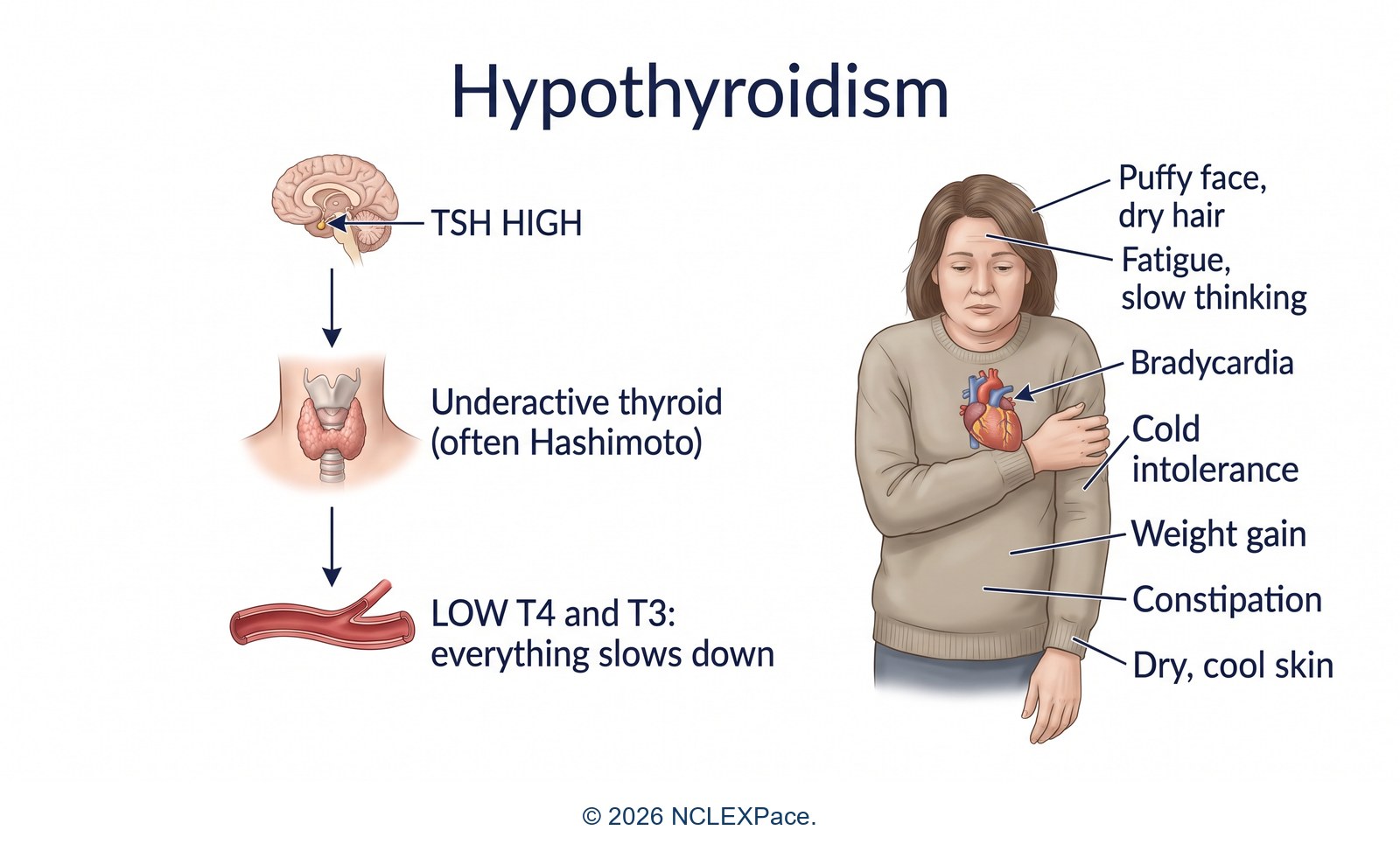
Hypothyroidism is thyroid hormone deficiency, which slows metabolism throughout the body. In the United States the most common cause is Hashimoto thyroiditis, an autoimmune disease; radioactive iodine treatment for Graves disease also usually ends in permanent hypothyroidism. In primary hypothyroidism the TSH is elevated and the free T4 is low. Severe untreated disease can progress to myxedema coma, an endocrine emergency.
What the NCLEX focuses on
- Classic findings: fatigue, cold intolerance, modest weight gain, constipation, dry skin, coarse hair, a hoarse voice, puffiness around the eyes and heavy menstrual bleeding.
- Bradycardia and slowed relaxation of deep tendon reflexes are typical assessment findings.
- Levothyroxine replaces the missing hormone; it controls hypothyroidism but does not cure it.
- Healthy younger adults may start a full replacement dose of about 1.6 mcg/kg daily; older adults and clients with coronary artery disease start with a low dose that is increased slowly.
- Too much levothyroxine causes chest pain, a rapid or irregular heartbeat, nervousness and tremor, and older adults are especially prone to atrial fibrillation.
- Hypothyroidism slows drug metabolism, so sedatives, opioids and anesthetics are given cautiously; central nervous system depressants can precipitate myxedema coma.
- TSH guides the dose and is rechecked 4 to 8 weeks after therapy starts or the dose changes.
Priority nursing actions
- Assess heart rate, blood pressure, temperature, weight, bowel pattern and mental status.
- Give levothyroxine on an empty stomach, 30 to 60 minutes before breakfast.
- Separate calcium and iron supplements from levothyroxine by at least 4 hours.
- Monitor older adults and clients with cardiac disease for chest pain, palpitations and an irregular pulse when therapy starts or the dose increases, and report them.
- Monitor respiratory rate and level of consciousness closely when a sedative or opioid is prescribed.
- Report hypothermia, bradycardia, slow breathing or increasing drowsiness at once as possible myxedema coma.
Numbers to know
| Value | Normal or target | Why it matters |
|---|---|---|
| TSH | 0.4 to 4.8 microunits/mL | High in primary hypothyroidism |
| Full replacement dose | About 1.6 mcg/kg daily | Used for healthy young and middle-aged adults |
| Starting dose in older adults or coronary artery disease | Low, usually 25 mcg daily or less | Avoids precipitating cardiac events |
| TSH recheck | 4 to 8 weeks after starting therapy or a dose change | Guides dose adjustment |
Common exam traps
- Choosing to give levothyroxine with breakfast or with a calcium or iron supplement: wrong because absorption falls.
- Choosing a full replacement dose for an older adult with coronary artery disease: wrong because it can precipitate cardiac events.
- Choosing to stop levothyroxine when symptoms improve: wrong because the drug controls the disease but does not cure it.
- Choosing to recheck TSH a few days after a dose change: wrong because levels take weeks to reach a steady state.
- Choosing levothyroxine to help a client lose weight: wrong because it must not be used to treat obesity.
What to teach
- Take levothyroxine once a day on an empty stomach, 30 to 60 minutes before breakfast, with a full glass of water.
- Expect several weeks to pass before symptoms improve.
- Do not stop the drug or change the dose without talking to the provider.
- Report chest pain, a rapid or irregular heartbeat, nervousness or tremor.
- Keep laboratory appointments and tell the provider about new medications or supplements.
2 NCLEX questions with rationales on this topic
From the NCLEXPace question bank. Choose your answer first, then open the correct answer and the full rationale under each question.
The nurse teaches a 74-year-old client who is starting levothyroxine for newly diagnosed hypothyroidism. Which point should the nurse emphasize?
Select the best answer.
- A. The initial dose should be relatively high so thyroid levels normalize quickly, then reduced once fatigue and cold intolerance improve
- B. Take levothyroxine with the evening meal so food protects the stomach and produces more consistent overnight absorption
- C. Take the tablet in the morning on an empty stomach, 30 to 60 minutes before breakfast
- D. Expect energy and activity tolerance to return to normal within about 48 hours after beginning replacement therapy
Show the correct answer and rationale
Correct answer:
- C. Take the tablet in the morning on an empty stomach, 30 to 60 minutes before breakfast
Rationale
Overview
- Definition: Hypothyroidism is inadequate thyroid hormone production. Levothyroxine provides synthetic thyroxine (T4) replacement.
- Dosing in older adults: Treatment generally begins with a low dose and gradual adjustment, especially in clients with coronary artery disease. Excessive replacement increases myocardial oxygen demand and the risk of angina and dysrhythmias.
- Teaching: Take levothyroxine consistently on an empty stomach, 30 to 60 minutes before breakfast. Separate calcium and iron supplements by at least four hours. Symptom improvement occurs gradually over several weeks.
Nursing key points
- Instruct the client to take levothyroxine with water 30 to 60 minutes before breakfast.
- Administer the medication at the same time each day.
- Separate calcium, iron, and interacting antacids from levothyroxine by at least four hours.
- Monitor thyroid-stimulating hormone approximately 6 to 8 weeks after initiation or dose adjustment.
- Report palpitations, tremors, new insomnia, or chest pain promptly.
- Reinforce lifelong treatment when permanent hypothyroidism is present.
Answer analysis
| Teaching point | Rationale |
|---|---|
| The initial dose should be relatively high so thyroid levels normalize quickly, then reduced once fatigue and cold intolerance improve | Not correct. Older adults require cautious dose titration to reduce cardiac ischemia and dysrhythmia risk. |
| Take levothyroxine with the evening meal so food protects the stomach and produces more consistent overnight absorption | Not correct. Food decreases or alters levothyroxine absorption. |
| Take the tablet in the morning on an empty stomach, 30 to 60 minutes before breakfast | Correct. Administration before food promotes consistent gastrointestinal absorption. |
| Expect energy and activity tolerance to return to normal within about 48 hours after beginning replacement therapy | Not correct. Clinical improvement develops gradually over days to weeks, with full assessment after thyroid hormone stabilization. |
A client reports daily fatigue and a weight gain of 6 kg despite eating less. Which additional findings would support hypothyroidism? Select all that apply.
- A. Feeling cold when others are comfortable
- B. Heart rate of 112/min at rest
- C. Bowel movements every 3 to 4 days
- D. Fine tremor of the outstretched hands
- E. Dry coarse skin and thinning hair
- F. Heavy or irregular menstrual periods
Show the correct answer and rationale
Correct answers:
- A. Feeling cold when others are comfortable
- C. Bowel movements every 3 to 4 days
- E. Dry coarse skin and thinning hair
- F. Heavy or irregular menstrual periods
Rationale
Overview
- Definition: Hypothyroidism is insufficient thyroid hormone production, resulting in reduced metabolic activity.
- Signs and symptoms: Fatigue, weight gain, cold intolerance, constipation, dry skin, thinning hair, bradycardia, and menstrual irregularities are characteristic findings.
- Labs: Overt primary hypothyroidism produces elevated TSH and decreased free T4.
Nursing key points
- Assess temperature intolerance, bowel habits, skin, hair, and menstrual history.
- Check TSH and free T4 to evaluate thyroid function.
- Monitor heart rate, weight, fatigue, and cognitive status.
- Administer prescribed levothyroxine consistently on an empty stomach.
- Separate levothyroxine from calcium and iron supplements by at least 4 hours.
Answer analysis
| Assessment finding | Rationale |
|---|---|
| Feeling cold when others are comfortable | Supports hypothyroidism. Reduced thyroid hormone lowers heat production and causes cold intolerance. |
| Heart rate of 112/min at rest | Does not support. Resting tachycardia indicates increased adrenergic activity rather than typical thyroid hormone deficiency. |
| Bowel movements every 3 to 4 days | Supports hypothyroidism. Reduced gastrointestinal motility causes constipation. |
| Fine tremor of the outstretched hands | Does not support. Fine tremor is characteristic of thyroid hormone excess. |
| Dry coarse skin and thinning hair | Supports hypothyroidism. Reduced metabolic activity alters skin and hair growth. |
| Heavy or irregular menstrual periods | Supports hypothyroidism. Thyroid hormone deficiency disrupts menstrual regulation and causes abnormal bleeding. |
The NCLEXPace bank has 3,200+ NCLEX questions with full rationales, sorted by topic, with your progress tracked as you practice. Create your account to start.
Create Account →More topics in Medical-Surgical
Lyme Disease NCLEX Questions With RationalesCovers Lyme disease stages, clinical manifestations, doxycycline treatment, tick removal, nursing priorities, and prevention.Influenza NCLEX Questions With RationalesReviews seasonal influenza symptoms, high-risk groups, antiviral treatment, isolation, vaccination, complications, and nursing care.Atopic Dermatitis (Eczema) NCLEX Questions With RationalesReviews childhood eczema manifestations, age-related distribution, triggers, skin care, topical medications, infection prevention, and parent education.Sources
- American Thyroid Association. Guidelines for the Treatment of Hypothyroidism. Thyroid. 2014.
- StatPearls, NCBI Bookshelf (NIH). Hypothyroidism. Last update 2024.
- MedlinePlus (NIH). Levothyroxine. Last revised 2019.
- Merck Manual Professional Edition. Hypothyroidism. Reviewed 2026.
3,200+ NCLEX questions with think-like-a-nurse rationales, unfolding case studies and adaptive readiness exams. Start with free practice questions, then choose a plan when you are ready.
Create Account →