Hyperparathyroidism NCLEX Questions With Rationales
What it is
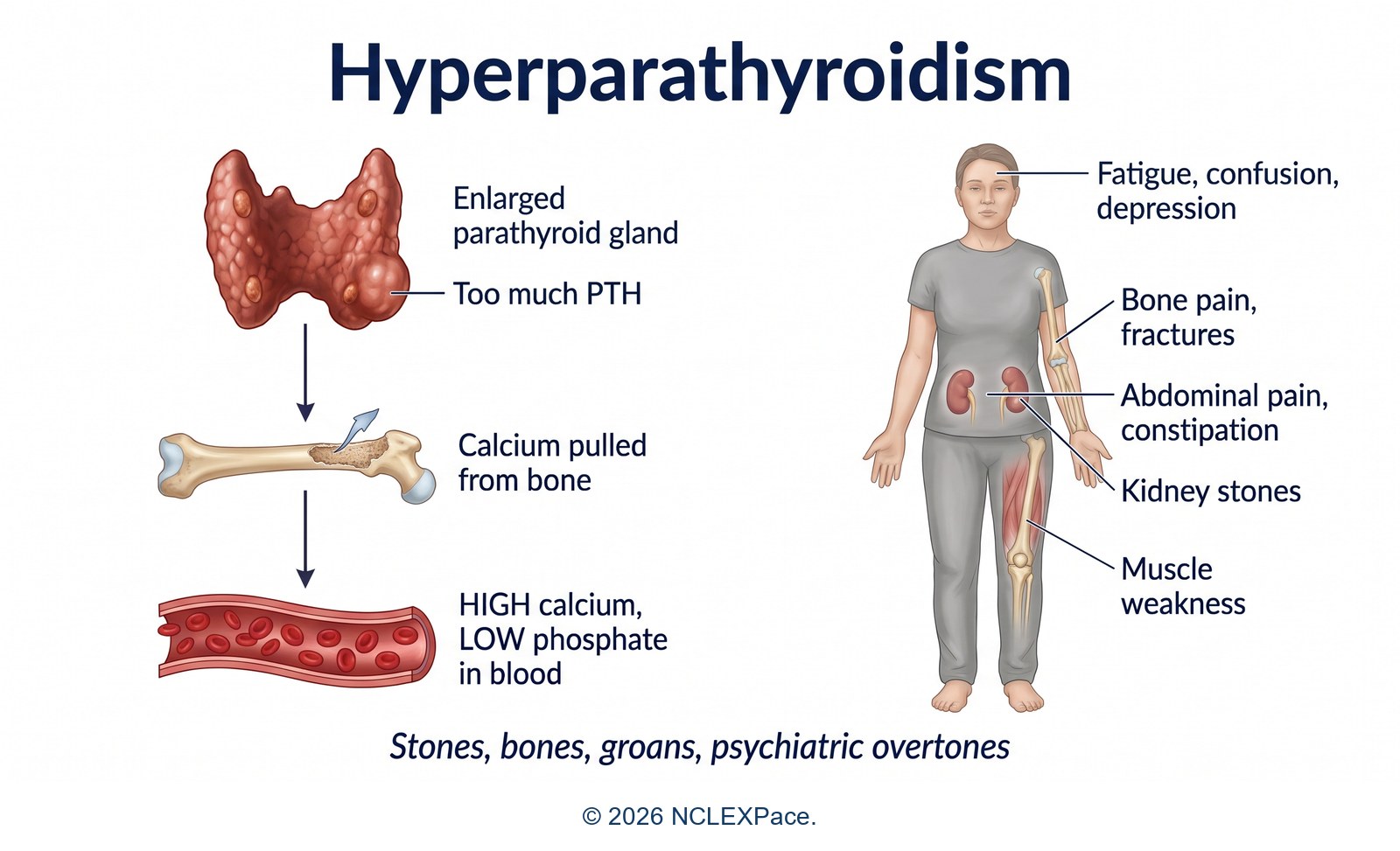
Hyperparathyroidism is a disorder characterized by excessive secretion of parathyroid hormone (PTH), which regulates calcium and phosphate balance. Primary hyperparathyroidism commonly causes elevated serum calcium and decreased phosphate because PTH increases calcium release from bones and renal phosphate excretion. Prolonged disease can damage bones and kidneys and affect gastrointestinal, neurological, and cardiovascular function.
What the NCLEX focuses on
- Bone manifestations: Increased bone resorption can cause bone pain, osteoporosis, muscle weakness, and pathological fractures.
- Kidney manifestations: Increased urinary calcium can contribute to kidney stones, renal impairment, and increased thirst and urination.
- Gastrointestinal manifestations: Hypercalcemia may cause constipation, nausea, vomiting, abdominal discomfort, and decreased appetite.
- Neurological manifestations: Fatigue, depression, poor concentration, confusion, and weakness may occur with elevated calcium.
- Cardiac findings: Hypercalcemia can shorten the QT interval and increase the risk of cardiac rhythm abnormalities.
- Diagnostic findings: Primary hyperparathyroidism typically produces elevated calcium, elevated or inappropriately normal PTH, and decreased serum phosphate. Secondary hyperparathyroidism, particularly from chronic kidney disease, has different calcium and phosphate patterns.
- Hydration: Isotonic IV normal saline restores circulating volume and promotes urinary calcium excretion in clients with significant hypercalcemia when fluid administration is appropriate.
- Medications: Calcitonin can lower calcium relatively quickly, while IV bisphosphonates reduce bone resorption. Cinacalcet decreases PTH secretion and is used in selected clients who cannot undergo surgery or require medical management.
- Loop diuretics: Furosemide is not routinely used to lower calcium. It may be prescribed after adequate hydration when fluid overload develops, with careful electrolyte monitoring.
- Parathyroidectomy: Surgical removal of overactive parathyroid tissue is the definitive treatment for appropriate candidates with primary hyperparathyroidism.
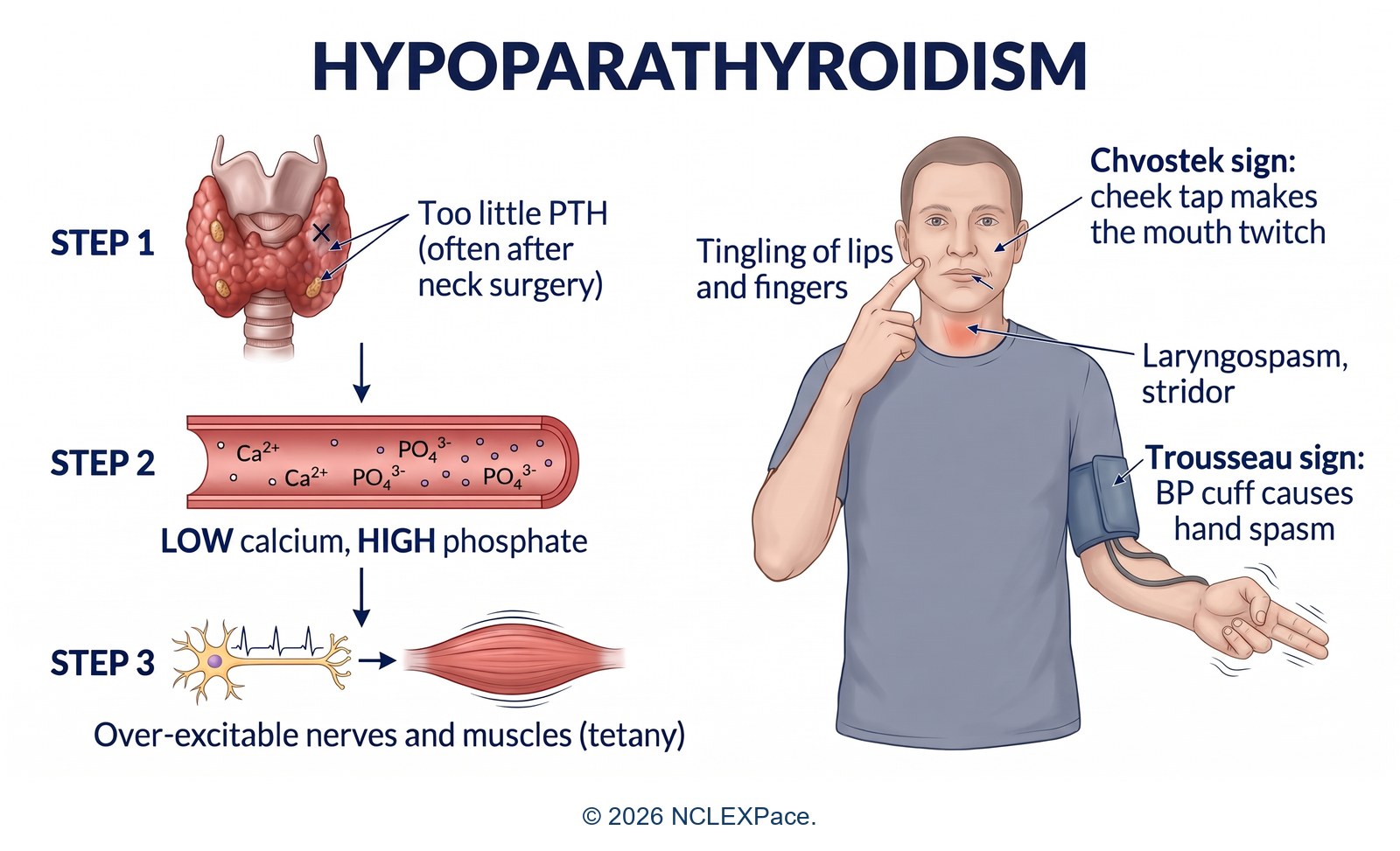
- Postoperative hypocalcemia: Temporary hypoparathyroidism or hungry bone syndrome can cause a rapid decrease in serum calcium after surgery. Findings include perioral tingling, numbness, muscle cramps, tetany, positive Chvostek sign, and positive Trousseau sign.
Priority nursing actions
- Assess neurological status, muscle strength, bone pain, renal symptoms, hydration, cardiac rhythm, and gastrointestinal function.
- Monitor serum calcium, phosphate, PTH, renal function, and ECG findings as prescribed.
- Administer prescribed isotonic IV fluids and monitor intake, output, lung sounds, and cardiac status, particularly in clients with renal or cardiac impairment.
- Administer prescribed calcitonin, bisphosphonates, or cinacalcet and monitor treatment response and adverse effects.
- Implement fall and fracture precautions, assist with mobility, and avoid unnecessary pressure or trauma to fragile bones.
- After parathyroidectomy, assess airway, neck swelling, bleeding, voice changes, swallowing, and serum calcium. Keep IV calcium gluconate available when indicated by the postoperative plan.
Numbers to know
| Value | Number | Why it matters |
|---|---|---|
| Normal total serum calcium | 9.0 to 10.5 mg/dL | Higher levels suggest hypercalcemia, depending on laboratory reference ranges. |
| Normal serum phosphate | 3.0 to 4.5 mg/dL | Primary hyperparathyroidism commonly decreases phosphate. |
| Severe hypercalcemia | Above 14 mg/dL | Requires urgent evaluation and treatment. |
| Parathyroid surgery consideration | Calcium more than 1 mg/dL above normal | One guideline criterion for surgery in primary hyperparathyroidism. |
| Age criterion for surgery | Younger than 50 years | One guideline criterion for parathyroidectomy. |
| Postoperative hypocalcemia | Commonly develops within 24 to 48 hours | Requires monitoring for neuromuscular irritability and cardiac complications. |
Common exam traps
- Choosing calcium supplements for untreated hypercalcemia without a specific indication: wrong because additional calcium may worsen elevated serum calcium.
- Choosing thiazide diuretics to treat hypercalcemia: wrong because they decrease urinary calcium excretion and may increase serum calcium.
- Choosing furosemide before correcting dehydration: wrong because volume depletion can worsen renal perfusion and electrolyte abnormalities.
- Choosing to ignore tingling around the mouth after parathyroidectomy: wrong because it may indicate developing hypocalcemia.
- Choosing to massage or manipulate fragile bones: wrong because increased bone resorption raises fracture risk.
What to teach
- Maintain adequate oral hydration as prescribed (up to about 3 liters a day when heart and kidney function allow) to reduce dehydration and kidney stone risk.
- Remain physically active as tolerated and follow safety precautions to prevent fractures.
- Avoid nonprescribed calcium supplements and discuss medications, especially thiazide diuretics, with the provider.
- Report flank pain, blood in the urine, worsening constipation, confusion, muscle weakness, or increased thirst.
- After surgery, report perioral tingling, numbness, muscle cramps, difficulty breathing, neck swelling, or voice changes immediately.
- Attend follow-up appointments for calcium, phosphate, PTH, and renal function monitoring.
2 NCLEX questions with rationales on this topic
From the NCLEXPace question bank. Choose your answer first, then open the correct answer and the full rationale under each question.
The nurse plans care for a client with hyperparathyroidism and a serum calcium of 12.8 mg/dL (reference 9.0 to 10.5) who is awaiting parathyroidectomy. Which intervention should the nurse include?
Select the best answer.
- A. Encourage the prescribed fluid goal, up to 3 liters daily if appropriate for cardiac and kidney function, and assist with regular ambulation
- B. Provide a high-calcium, high-vitamin D diet with dairy products at every meal and additional calcium-fortified snacks between meals to replace calcium lost from bone and lower the elevated serum calcium by restoring skeletal mineral stores
- C. Maintain strict bedrest and use log rolling for all repositioning because weight-bearing activity increases the likelihood of pathologic fracture when calcium is being removed from bone
- D. Restrict total fluid intake to 1 liter daily so less calcium is filtered into the urine and the risk of renal stone formation is reduced before surgery
Show the correct answer and rationale
Correct answer:
- A. Encourage the prescribed fluid goal, up to 3 liters daily if appropriate for cardiac and kidney function, and assist with regular ambulation
Rationale
Overview
- Definition: Hyperparathyroidism is excessive PTH secretion that increases bone resorption, renal calcium reabsorption, and serum calcium.
- Effects: Hypercalcemia causes polyuria, dehydration, constipation, weakness, and renal calculi. Prolonged bone resorption increases fracture risk.
- Care: Appropriate hydration promotes urinary calcium excretion, while regular safe ambulation limits immobility-related bone loss.
Nursing key points
- Follow the prescribed fluid goal after reviewing cardiac and kidney function.
- Monitor intake, output, serum calcium, creatinine, and hydration status.
- Assist with regular ambulation and implement individualized fracture precautions.
- Avoid unprescribed calcium supplements and review thiazide diuretics with the prescriber.
- Report worsening confusion, severe weakness, or cardiac rhythm changes immediately.
Answer analysis
| Intervention | Rationale |
|---|---|
| Encourage the prescribed fluid goal, up to 3 liters daily if appropriate for cardiac and kidney function, and assist with regular ambulation | Correct. Hydration promotes renal calcium excretion. Ambulation reduces immobility-related bone resorption. |
| Provide a high-calcium, high-vitamin D diet with dairy products at every meal and additional calcium-fortified snacks between meals to replace calcium lost from bone and lower the elevated serum calcium by restoring skeletal mineral stores | Not correct. Excessive calcium and vitamin D intake worsens hypercalcemia. |
| Maintain strict bedrest and use log rolling for all repositioning because weight-bearing activity increases the likelihood of pathologic fracture when calcium is being removed from bone | Not correct. Prolonged bedrest increases bone resorption and worsens hypercalcemia. |
| Restrict total fluid intake to 1 liter daily so less calcium is filtered into the urine and the risk of renal stone formation is reduced before surgery | Not correct. Fluid restriction increases dehydration and urinary calcium concentration. |
Six hours after parathyroidectomy, which assessment finding requires the nurse’s immediate action?
Select the best answer.
- A. Serum calcium of 9.4 mg/dL on the 4-hour laboratory draw with no perioral tingling, muscle cramping, or new weakness
- B. Carpal spasm when the blood pressure cuff inflates
- C. Hoarse voice unchanged since extubation with no stridor, dyspnea, difficulty swallowing, or increasing neck swelling
- D. Temperature of 37.6°C with heart rate 88/min, stable blood pressure, and no chills or other signs of infection
Show the correct answer and rationale
Correct answer:
- B. Carpal spasm when the blood pressure cuff inflates
Rationale
Overview
- Definition: Post-parathyroidectomy hypocalcemia results from reduced parathyroid hormone activity or rapid skeletal calcium uptake in hungry bone syndrome.
- Signs: Paresthesia, muscle cramps, tetany, and a positive Trousseau sign indicate neuromuscular excitability from hypocalcemia.
- Action: Symptomatic hypocalcemia requires prompt assessment, calcium testing, provider notification, and prescribed calcium replacement.
Nursing key points
- Recognize carpal spasm during cuff inflation as a positive Trousseau sign.
- Assess airway, respirations, muscle spasms, and paresthesia immediately.
- Notify the surgical team and obtain repeat serum or ionized calcium testing.
- Prepare prescribed IV calcium gluconate for significant symptomatic hypocalcemia.
- Monitor ECG for QT prolongation and dysrhythmias when indicated.
- Maintain emergency airway equipment for severe tetany or laryngospasm.
Answer analysis
| Assessment finding | Rationale |
|---|---|
| Serum calcium of 9.4 mg/dL on the 4-hour laboratory draw with no perioral tingling, muscle cramping, or new weakness | Not correct. This earlier calcium result is normal. Continue postoperative monitoring for subsequent changes. |
| Carpal spasm when the blood pressure cuff inflates | Correct. A positive Trousseau sign indicates neuromuscular irritability associated with hypocalcemia and requires immediate assessment. |
| Hoarse voice unchanged since extubation with no stridor, dyspnea, difficulty swallowing, or increasing neck swelling | Not correct. Stable hoarseness requires assessment and monitoring without current signs of airway obstruction. |
| Temperature of 37.6°C with heart rate 88/min, stable blood pressure, and no chills or other signs of infection | Not correct. These stable postoperative findings do not require immediate emergency intervention. |
The NCLEXPace bank has 3,200+ NCLEX questions with full rationales, sorted by topic, with your progress tracked as you practice. Create your account to start.
Create Account →More topics in Medical-Surgical
Lyme Disease NCLEX Questions With RationalesCovers Lyme disease stages, clinical manifestations, doxycycline treatment, tick removal, nursing priorities, and prevention.Influenza NCLEX Questions With RationalesReviews seasonal influenza symptoms, high-risk groups, antiviral treatment, isolation, vaccination, complications, and nursing care.Atopic Dermatitis (Eczema) NCLEX Questions With RationalesReviews childhood eczema manifestations, age-related distribution, triggers, skin care, topical medications, infection prevention, and parent education.Sources
3,200+ NCLEX questions with think-like-a-nurse rationales, unfolding case studies and adaptive readiness exams. Start with free practice questions, then choose a plan when you are ready.
Create Account →