Anorexia and Bulimia NCLEX Questions With Rationales
What it is
Anorexia nervosa is an eating disorder involving restricted energy intake, significantly low body weight, intense fear of weight gain, and disturbed body image. Bulimia nervosa involves recurrent binge eating followed by compensatory behaviors such as vomiting, laxative misuse, fasting, or excessive exercise. Both disorders can cause serious medical complications and require coordinated nutritional, medical, and psychological treatment.
What the NCLEX focuses on
- Anorexia nervosa commonly causes bradycardia, hypotension, hypothermia, fatigue, and menstrual disturbances.
- Fine, soft body hair called lanugo may develop with severe malnutrition.
- Clients with bulimia nervosa may have normal or above-normal body weight despite dangerous purging behaviors.
- Russell sign describes abrasions or calluses on the knuckles caused by repeated self-induced vomiting.
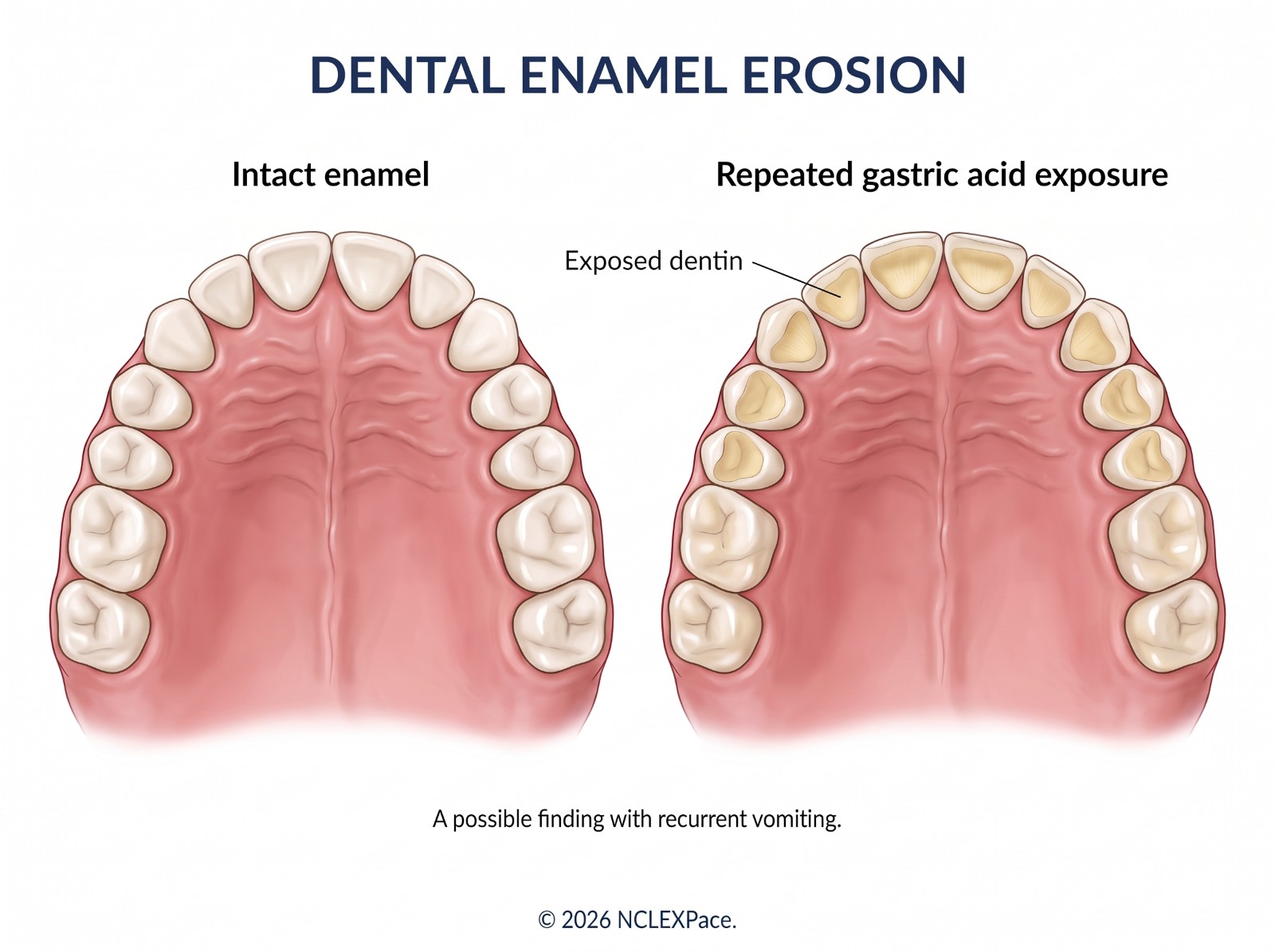
- Repeated vomiting can produce dental enamel erosion, painless parotid enlargement, and esophageal inflammation.
- Vomiting-related potassium depletion and metabolic alkalosis can contribute to cardiac arrhythmias.
- Severe malnutrition can impair cardiovascular function and increase the risk of medical instability.
- Refeeding syndrome involves dangerous electrolyte shifts, especially hypophosphatemia, when nutrition is restored after significant undernutrition.
- Supervised meals and observation afterward help identify food restriction, concealment, and purging behaviors.
Priority nursing actions
- Assess vital signs, hydration, mental status, and cardiac symptoms immediately; report severe bradycardia, hypotension, syncope, or suspected arrhythmias.
- Monitor prescribed laboratory testing, especially potassium, magnesium, phosphorus, sodium, and glucose, and report abnormalities promptly.
- During nutritional rehabilitation, monitor for refeeding complications and administer prescribed electrolyte replacement while following the individualized nutrition plan.
- Supervise meals and post-meal periods according to the treatment protocol, monitor intake, and document behaviors objectively.
- Monitor weight under consistent conditions, intake and output, and physical symptoms without making judgmental comments about appearance.
- Use calm, nonjudgmental communication and coordinate care with the provider, dietitian, and mental health team.
Numbers to know
| Value | Number | Why it matters |
|---|---|---|
| Bulimia binge frequency | At least once a week | Part of the diagnostic criteria when accompanied by compensatory behaviors. |
| Bulimia symptom duration | 3 months | Minimum duration required by the diagnostic criteria. |
| Hypokalemia threshold | Less than 3.5 mEq/L | Low potassium increases concern for neuromuscular and cardiac complications. |
| Post-meal observation | At least 1 hour | A nursing textbook recommendation to reduce opportunities for purging in structured treatment. |
Common exam traps
- Choosing normal weight to exclude bulimia: wrong because clients may maintain normal body weight.
- Choosing immediate unrestricted feeding after severe starvation: wrong because refeeding can cause dangerous electrolyte disturbances.
- Choosing to ignore repeated vomiting: wrong because purging can cause hypokalemia and cardiac complications.
- Choosing confrontation about hidden food: wrong because therapeutic care requires supportive, nonjudgmental communication and consistent supervision.
What to teach
- Follow the individualized meal plan and attend scheduled medical and nutritional appointments.
- Understand that nutritional rehabilitation requires monitoring even when food intake improves.
- Report fainting, palpitations, muscle weakness, or persistent vomiting promptly.
- Avoid laxative misuse, self-induced vomiting, and compensatory excessive exercise.
- Participate in recommended psychotherapy and involve supportive family members when appropriate.
2 NCLEX questions with rationales on this topic
From the NCLEXPace question bank. Choose your answer first, then open the correct answer and the full rationale under each question.
A nurse is performing a physical assessment on a client with a history of bulimia nervosa. Which finding would the nurse expect?
Select the best answer.
- A. Regular menstrual cycles
- B. Dental enamel erosion and calluses on the knuckles
- C. A body weight far below the expected range for height
- D. Significant lanugo across the back and arms
Show the correct answer and rationale
Correct answer:
- B. Dental enamel erosion and calluses on the knuckles
Rationale
Overview
- Definition: Bulimia nervosa is an eating disorder characterized by recurrent binge eating followed by compensatory behaviors, including self-induced vomiting, to prevent weight gain.
- Physical signs of purging: Repeated exposure to gastric acid causes dental enamel erosion, caries, and tooth sensitivity. Contact between the fingers and teeth causes knuckle calluses (Russell sign). Other findings include parotid gland enlargement, sore throat, esophageal injury, hypokalemia, metabolic alkalosis, and menstrual irregularities.
- What belongs to anorexia: Markedly low body weight and prominent lanugo are characteristic findings of prolonged undernutrition in anorexia nervosa. Body weight in bulimia nervosa is commonly within the expected range.
Nursing key points
- Inspect dental enamel for erosion, caries, and sensitivity.
- Examine the dorsal knuckles for Russell sign.
- Assess the parotid glands and ask about sore throat, vomiting, and hematemesis.
- Check serum potassium; the normal range is 3.5 to 5.0 mEq/L.
- Obtain an ECG when hypokalemia, palpitations, or irregular rhythm occurs.
Answer analysis
| Assessment finding | Rationale |
|---|---|
| Regular menstrual cycles | Not correct. Menstrual cycles are variable in bulimia and do not identify recurrent vomiting. |
| Dental enamel erosion and calluses on the knuckles | Correct. Repeated vomiting exposes teeth to gastric acid and causes Russell sign. |
| A body weight far below the expected range for height | Not correct. Markedly low weight is characteristic of anorexia nervosa. |
| Significant lanugo across the back and arms | Not correct. Prominent lanugo reflects prolonged undernutrition rather than characteristic purging injury. |
A nurse is caring for a client with anorexia nervosa. For each finding, indicate whether it is an expected finding for this diagnosis or one requiring urgent provider notification.
For each finding, indicate whether it is an expected finding in anorexia nervosa or a finding requiring urgent provider notification.
| Expected finding | Requires urgent provider notification | |
|---|---|---|
| Heart rate of 34 beats per minute with dizziness on standing | ||
| Cold intolerance and fine body hair growth | ||
| Serum potassium of 2.6 mEq/L with new cardiac dysrhythmia | ||
| Amenorrhea for the past several months |
Show the correct answer and rationale
Correct answers:
- Heart rate of 34 beats per minute with dizziness on standing: Requires urgent provider notification
- Cold intolerance and fine body hair growth: Expected finding
- Serum potassium of 2.6 mEq/L with new cardiac dysrhythmia: Requires urgent provider notification
- Amenorrhea for the past several months: Expected finding
Rationale
Overview
- Definition: Anorexia nervosa causes prolonged energy deficiency with characteristic starvation findings and potentially life-threatening cardiovascular and electrolyte instability.
- Expected: Hypothalamic suppression causes amenorrhea. Reduced metabolic heat production causes cold intolerance. Fine body hair growth (lanugo) occurs with prolonged undernutrition.
- Report urgently: Potassium 2.6 mEq/L with a new dysrhythmia and heart rate 34/min with orthostatic dizziness require immediate evaluation. Other warning findings include syncope, systolic blood pressure below 90 mmHg, temperature below 36 C, and glucose below 60 mg/dL.
Nursing key points
- Notify the provider immediately for potassium 2.6 mEq/L with a new dysrhythmia.
- Obtain an ECG, initiate continuous cardiac monitoring, and administer prescribed potassium replacement.
- Assess blood pressure, orthostatic symptoms, and perfusion with heart rate 34/min.
- Escalate syncope, systolic pressure below 90 mmHg, temperature below 36 C, or glucose below 60 mg/dL.
- Monitor phosphorus, magnesium, potassium, and fluid balance during nutritional rehabilitation.
Answer analysis
| Clinical finding | Column | Rationale |
|---|---|---|
| Heart rate of 34 beats per minute with dizziness on standing | Requires urgent provider notification. | Severe symptomatic bradycardia and orthostatic dizziness indicate medical instability. |
| Cold intolerance and fine body hair growth | Expected finding. | Reduced heat production and lanugo are characteristic manifestations of prolonged undernutrition. |
| Serum potassium of 2.6 mEq/L with new cardiac dysrhythmia | Requires urgent provider notification. | Hypokalemia with a new dysrhythmia requires immediate cardiac monitoring and prescribed correction. |
| Amenorrhea for the past several months | Expected finding. | Prolonged energy deficiency suppresses hypothalamic reproductive hormone signaling and menstruation. |
The NCLEXPace bank has 3,200+ NCLEX questions with full rationales, sorted by topic, with your progress tracked as you practice. Create your account to start.
Create Account →More topics in Mental Health
Intimate Partner Violence NCLEX Questions With RationalesCovers IPV recognition, screening, safety assessment, documentation, mandatory reporting, pregnancy risks, and nursing interventions.Grief and Loss NCLEX Questions With RationalesReviews normal and anticipatory grief, Kubler-Ross stages, prolonged grief, nursing interventions, suicide assessment, and age-appropriate bereavement support.Obsessive-Compulsive Disorder (OCD) NCLEX Questions With RationalesReviews OCD symptoms, nursing interventions, exposure and response prevention, medications, and client education.Sources
3,200+ NCLEX questions with think-like-a-nurse rationales, unfolding case studies and adaptive readiness exams. Start with free practice questions, then choose a plan when you are ready.
Create Account →