
2-Week Emergency NCLEX Plan: Triage Strategy When Your Date Is Locked In
With only two weeks and a locked-in date, stop trying to cover everything and triage for the most expected points per hour: case studies first, then Management of Care, pharmacology by class, unstable clients, and safety and infection precautions. Deliberately abandon low-yield content like growth-and-development milestones and rare disorders. If you are genuinely underprepared and can still reschedule with one full business day's notice, that is usually the better decision than a failed attempt.

A free sample lesson on unstable clients, the Physiological Adaptation content days 5 and 6 of this plan are built around.
From the Intensive NCLEX Course. This lesson is a free sample: watch it with a free account.
First, the question you should answer before reading further.
Can you reschedule?
You can reschedule or cancel without losing your fee if you give at least one full business day (24 hours) notice — and for exams scheduled Saturday, Sunday, or Monday, notice must come by Friday. A voicemail does not count; reschedule online or speak to an agent.
If you are two weeks out and genuinely underprepared, rescheduling is usually the better decision. A failed attempt costs $200, a minimum 45-day wait before you can retest, and the momentum of starting over.
If you cannot reschedule — the ATT window is closing, the job start date is fixed, the circumstances are what they are — then read on. Two weeks is workable. It is not comfortable.
The triage principle
You do not have time to cover everything. So stop trying.
Emergency preparation is about maximizing expected points per hour, which means going where the items are and where your gaps are, and deliberately abandoning everything else.
That means writing off content areas. That is not failure — it is triage, and it is the correct decision under this constraint.
Where the items are
On a minimum-length exam, 52 items come from the eight content areas. Applying the midpoints:
| Category | Weight | ~Items |
|---|---|---|
| Management of Care | 18% | ~9 |
| Pharmacological and Parenteral Therapies | 16% | ~8 |
| Physiological Adaptation | 14% | ~7 |
| Safety and Infection Prevention and Control | 13% | ~7 |
| Reduction of Risk Potential | 12% | ~6 |
| Health Promotion / Psychosocial / Basic Care | 9% each | ~5 each |
Plus 18 case study items — roughly a quarter of your scored items — sitting outside those percentages entirely.
Priority order for two weeks:
- Case studies. Largest single block, and the format punishes the unpracticed. Non-negotiable.
- Management of Care. Biggest content category, and prioritization and delegation are learnable as rules faster than most content.
- Pharmacology by class. Not individual drugs — classes, suffixes, and the high-alert drugs.
- Physiological Adaptation. Unstable clients and emergencies.
- Safety and Infection Prevention and Control. Precautions are memorizable quickly and appear reliably.
Everything else gets whatever is left.
The two weeks
Assume six to eight hours a day. If you have less, compress the same priority order rather than trying to keep everything.
Days 1–2 — Diagnose and prioritization rules
Morning of day 1: 75-question mixed assessment, timed. You need to know where you stand before you allocate.
Then: prioritization and delegation frameworks. Maslow, ABCs, the nursing process, stable versus unstable, the five rights of delegation, LPN versus UAP scope.
This is the highest-return material in emergency prep because it is rules, not facts. Rules generalize across hundreds of questions. Facts do not.
Days 3–4 — Pharmacology by class
Do not attempt to learn individual drugs. Learn:
- Suffix families: -olol, -pril, -sartan, -statin, -azole, -cillin, -mycin
- Class-level actions, major adverse effects, and key nursing considerations
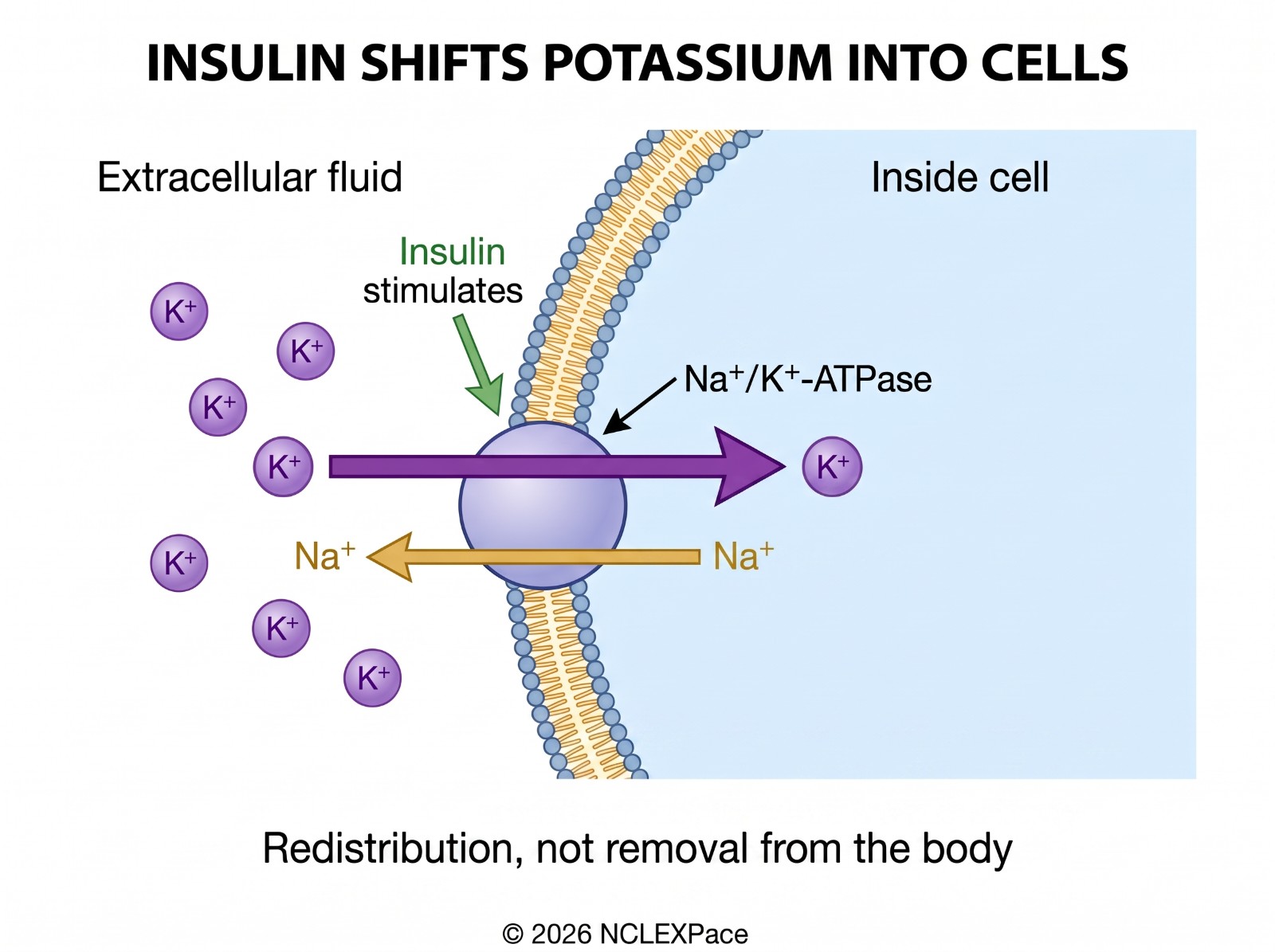
- High-alert drugs: insulin, heparin and warfarin, opioids, potassium
- Antidotes and reversal agents
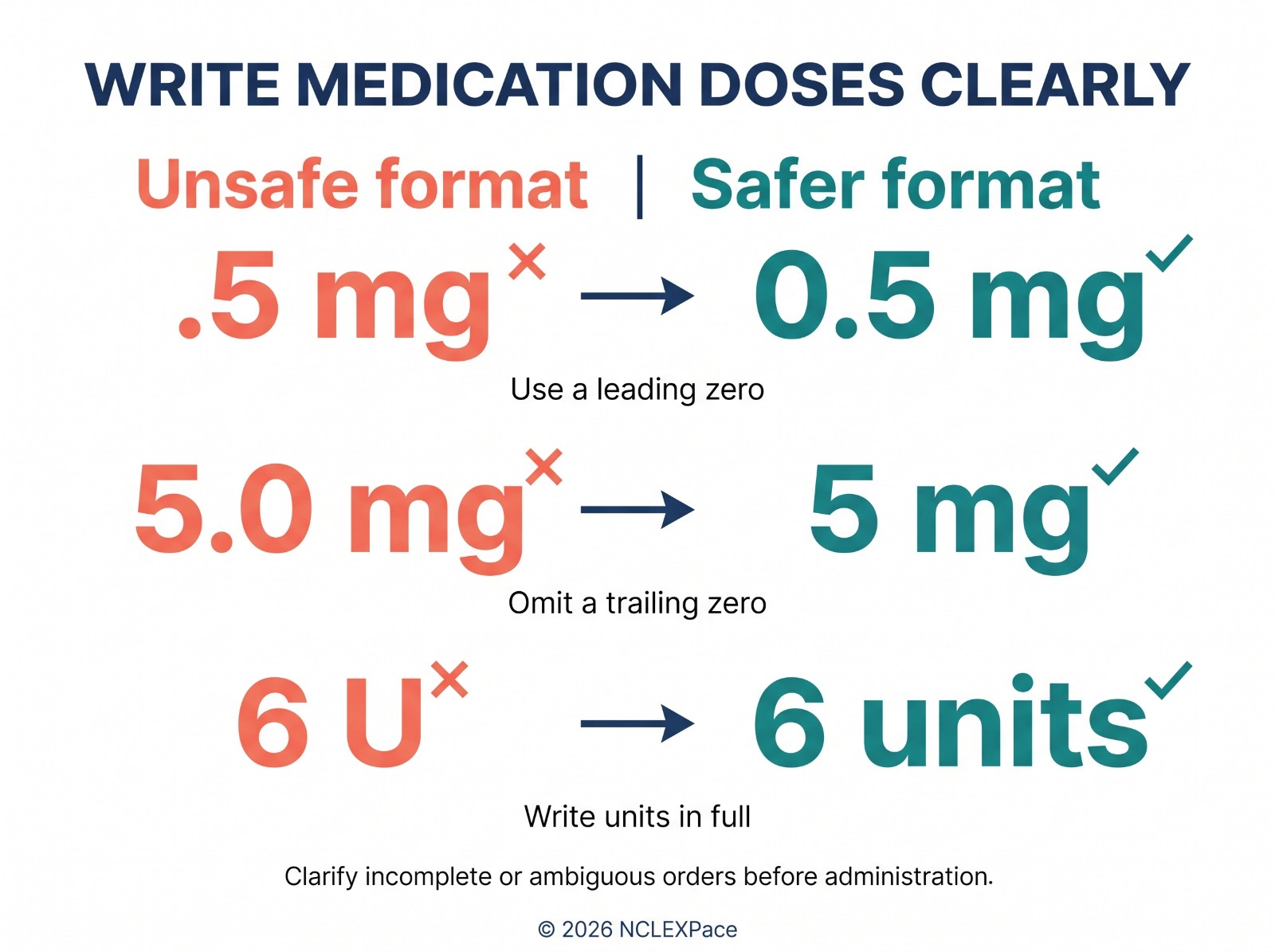
- Dosage calculation — one dependable method, practiced until automatic
Days 5–6 — Unstable clients
Shock, sepsis, respiratory failure, MI, stroke, DKA and HHS, increased ICP, hemorrhage. For each: recognition, priority action, what you monitor.
Focus on recognition and first action. That is what the exam asks.
Day 7 — Rest, or near it
Two or three hours of light review maximum. Consolidation is real and you cannot run flat out for fourteen days.
Days 8–9 — Safety, infection, risk reduction
Transmission-based precautions with the organisms in each. PPE order. Fall and restraint rules. Pre- and post-procedure nursing care. Lab values worth memorizing — and only those worth memorizing.
Days 10–11 — Case studies, intensively
Three to four full six-item sets daily. Work the six steps explicitly: recognize cues, analyze cues, prioritize hypotheses, generate solutions, take action, evaluate outcomes.
Use NCSBN’s free Sample Pack — three RN case studies and additional examples — and the candidate tutorial on Pearson VUE. Free, and written by the people who write the exam.
Day 12 — Full-length simulation
150 questions, five hours, one break. Stamina rehearsal.
Day 13 — Review the simulation, then stop adding
Deep review in the morning. Afternoon: skim the material you know best. Nothing new after noon.
Day 14 — The day before
Nothing. Confirm your ID and your test center. Sleep.
What to deliberately abandon
Under this constraint, accept lower performance on:
- Detailed growth and development milestones
- Comprehensive maternity content beyond emergencies
- Rare disorders and zebra diagnoses
- Individual drug names outside the high-alert list
- Detailed community and public health content
You will get some of these wrong. That is the trade, and it is the right trade — you cannot be above the passing standard everywhere, and the algorithm is measuring your overall ability, not any single category.
Rules for two-week mode
Question review still outranks question volume. Even now. Doing 200 questions with shallow review is worse than 100 with real review.
Sleep is not optional. Sleep deprivation degrades exactly the reasoning the NCLEX measures. Do not trade sleep for study hours in the final week — it is a losing exchange.
Do not open new resources. Two weeks out, a new question bank or review book is a distraction, not an upgrade.
Do not calculate your predicted score. Practice percentages do not predict NCLEX outcomes. Article 35 explains why.
And the honest caveat
Two weeks of focused work can carry a candidate who mostly knows the material and needs to convert it into exam performance.
Two weeks cannot substitute for content you never learned.
If you finish this plan and the simulation goes badly, and rescheduling is still available to you, reschedule. The 24-hour deadline exists precisely for this decision.
Exam facts accessed August 2026.
5 NCLEX practice questions to try now
A mixed set from the NCLEXPace bank, in the same player with the same partial-credit scoring students use inside the platform: answer, submit, read the full rationale, then Next. Your score is waiting at the end. No account needed for these.
A free account opens 20 more questions, a case study, a video and a cheat sheet. The full bank has 3,200+ questions with rationales, by topic.
Practice more, free →Ready for the full bank? See NCLEXPace plans and prices: one payment for 1, 2, 3 or 6 months.
Frequently asked questions
Common follow-up questions on Study Plans & Timelines.
Should I reschedule instead of cramming for two weeks?
If you are two weeks out and genuinely underprepared, rescheduling is usually the better decision. You can reschedule or cancel without losing your fee by giving at least one full business day (24 hours) notice, and for exams scheduled Saturday, Sunday, or Monday that notice must come by Friday. A failed attempt costs $200, a minimum 45-day wait before you can retest, and the momentum of starting over.
What should I prioritise in a two-week plan?
In priority order: case studies, because they are the largest single block and the format punishes the unpracticed; Management of Care, the biggest content category, where prioritization and delegation are learnable as rules; pharmacology by class rather than individual drugs; Physiological Adaptation, meaning unstable clients and emergencies; and Safety and Infection Prevention and Control, since precautions are memorizable quickly. Everything else gets whatever time is left.
What can I safely skip to save time?
Under this constraint you accept lower performance on detailed growth and development milestones, comprehensive maternity content beyond emergencies, rare disorders and zebra diagnoses, individual drug names outside the high-alert list, and detailed community and public health content. That is triage, not failure, because you cannot be above the passing standard everywhere and the algorithm measures your overall ability rather than any single category.
Does question volume matter more than review in emergency mode?
No. Question review still outranks question volume even now. Doing 200 questions with shallow review is worse than 100 with real review. The plan still schedules deep review of your full-length simulation before you stop adding new material.
Is it worth sacrificing sleep in the final days to study more?
No. Sleep is not optional because sleep deprivation degrades exactly the reasoning the NCLEX measures. Trading sleep for study hours in the final week is a losing exchange. The day before the exam should be nothing but confirming your ID and test center and sleeping.
Sources and references
- National Council of State Boards of Nursing. 2026 NCLEX-RN Test Plan (effective April 1, 2026). Chicago, IL: NCSBN; 2026. nclex.com, Test Plans.
- Roediger HL, Karpicke JD. Test-Enhanced Learning: Taking Memory Tests Improves Long-Term Retention. Psychol Sci. 2006;17(3):249-255.
Reviewed by the NCLEXPace team, October 2026.
Keep reading



3,200+ NCLEX questions with think-like-a-nurse rationales, unfolding case studies and adaptive readiness exams. Start with free practice questions, then choose a plan when you are ready.
Create Free Account →