Reading a Complete Blood Count
Four CBC numbers matter for the exam: WBC (5,000 to 10,000), hemoglobin (12 to 16 g/dL female, 14 to 18 g/dL male), hematocrit (roughly three times the hemoglobin), and platelets (150,000 to 400,000). A low WBC means neutropenic precautions and a fever becomes an emergency; a low hemoglobin means the client cannot carry enough oxygen, with under 7 usually critical; and low platelets mean bleeding precautions, with under 50,000 a serious risk and under 20,000 a risk of spontaneous bleeding.

The anemias: what a low hemoglobin means, how the types differ, and the nursing care for each.
From the Intensive NCLEX Course. See the course; the full video library is part of Pro and Ultimate.
The CBC is the most ordered blood test. Four numbers matter for the exam.
The four numbers
| Lab | Normal | What it tells you |
|---|---|---|
| WBC | 5,000–10,000/mm³ | Infection and immune defense |
| Hemoglobin | 12–16 g/dL (female), 14–18 g/dL (male) | Oxygen carrying |
| Hematocrit | 37–47% (female), 42–52% (male) | Percentage of blood that is red cells |
| Platelets | 150,000–400,000/mm³ | Clotting |
Useful shortcut: hematocrit is roughly three times the hemoglobin. Hemoglobin of 12 → hematocrit around 36. If they do not fit that pattern, look again.
White blood cells
High WBC (over 10,000) — usually infection. Also inflammation, stress, steroids, leukemia.
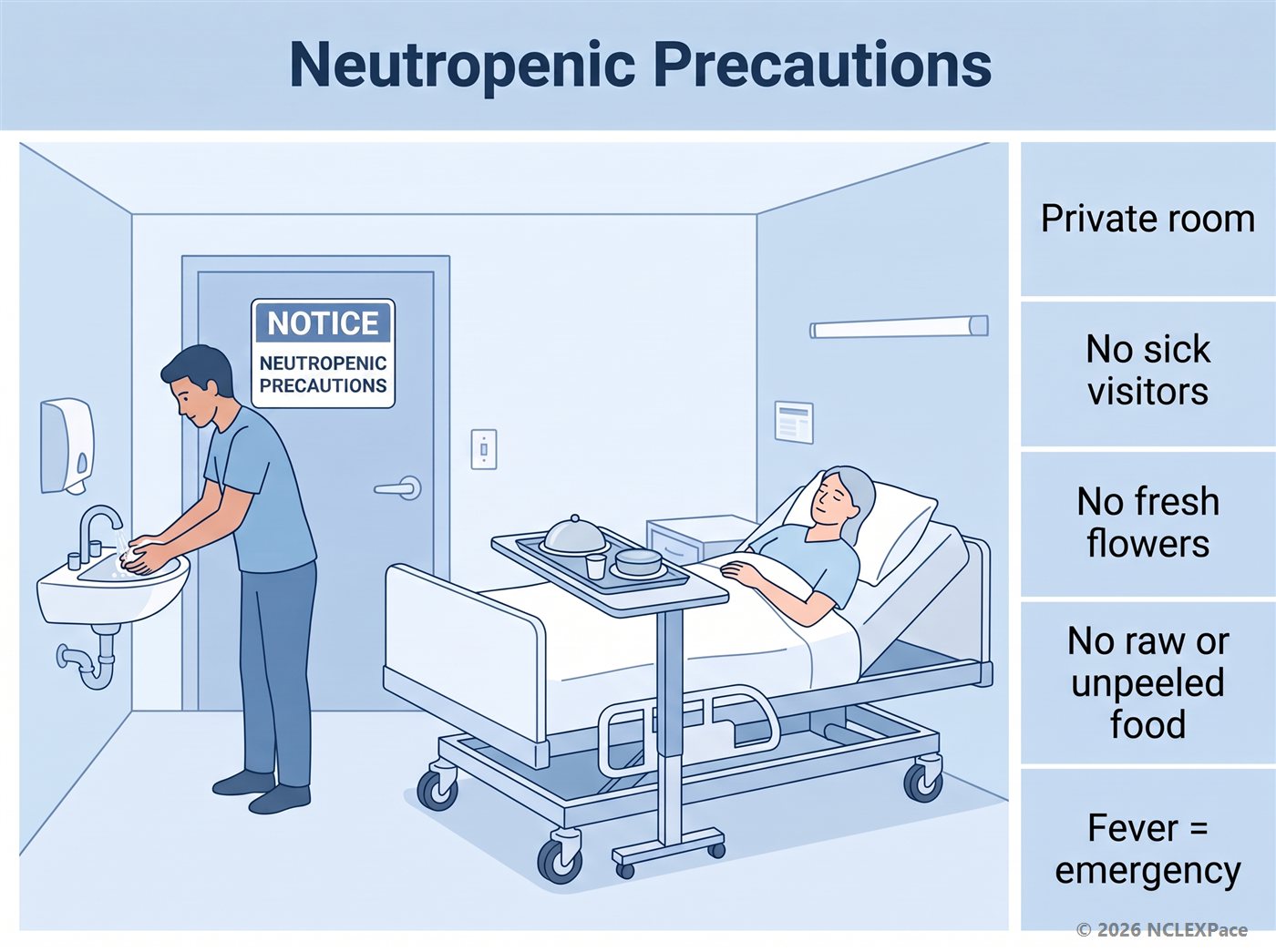
Low WBC (under 5,000) — the dangerous one. The client cannot fight infection.
Causes of low WBC: chemotherapy, radiation, some medications, bone marrow problems, severe overwhelming infection.
What you do for a low WBC:
- Neutropenic precautions — protect the client from germs
- Private room where indicated
- Strict hand hygiene by everyone
- No fresh flowers or standing water — they grow bacteria and fungus
- No raw fruits and vegetables in many protocols
- No visitors who are sick
- Avoid crowds
- Monitor temperature closely
The critical teaching point: a fever in a neutropenic client is an emergency.
They may not show the usual signs of infection because they cannot mount a normal immune response. A fever may be the only sign, and infection can become life-threatening quickly. Report it immediately.
Hemoglobin and hematocrit
These move together. Both tell you about oxygen-carrying ability.
Low (anemia) — the client cannot carry enough oxygen.
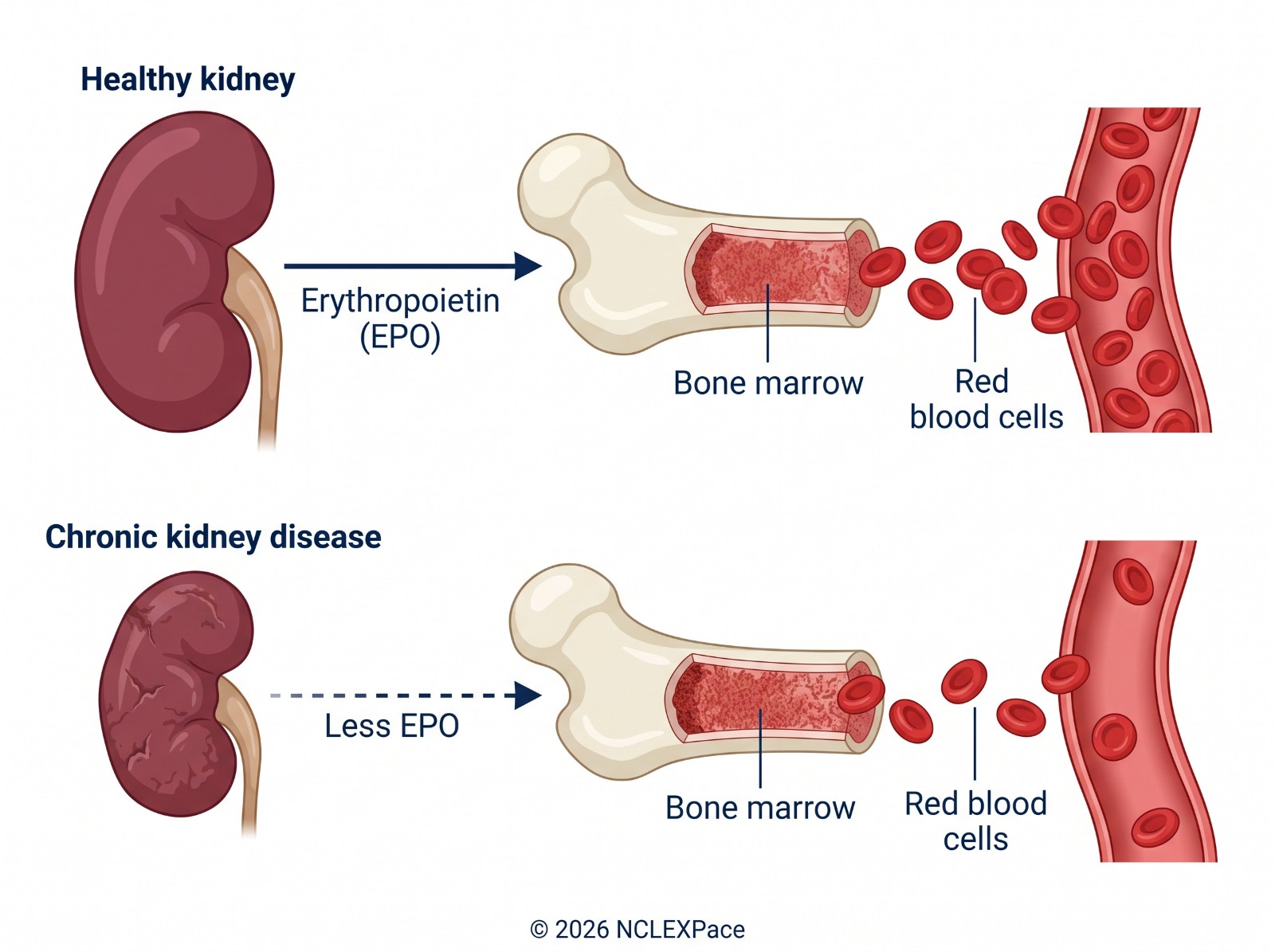
Causes: bleeding, iron deficiency, B12 or folate deficiency, kidney disease, chronic illness, bone marrow problems.
Signs: tiredness, weakness, pale skin and mucous membranes, shortness of breath on exertion, fast heart rate, dizziness, cold hands and feet.
What you do:
- Monitor for bleeding
- Balance activity with rest
- Watch for shortness of breath
- Oxygen if ordered
- Expect iron, B12, or transfusion depending on the cause
- A hemoglobin under 7 is usually a critical value
High — dehydration (falsely high, because the blood is concentrated), COPD, living at high altitude, polycythemia.
Important distinction: in acute bleeding, hemoglobin and hematocrit do not drop immediately. The body loses whole blood, so the concentration stays the same at first. It falls once fluid shifts in or IV fluids are given.
So a normal hemoglobin does not rule out active bleeding. Watch the vital signs — rising heart rate and falling blood pressure show up before the lab does. This is a favorite exam point.
Platelets
Normal: 150,000 to 400,000/mm³
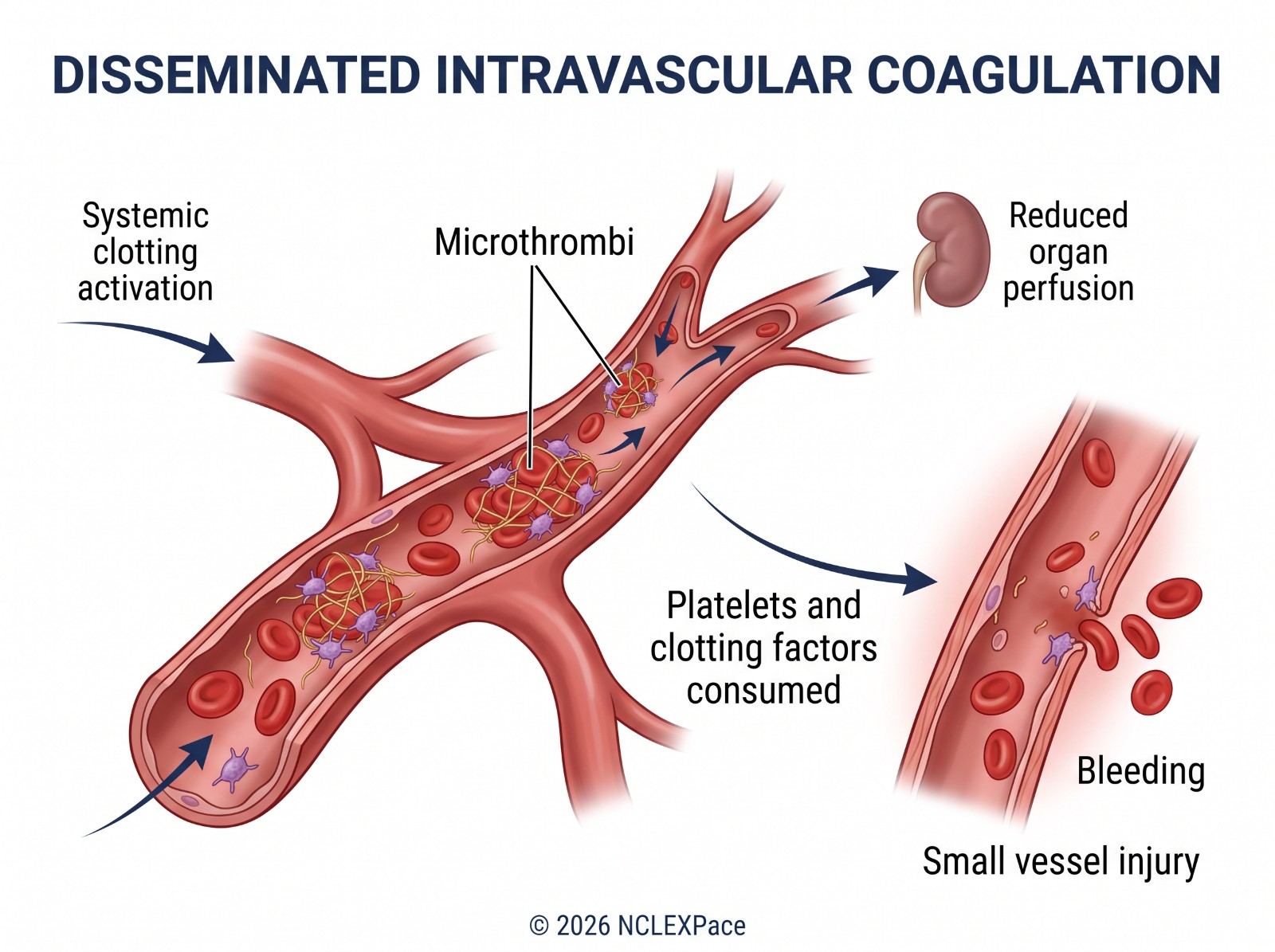
Low platelets = bleeding risk.
Causes: chemotherapy, heparin reaction, liver disease, some infections, immune conditions, alcohol use.
The thresholds worth knowing:
- Under 150,000 — low, monitor
- Under 50,000 — significant bleeding risk, usually a critical value
- Under 20,000 — spontaneous bleeding can occur without injury
Bleeding precautions for low platelets:
- Soft toothbrush, no flossing if very low
- Electric razor, not a blade
- No intramuscular injections if avoidable
- No rectal temperatures, suppositories, or enemas
- Avoid aspirin and NSAIDs
- Prevent falls
- Avoid straining — treat constipation
- Apply pressure longer after any needle stick
- Report headache, confusion, or vision change — these can mean bleeding in the brain
High platelets — can increase clotting risk. Less commonly tested.
The differential
Some questions include a WBC differential — the breakdown of white cell types.
You mainly need one idea:
Neutrophils are the main infection fighters. A low neutrophil count is what makes a client truly vulnerable, which is why neutropenic precautions are based on it rather than on the total WBC alone.
A “left shift” means more immature neutrophils are being released, which suggests the body is fighting a serious infection.
You do not need to memorize every cell type percentage.
How the exam uses the CBC
Type 1: Which finding needs follow-up? Look for a very low WBC, a hemoglobin under 7, or platelets under 50,000.
Type 2: What precautions?
- Low WBC → neutropenic precautions
- Low platelets → bleeding precautions
Type 3: What teaching?
- Low platelets → soft toothbrush, electric razor, no aspirin
- Low WBC → avoid crowds, report fever immediately
Type 4: Which client should I see first? A neutropenic client with a fever usually wins. That is an emergency.
The short version
- WBC low → neutropenic precautions → fever is an emergency
- Hemoglobin low → tired, pale, short of breath → under 7 is critical
- Hemoglobin does not fall right away in acute bleeding — watch vital signs
- Platelets low → bleeding precautions → under 50,000 is serious, under 20,000 is spontaneous bleeding risk
- Hematocrit is about 3× the hemoglobin
Reference ranges and precaution thresholds vary by facility.
5 NCLEX practice questions on this topic
The same questions, player and partial-credit scoring students use inside NCLEXPace: answer, submit, read the full rationale, then Next. Your score is waiting at the end. No account needed for these.
A free account opens 20 more questions, a case study, a video and a cheat sheet. The full bank has 3,200+ questions with rationales, by topic.
Practice more, free →Ready for the full bank? See NCLEXPace plans and prices: one payment for 1, 2, 3 or 6 months.
Frequently asked questions
Common follow-up questions on Labs, Values & Diagnostics.
What do I do for a client with a low white blood cell count?
Start neutropenic precautions to protect the client from germs: a private room where indicated, strict hand hygiene, no fresh flowers or standing water, no raw fruits and vegetables in many protocols, no sick visitors, avoiding crowds, and close temperature monitoring. The critical teaching point is that a fever in a neutropenic client is an emergency, because they may not show the usual signs of infection and it can become life-threatening quickly.
Why doesn't hemoglobin drop right away in acute bleeding?
In acute bleeding the body loses whole blood, so the concentration stays the same at first, and hemoglobin and hematocrit fall only once fluid shifts in or IV fluids are given. So a normal hemoglobin does not rule out active bleeding. Watch the vital signs instead: a rising heart rate and falling blood pressure show up before the lab does, which is a favorite exam point.
What are the platelet thresholds worth knowing?
Under 150,000 is low and warrants monitoring, under 50,000 is a significant bleeding risk and usually a critical value, and under 20,000 means spontaneous bleeding can occur without injury. Low platelets mean bleeding precautions: soft toothbrush, electric razor, no IM injections if avoidable, no rectal temperatures or enemas, avoid aspirin and NSAIDs, and report headache, confusion, or vision change, which can mean bleeding in the brain.
What hemoglobin level is considered critical?
A hemoglobin under 7 g/dL is usually a critical value. Low hemoglobin (anemia) means the client cannot carry enough oxygen, with signs of tiredness, weakness, pale skin and mucous membranes, shortness of breath on exertion, fast heart rate, and dizziness. Management includes monitoring for bleeding, balancing activity with rest, and expecting iron, B12, or transfusion depending on the cause.
Why do neutropenic precautions depend on neutrophils rather than total WBC?
Neutrophils are the main infection fighters, so a low neutrophil count is what makes a client truly vulnerable, which is why neutropenic precautions are based on it rather than on the total WBC alone. A 'left shift' means more immature neutrophils are being released, which suggests the body is fighting a serious infection. You do not need to memorize every cell type percentage.
Sources and references
- Pagana KD, Pagana TJ, Pagana TN. Mosby's Diagnostic and Laboratory Test Reference. 16th ed. Elsevier; 2023.
- Harding MM, Kwong J, Hagler D, Reinisch C. Lewis's Medical-Surgical Nursing: Assessment and Management of Clinical Problems. 12th ed. Elsevier; 2023; Chapter: Assessment: Hematologic System.
Reviewed by the NCLEXPace team, October 2026.
Keep reading
3,200+ NCLEX questions with think-like-a-nurse rationales, unfolding case studies and adaptive readiness exams. Start with free practice questions, then choose a plan when you are ready.
Create Free Account →